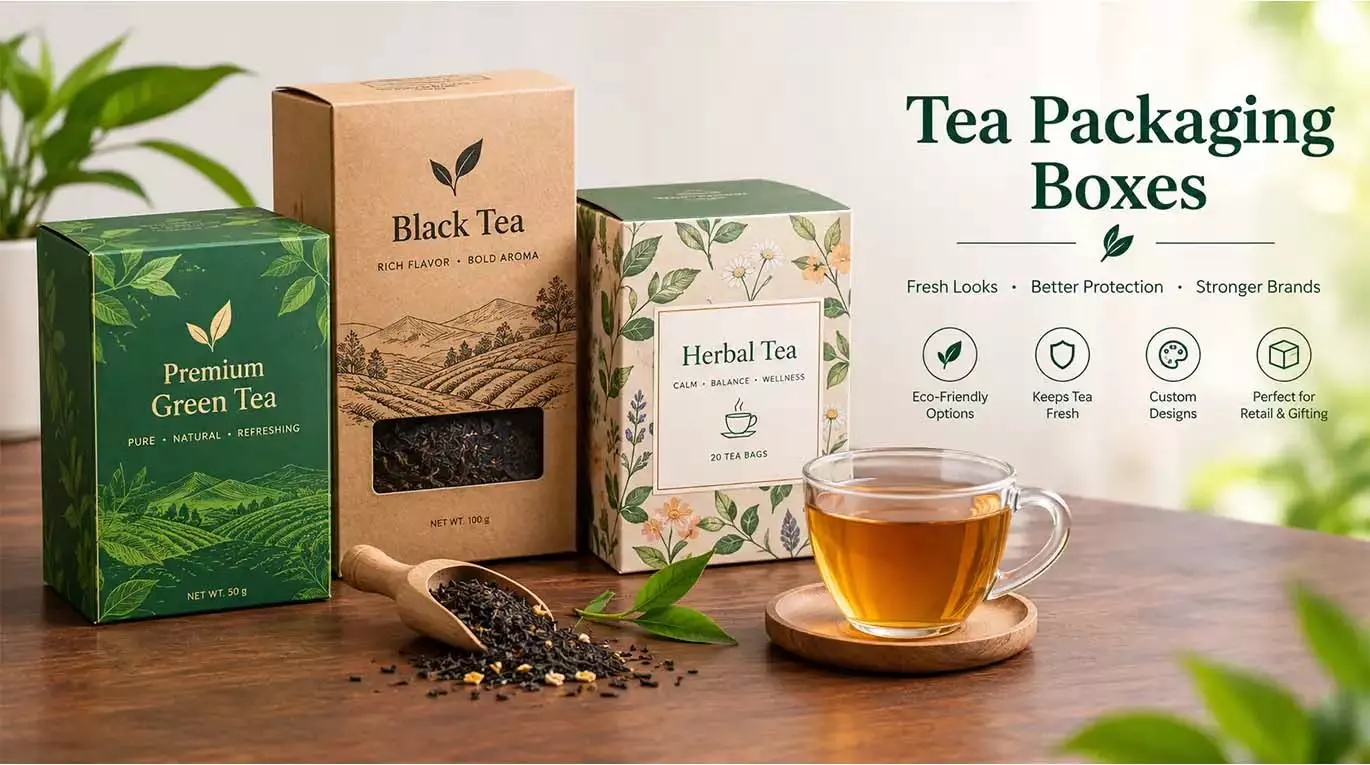
Why Custom Tea Boxes Are Important for Premium Tea Packaging
Speciality tea brands compete on quality, origin and experience. The moment a customer receives or opens a pack of tea shapes their perception of the product inside.
Custom tea boxes give producers a practical way to protect delicate leaves, preserve aroma and present their range with the care that premium tea deserves.
Whether you sell loose-leaf blends, pyramid bags or gift collections, well-designed packaging supports freshness, reinforces brand identity and creates a more memorable experience from shelf to cup.
Good packaging does more than contain the tea. It protects the product during transit, communicates quality and turns a simple purchase into something that feels considered and professional.
Protecting Tea Quality and Freshness
Tea is sensitive to light, moisture and air. Exposure can dull flavour and reduce aroma over time. Custom tea boxes create a more reliable barrier when designed with appropriate board grades and, where needed, internal liners or coatings.
This protection helps maintain the character of the tea from packing to the customer’s cupboard.
Precise sizing matters. Boxes that leave excess space allow pouches or tins to move and increase the risk of damage.
A fit that holds the product securely reduces movement during shipping and keeps presentation neat. Stronger structures also support stacking in warehouses and on retail shelves without crushing the contents.
For loose-leaf teas and fragile pyramid bags, internal supports or compartments prevent shifting and protect against impact. These practical details preserve both product quality and visual appeal.
Building Brand Identity Through Packaging Design
Premium tea brands rely on clear visual identity. Consistent colours, refined typography and thoughtful use of space help products stand out on crowded shelves and in online photographs. Custom tea boxes give brands full control over these elements so the packaging aligns with the overall brand character.
Many successful ranges use packaging to share short origin stories, tasting notes or brewing guidance.
Clean hierarchy and readable text make this information accessible without overcrowding the design. Restrained layouts usually feel more premium than busy graphics.
Finish choices influence perception. Soft-touch coatings, matte surfaces or selective embossing can elevate the unboxing experience and signal quality. The packaging should feel intentional and aligned with the care taken in sourcing and blending the tea.
Supporting Different Tea Formats and Occasions
Loose-leaf teas, tea bags, sampler sets and gift collections each present different packaging needs.
Custom designs can accommodate these variations while maintaining a consistent brand look. Single-origin boxes, multi-pack ranges and seasonal gifts all benefit from structures that protect the product and present it attractively.
Gift packaging carries particular importance. Customers often choose tea as a present, and the box becomes part of the experience. A well-designed outer pack that opens cleanly and reveals the tea thoughtfully supports higher perceived value and encourages recommendations.
Subscription and direct-to-consumer models also gain from reliable packaging. Regular customers receive boxes that feel familiar and professional. New customers encounter a clear brand message from the first delivery.
Practical Design Considerations for Tea Brands
Accurate product measurements form the starting point. Height, width and depth of pouches, tins or bags must be accounted for so the box provides a secure fit. Testing samples with actual products reveals how the structure performs under real conditions.
Assembly and packing speed matter for growing brands. Designs that fold cleanly and require minimal additional securing support efficient fulfilment. Complicated constructions slow operations and increase the chance of errors during busy periods.
Clear branding space remains essential. Logo placement, colour consistency and required product information should be planned early so the final design supports overall brand standards without looking cluttered.
Read: How Small Businesses Can Maximize Sales with Counter
Material Choices That Support Premium Positioning
Board selection influences both protection and perception. Higher-grade card or lightweight corrugated options provide strength without excessive bulk.
White board creates a clean background that suits most premium brands. Kraft board offers a more natural appearance popular with organic or artisan ranges.
Moisture resistance and light protection help preserve tea quality. Food-safe coatings or internal barriers can be specified where needed. These practical layers protect the product while remaining suitable for direct contact with food packaging.
Recyclable materials support clearer environmental claims. Many tea customers prefer packaging they can dispose of responsibly. Choosing widely recyclable board and printing simple disposal instructions builds credibility with environmentally aware buyers.
Sustainability and Customer Expectations
Environmental considerations continue to influence purchasing decisions. Brands that demonstrate genuine commitment to responsible packaging often gain an advantage. Recycled content, recyclable structures and minimal use of non-recyclable components all support stronger claims.
Reducing excess material also helps. A well-proportioned box that fits the product closely uses less board while still providing protection. Efficient design benefits both costs and environmental impact.
Transparent communication about material choices builds trust. When brands explain why they selected certain packaging, customers respond more positively than they do to vague statements.
Common Challenges and How to Address Them
One frequent issue is underestimating the need for internal protection. Soft pouches or fragile bags require more than a simple outer box. Simple inserts or precise fit often solve this problem without adding unnecessary complexity.
Another challenge involves balancing visual impact with practicality. Overly elaborate designs can raise costs and slow packing. Focusing on protection, clear branding and ease of use usually produces more effective results.
Ignoring end-of-life considerations can create problems later. Packaging that is difficult to recycle may generate negative feedback even when the tea itself is excellent. Designing with disposal in mind supports both customer satisfaction and brand reputation.
Planning and Specifying Successful Tea Packaging
Clear product details and brand guidelines form the foundation of good packaging. Share accurate dimensions, weight, moisture sensitivity and any special requirements early. This information shapes practical recommendations and reduces the need for later revisions.
Requesting physical samples allows real-world testing. Checking fit, strength, print quality and unboxing experience under normal conditions reveals issues that digital designs cannot show. Feedback at this stage leads to better final choices.
Consider order volumes carefully. Smaller runs suit new blends or limited editions. Larger quantities usually lower the unit cost and support consistent branding as sales grow.
The Role of Packaging in the Premium Tea Experience
The moment a customer opens a tea box has become part of the overall product experience. Clean construction, secure fit and thoughtful presentation all contribute to a positive impression. People notice when packaging feels considered and often associate it with higher overall quality.
Reliable packaging also supports operational efficiency. Fewer damaged items, clearer presentation and consistent branding reduce friction and improve the experience across every order.
Moving Forward with Stronger Tea Packaging
Custom tea boxes give premium tea brands a practical way to protect delicate products, strengthen brand identity and improve the customer experience. They address the specific challenges of aroma preservation, light protection and presentation while creating opportunities for clear branding and responsible material choices.
The most effective packaging balances structural performance with visual clarity and practical usability. Brands that treat the box as an extension of the tea rather than an afterthought gain a lasting advantage in a competitive market.
Review your current packaging against the needs of your teas and customers. Identify where better protection, clearer branding or improved sustainability would make the greatest difference. Taking a focused approach helps you create packaging that supports both the product and the reputation of your brand.