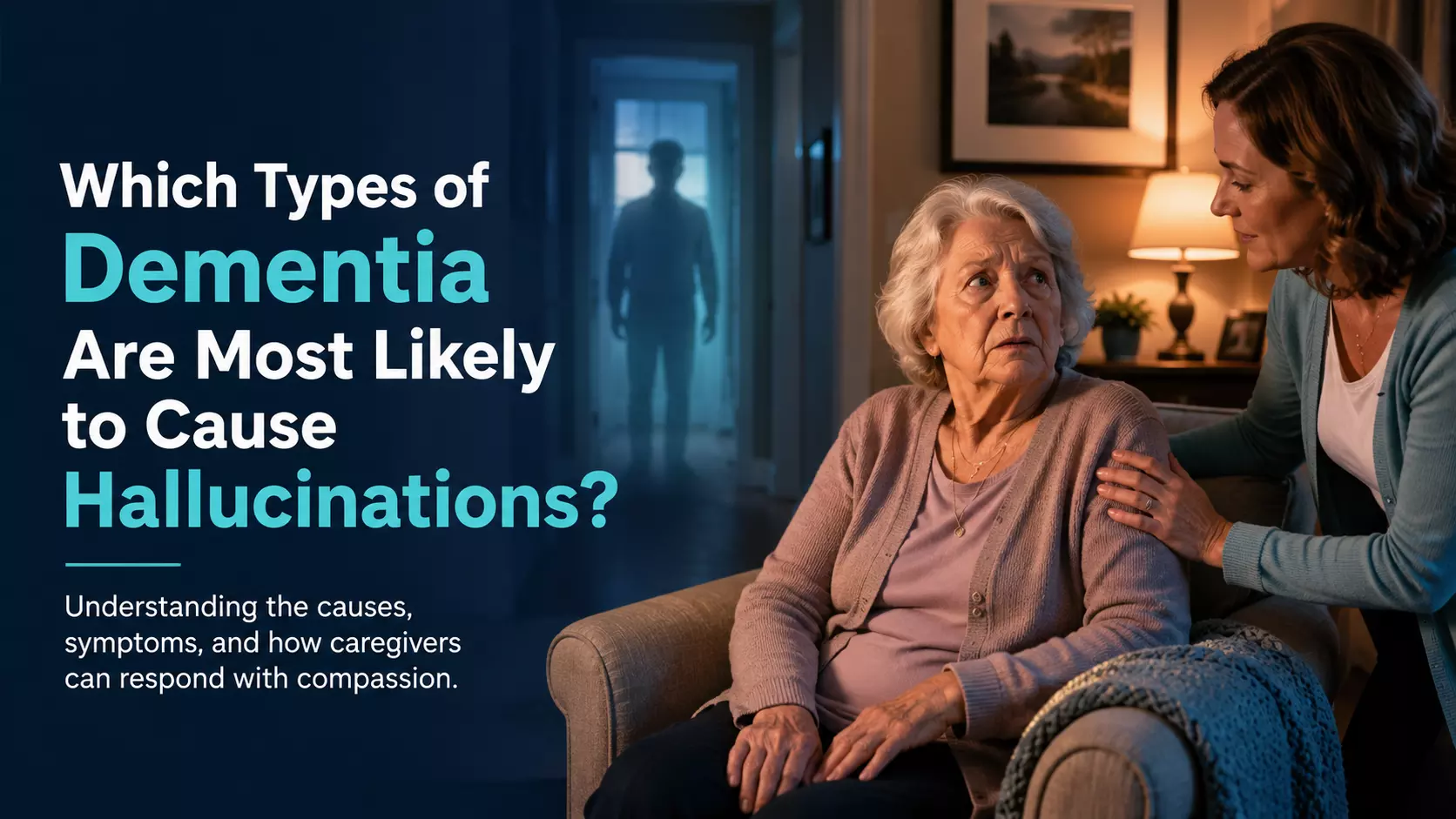
Which Types of Dementia Are Most Likely to Cause Hallucinations?
Hallucinations are a distressing symptom that can occur in several types of dementia, affecting both the person living with the condition and their caregivers. While memory loss is often the best-known sign of dementia, changes in the brain can also cause people to see, hear, or feel things that are not actually there.
Understanding which types of dementia are most likely to cause hallucinations helps families recognize symptoms early, seek appropriate medical care, and provide compassionate support at home.
What Are Hallucinations in Dementia?
Hallucinations are false sensory experiences that seem completely real to the individual. A person with dementia may see unfamiliar people, hear voices, smell odors, or feel sensations that have no external source.
Visual hallucinations are the most common, although auditory, tactile, and olfactory hallucinations may also occur. These symptoms result from changes in the brain rather than imagination or mental illness.
Which Types of Dementia Commonly Cause Hallucinations?
Lewy Body Dementia
Lewy body dementia (LBD) is the form of dementia most strongly associated with hallucinations. Many individuals experience vivid visual hallucinations early in the disease. They may see people, animals, or objects that appear remarkably real.
Because hallucinations are a hallmark symptom of LBD, doctors often consider them an important clue when making a diagnosis.
Parkinson's Disease Dementia
People with Parkinson's disease dementia frequently develop visual hallucinations as the disease progresses. These may result from both changes in the brain and certain medications used to treat Parkinson's symptoms.
Hallucinations often become more common alongside increasing cognitive decline.
Alzheimer's Disease
Hallucinations are less common during the early stages of Alzheimer's disease but may appear as the condition advances. If you're wondering what stage of dementia is hallucinations, they typically develop during the middle or later stages of Alzheimer's, although every individual experience dementia differently.
Vascular Dementia
Hallucinations can occur in vascular dementia, but they are generally less frequent than in Lewy body dementia. Their likelihood depends on which parts of the brain have been affected by reduced blood flow or stroke.
Frontotemporal Dementia (FTD)
Hallucinations are relatively uncommon in frontotemporal dementia. Individuals with FTD are more likely to experience changes in personality, behavior, language, and judgment than visual hallucinations.
Read: est Old Patients Care Services for Senior Health Support
Why Do Hallucinations Happen?
Hallucinations in dementia occur because brain cells responsible for processing sensory information become damaged. Changes in brain chemistry, visual processing, medications, infections, sleep disturbances, and progression of dementia can all contribute to these symptoms.
Not every hallucination is caused solely by dementia. Medical conditions such as urinary tract infections, dehydration, or delirium can also trigger sudden hallucinations and should be evaluated promptly.
How Should Caregivers Respond?
When hallucinations occur, the goal is to reduce fear rather than argue about reality.
Helpful strategies include:
- Stay calm and speak in a reassuring voice.
- Avoid telling the person they're wrong.
- Check for environmental triggers such as poor lighting or mirrors.
- Redirect attention to another activity.
- Discuss new or worsening hallucinations with a healthcare provider.
A supportive response often prevents unnecessary anxiety and agitation.
When Should Hallucinations Be Evaluated?
Seek medical advice if hallucinations appear suddenly, become frequent, lead to unsafe behavior, cause significant distress, or are accompanied by fever, confusion, or rapid changes in mental status. A healthcare provider can identify whether dementia progression or another medical condition is responsible.
Final Thoughts
Although hallucinations can occur in several forms of dementia, they are especially common in Lewy body dementia and Parkinson's disease dementia, while typically appearing later in Alzheimer's disease.
Recognizing these symptoms early, understanding their causes, and responding with patience and reassurance can reduce anxiety and improve quality of life. Working closely with healthcare professionals ensures individuals with dementia receive the personalized care and support they need as the condition progresses.
Frequently Asked Questions
Which type of dementia is most likely to cause hallucinations?
Lewy body dementia is the type most commonly associated with vivid visual hallucinations. These symptoms often develop early and are considered one of the condition's defining characteristics.
What stage of dementia is hallucinations?
Hallucinations usually occur during the middle or late stages of Alzheimer's disease. However, they often develop much earlier in Lewy body dementia and Parkinson's disease dementia.
Are hallucinations always a sign that dementia is getting worse?
Not necessarily. Hallucinations can result from medications, infections, vision problems, or sleep disorders. A medical evaluation helps determine the underlying cause.
Should I tell someone with dementia their hallucinations aren't real?
No. Correcting or arguing may increase fear and agitation. It's generally better to acknowledge their feelings, reassure them, and gently redirect their attention.
Can hallucinations in dementia be treated?
Treatment depends on the cause. Doctors may adjust medications, treat underlying illnesses, improve sleep, or recommend behavioral strategies. Medication is used cautiously and only when appropriate.
When should families seek professional dementia care?
Professional support may be helpful when hallucinations become frequent, create safety concerns, overwhelm family caregivers, or interfere with daily life and independence.