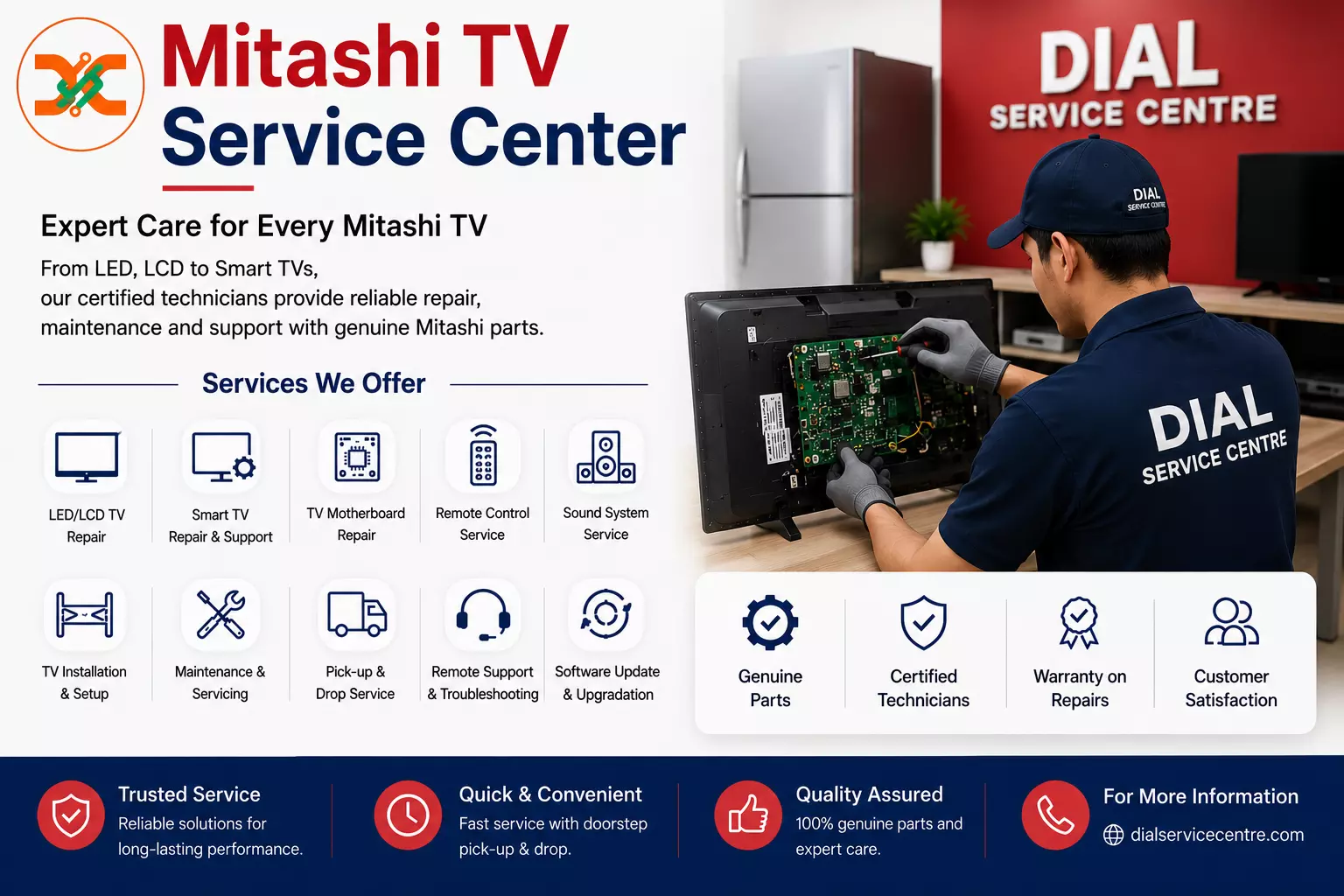
Which Mitashi TV Service Center Handles Smart TV Problems?
Smart TVs combine traditional television features with internet connectivity, applications, streaming platforms, and advanced software.
Because of this, a problem may not always be related to the display or internal hardware. Software glitches, network failures, remote-control issues, application errors, and firmware-related problems can also affect everyday viewing.
A Mitashi TV Service Center in Mumbai can be considered when professional assistance is needed to identify the underlying cause and determine an appropriate repair approach.
Choosing the right repair facility is important because Smart TV problems can involve several interconnected components. A proper diagnosis helps prevent unnecessary part replacement and ensures that the technician focuses on the actual source of the fault.
Understanding Common Mitashi Smart TV Problems
Smart TV problems can appear in different ways. The television may fail to connect to Wi-Fi, applications may stop responding, the system may freeze, or the TV may restart unexpectedly.
Some problems can also involve HDMI inputs, sound output, remote controls, display settings, or power-related components.
A service professional can inspect the television systematically rather than assuming that every problem requires hardware replacement. This approach is particularly useful when the symptoms are inconsistent or appear only while using certain applications or functions.
Software and Operating System Troubleshooting
Software-related faults are common in connected televisions. A Smart TV might become slow, freeze during operation, fail to load applications, or display unexpected error messages. Incorrect settings or outdated system software can sometimes contribute to these problems.
Professional troubleshooting may involve checking system settings, examining available software updates, reviewing application behavior, and identifying whether the issue is related to the TV's internal software environment.
If a reset is necessary, important settings and user information should be considered before proceeding.
Wi-Fi and Internet Connectivity Problems
A Smart TV depends on a stable network connection for streaming and online applications. When connectivity fails, users may notice buffering, application loading errors, frequent disconnections, or an inability to access online services.
A technician can help determine whether the problem originates from the television's network settings, wireless hardware, software configuration, or an external network source. Checking network recognition, connection stability, and related settings can help narrow down the cause.
Application and Streaming Issues
Streaming applications can occasionally stop working correctly. An app may fail to open, close unexpectedly, become unresponsive, or display an error message. In some situations, the issue may be limited to a particular application rather than the television itself.
Professional assistance can help distinguish between an application-specific issue and a broader Smart TV software problem. This prevents unnecessary attention to unrelated hardware components when the actual problem is software-based.
Read: What services are offered at the Hitachi TV Service Center by
Display and Picture-Related Faults
Although Smart TV problems often involve software, display faults can also occur. Symptoms may include distorted images, lines across the screen, flickering, unusual brightness, incorrect colors, or a completely blank display.
A qualified technician can inspect the television to determine whether the problem is associated with settings, signal input, internal boards, connections, or the display assembly.
Since screen-related repairs can involve delicate components, professional handling is generally preferable to attempting an internal repair at home.
HDMI and External Device Problems
Many Smart TVs are connected to set-top boxes, gaming consoles, streaming devices, sound systems, and other equipment. A faulty HDMI connection can create symptoms such as no picture, no sound, intermittent signals, or input-detection problems.
The repair process may include checking different inputs, examining connections, testing compatible external devices, and determining whether the fault is with the television or the connected equipment. This type of diagnosis can save time when the TV itself is functioning normally.
Mitashi TV Service Center in Bengaluru for Smart TV Support
Customers looking for a Mitashi TV Service Center in Bengaluru may consider the facility's ability to diagnose both software and hardware-related Smart TV faults. A dependable repair process should begin with understanding the symptoms rather than immediately replacing components.
Technicians may check connectivity, applications, system behavior, picture and sound performance, input ports, and power-related symptoms according to the model and fault. Model compatibility is also important because Smart TV configurations can vary between different generations.
Remote and Control-Related Problems
A Smart TV can appear to have a system problem when the actual issue involves the remote or control interface. Buttons may stop responding, pairing may fail, or certain commands may not work correctly.
Technicians can examine whether the problem originates from the remote, batteries, pairing configuration, infrared reception, or the television's control system. Identifying the correct source helps avoid unnecessary repair work.
Audio Problems in Smart TVs
Sound problems can include no audio, distorted sound, inconsistent volume, or audio that does not match the picture. These symptoms can originate from settings, external devices, software, speakers, or internal electronic components.
A proper diagnostic process can involve checking audio settings, testing different sources, examining external connections, and evaluating the internal sound system where required.
Power and Restarting Issues
Unexpected shutdowns and repeated restarts may indicate a software or hardware-related issue. A television that turns off shortly after starting may require a more detailed inspection of its power system, internal boards, thermal behavior, or software environment.
Rather than repeatedly switching the TV on and off, users should consider professional diagnosis when the problem continues. This can help identify whether the issue is temporary or requires technical attention.
Mitashi TV Service Center in Pune for Technical Diagnosis
When considering a Mitashi TV Service Center in Pune, customers should look for an option capable of handling different categories of Smart TV faults. A good repair process generally includes initial inspection, symptom verification, diagnosis, repair or adjustment, and testing.
Technicians should also consider the specific TV model before recommending a repair. This is important because available components, internal architecture, software versions, and troubleshooting procedures can differ between models.
Importance of Genuine and Compatible Components
If a Smart TV requires replacement hardware, component compatibility is important. Using an unsuitable part can create additional problems or affect television performance.
A professional repair facility should identify the required component based on the TV model and fault. Customers can also ask for information about the component being replaced and whether the repair requires additional calibration or testing.
Post-Repair Testing
Testing after a repair is an important part of the service process. A Smart TV should ideally be checked for the original problem as well as related functions that could have been affected during repair.
Depending on the issue, testing may include power operation, display quality, sound output, remote response, HDMI inputs, network connectivity, applications, and other Smart TV functions. Comprehensive testing helps verify whether the repair has addressed the reported symptoms.
Choosing a Reliable Smart TV Repair Facility
Before selecting a service center, customers should consider technical experience, model compatibility, diagnostic procedures, repair transparency, component availability, and post-repair testing.
Clear communication is also useful because customers should understand what has been identified before approving repair work.
It is better to choose a service option that explains the problem and proposed solution clearly rather than one that recommends component replacement without adequate diagnosis.
Conclusion
Smart TV problems can originate from software, connectivity, display systems, audio components, external inputs, remote controls, or internal hardware. Identifying the correct cause is therefore more important than simply replacing a part.
A structured diagnostic process can help determine the appropriate repair approach while reducing the possibility of unnecessary work.
Customers should focus on technical capability, compatible components, careful handling, transparent communication, and proper testing when choosing professional Smart TV repair assistance.
FAQs
1. What Smart TV problems can a Mitashi service center handle?
A service center may assist with software glitches, connectivity problems, application errors, display faults, audio issues, HDMI problems, remote-control concerns, and certain hardware faults depending on the TV model.
2. Can Smart TV software problems be repaired without replacing hardware?
Yes, some issues can be related to settings, applications, connectivity, or system software and may not require hardware replacement. Proper diagnosis is necessary to determine the cause.
3. Why does my Mitashi Smart TV keep restarting?
Repeated restarting can have several possible causes, including software problems, power-related faults, internal components, or overheating. Professional diagnosis can help identify the underlying issue.
4. Should I repair a Smart TV with a blank screen myself?
Internal television components can be delicate and may involve electrical hazards. Professional inspection is generally safer when basic troubleshooting does not resolve the problem.
5. How can I choose a suitable Smart TV repair service?
Consider technical experience, model compatibility, diagnostic methods, replacement-component suitability, repair transparency, and post-repair testing before selecting a service provider.