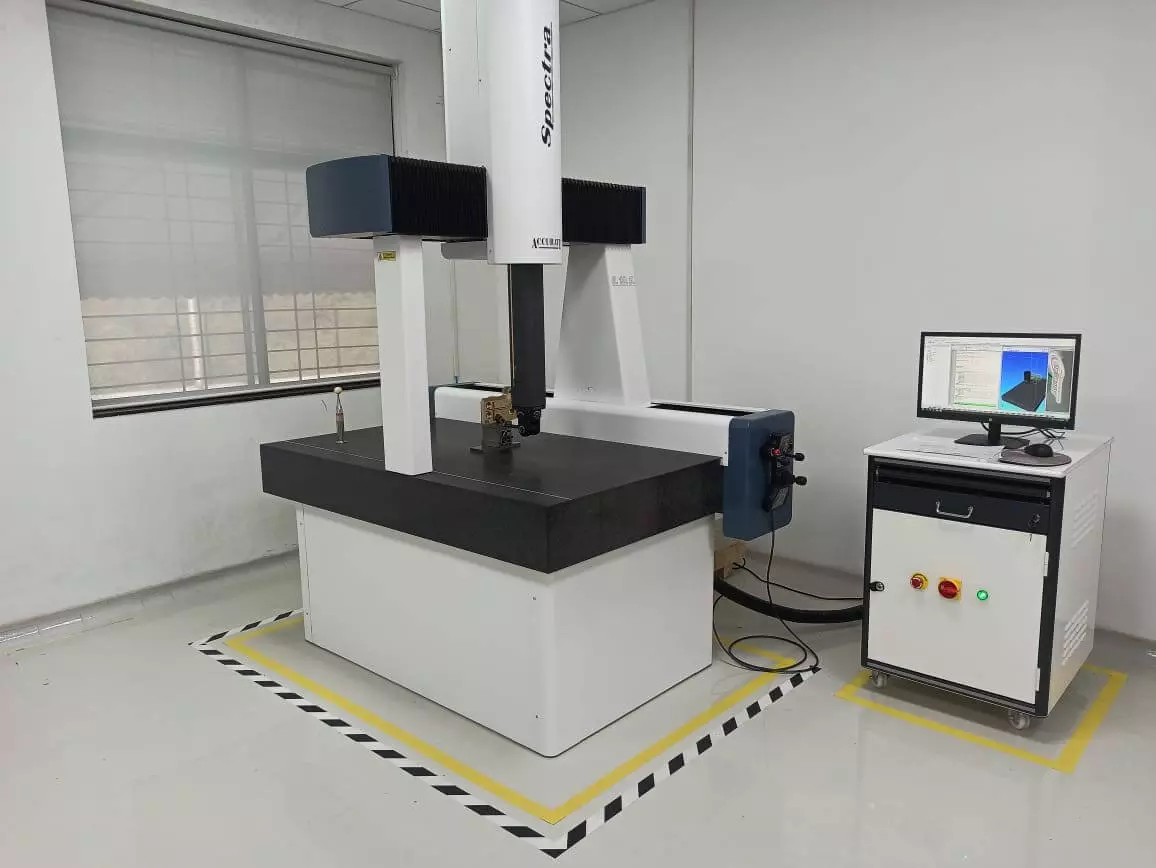
What Is CMM Measurement? A Simple Guide for Modern Manufacturing
In today’s precision-driven manufacturing world, accuracy is no longer optional—it’s essential. As components become more complex and tolerances tighter, manufacturers rely on advanced inspection methods to ensure quality and consistency. One of the most important technologies enabling this is CMM measurement.
This guide explains what CMM measurement is, how a CMM machine works, and why a CMM coordinate measuring machine has become a critical tool in modern manufacturing.
What Is CMM Measurement?
CMM measurement is the process of using a Coordinate Measuring Machine to accurately measure the physical geometry of a component. It captures precise data about dimensions, shapes, positions, and tolerances by recording coordinates on the X, Y, and Z axes.
Unlike manual measurement tools, CMM measurement delivers:
- High accuracy
- Repeatable results
- Digital inspection data
- Faster quality checks
This makes it ideal for industries where precision, compliance, and consistency matter.
What Is a CMM Machine?
A CMM machine is a highly accurate inspection device designed to measure objects in three-dimensional space. It uses a probing system to touch or scan the surface of a part, recording exact coordinate points that define the component’s geometry.
These measurements are then compared against CAD models or engineering drawings to verify compliance with design specifications.
Core Components of a CMM Machine
- Structure – Bridge, gantry, cantilever, or horizontal arm design
- Probe system – Touch-trigger, scanning, or optical probes
- Control software – Analyses data and generates inspection reports
- Granite base – Provides stability and vibration resistance
What Does CMM Stand For?
CMM stands for Coordinate Measuring Machine. When people refer to a CMM coordinate measuring machine, they are describing a system that measures components using a three-axis coordinate system to determine precise dimensions and locations.
How Does CMM Measurement Work?
CMM measurement follows a structured inspection process:
- Part Setup
- The component is placed securely on the CMM table.
- Probe Interaction
- The probe touches or scans specific features of the part.
- Coordinate Capture
- Each point contacted is recorded in X, Y, and Z coordinates.
- Data Analysis
- Software compares measured data with CAD models or tolerances.
- Reporting
- Detailed inspection reports are generated for quality control and compliance.
This process ensures accurate, repeatable measurements across production runs.
Types of CMM Machines
Different manufacturing needs require different CMM machine configurations:
Bridge CMM
Most common type, suitable for general inspection tasks.
Gantry CMM
Designed for large, heavy components.
Horizontal Arm CMM
Often used in automotive and aerospace body inspection.
Portable CMM
Ideal for on-site measurement and large assemblies.
Each type supports precise CMM measurement depending on part size, environment, and application.
Why CMM Measurement Is Critical in Modern Manufacturing
Modern manufacturing demands speed, accuracy, and data-driven decision-making. CMM measurement supports all three.
Key Benefits:
- Exceptional accuracy down to microns
- Repeatable inspection results
- Reduced human error
- Improved product quality
- Faster inspection times
- Digital traceability for audits
A CMM coordinate measuring machine ensures quality control keeps pace with advanced production methods.
Industries That Rely on CMM Measurement
CMM measurement is widely used across precision-focused industries, including:
- Automotive manufacturing
- Aerospace and aviation
- Medical device production
- Precision engineering
- Toolmaking and mould design
- Electronics manufacturing
Any industry with strict tolerance requirements benefits from CMM-based inspection.
CMM Measurement vs Manual Measurement
Feature
Manual Tools
CMM Measurement
Accuracy
Limited
Extremely high
Repeatability
Variable
Consistent
Speed
Slower
Faster
Data output
Manual
Digital reports
Complex geometry
Difficult
Easy
A CMM machine dramatically outperforms traditional tools when precision and efficiency are required.
CMM Measurement and Quality Control
CMM measurement plays a vital role in quality assurance by:
- Verifying dimensional accuracy
- Ensuring tolerance compliance
- Supporting ISO and GD&T standards
- Reducing scrap and rework
- Improving process control
Manufacturers increasingly integrate CMM data into production workflows for continuous improvement.
In-House vs Outsourced CMM Measurement
Some manufacturers invest in their own CMM machine, while others outsource CMM measurement services.
In-House CMM
- Full control
- Faster access
- Higher upfront cost
Outsourced CMM Services
- No capital investment
- Access to expert operators
- Ideal for low-volume or complex inspections
Both approaches rely on the same core CMM coordinate measuring machine technology.
Read: How Coordinate Measuring Machine Software Improves
The Future of CMM Measurement
As manufacturing evolves, CMM measurement continues to advance through:
- Automation and robotic integration
- AI-driven inspection software
- Faster scanning probes
- Smart manufacturing connectivity
- Digital twins and Industry 4.0 systems
CMM machines are becoming smarter, faster, and more connected—making them central to future-ready production environments.
Final Thoughts
CMM measurement is no longer a specialist tool—it’s a manufacturing essential. Whether you’re producing high-volume components or precision-engineered parts, a CMM machine ensures accuracy, consistency, and confidence in your quality processes.
By using a CMM coordinate measuring machine, manufacturers can meet tighter tolerances, reduce errors, and maintain the high standards demanded by modern industry.