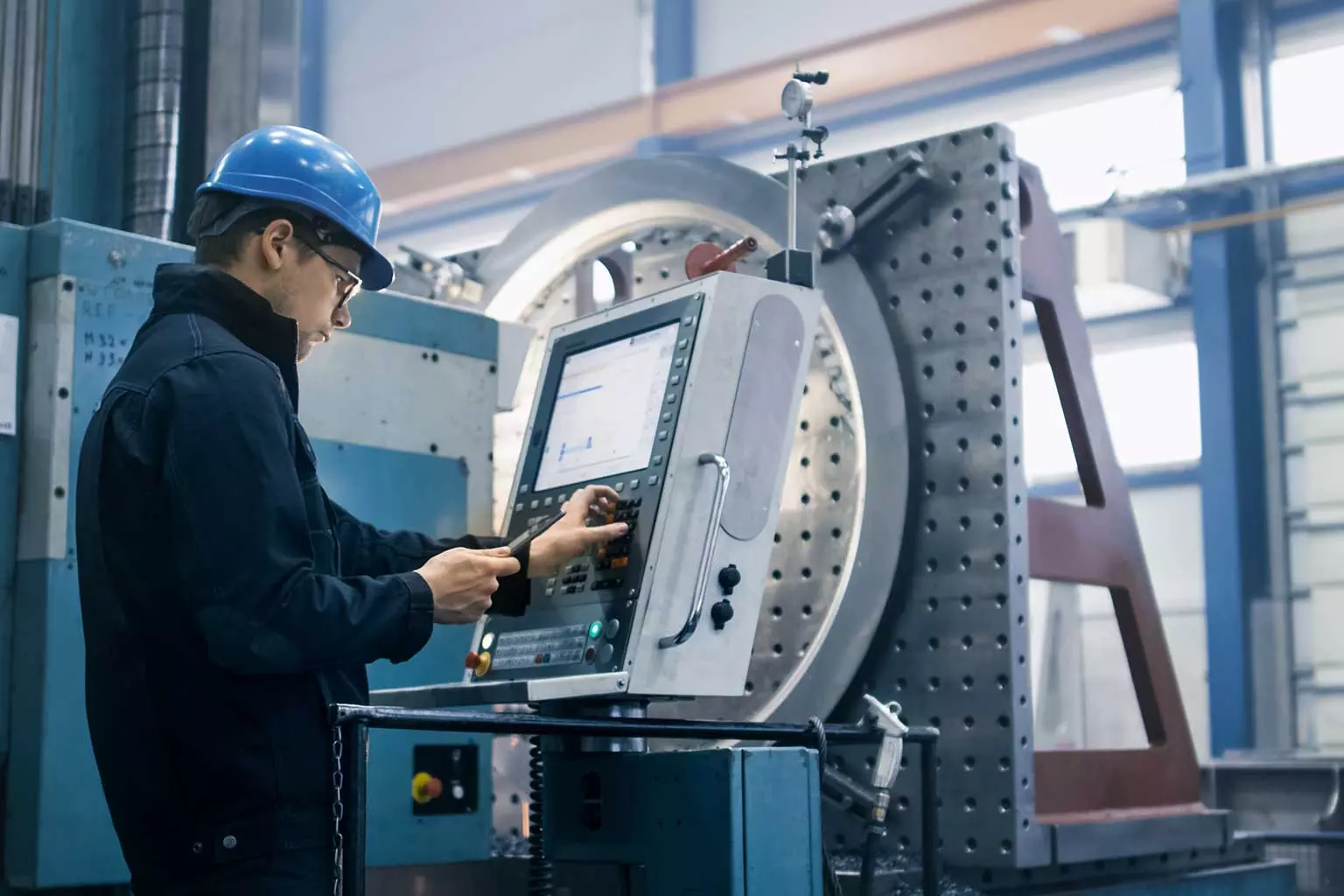
How Coordinate Measuring Machine Software Improves Accuracy in Manufacturing
In modern manufacturing, accuracy is not optional—it is essential. As tolerances become tighter and quality standards more demanding, manufacturers rely on advanced inspection technologies to ensure consistency and compliance.
At the centre of this evolution is coordinate measuring machine software, which plays a critical role in transforming raw measurement data into reliable, actionable insights.
When combined with coordinate measuring machines (CMM), specialised software enables manufacturers to achieve higher precision, reduce errors, and improve overall production efficiency.
This article explores how CMM software improves accuracy across manufacturing processes and why it has become a cornerstone of quality control.
What Is Coordinate Measuring Machine Software?
Coordinate measuring machine software is the digital system that controls, analyses, and reports measurements taken by coordinate measuring machines. While the CMM hardware physically probes or scans a component, the software interprets this data to determine whether parts meet design specifications.
Key functions of CMM software include:
- Controlling probe movement and scanning paths
- Capturing dimensional data
- Comparing results against CAD models
- Analysing tolerances and deviations
- Generating inspection and compliance reports
Without advanced software, even the most precise coordinate measuring machines CMM would be limited in accuracy and usability.
The Role of Coordinate Measuring Machines (CMM) in Manufacturing
Coordinate measuring machines CMM are used to measure the physical geometry of components by detecting points on a part’s surface. They are widely used in industries such as automotive, aerospace, medical devices, and precision engineering.
CMMs provide:
- High repeatability
- Micron-level accuracy
- Consistent inspection across large production volumes
However, the true value of a CMM is unlocked through the software that manages and interprets the measurement process.
How CMM Software Improves Accuracy
1. Eliminates Human Measurement Error
Manual measurement methods rely heavily on operator skill and judgement, which introduces variability. Coordinate measuring machine software automates measurement routines, ensuring consistency regardless of operator experience.
By standardising probing paths and inspection sequences, software significantly reduces:
- Operator bias
- Inconsistent measurement techniques
- Data entry errors
This automation results in more reliable and repeatable measurements.
2. Enables CAD-Based Inspection
One of the most powerful features of coordinate measuring machine software is its ability to work directly with CAD models. The software compares measured data from coordinate measuring machines CMM against the original design geometry.
This allows manufacturers to:
- Detect even minor deviations from design intent
- Verify complex geometries accurately
- Identify form, position, and profile errors
CAD-based inspection ensures that accuracy is measured against the exact design, not approximations.
3. Improves Repeatability and Consistency
Consistency is just as important as accuracy in manufacturing. CMM software allows inspection programs to be saved, reused, and applied across multiple parts and production batches.
Benefits include:
- Identical inspection routines every time
- Reduced variability between shifts or operators
- Reliable quality control over long production runs
This repeatability is critical for industries with strict regulatory or safety requirements.
4. Advanced Data Analysis and Tolerance Control
Coordinate measuring machine software does more than collect measurements—it analyses them in depth. Advanced algorithms evaluate tolerance limits, geometric dimensioning and tolerancing (GD&T), and statistical trends.
This enables manufacturers to:
- Identify patterns of deviation early
- Detect tool wear or process drift
- Make data-driven adjustments before defects occur
By catching issues early, manufacturers maintain high accuracy while reducing scrap and rework.
5. Supports Automated and In-Line Inspection
Modern coordinate measuring machines CMM integrated with advanced software can be used for automated or near-real-time inspection. This reduces delays between production and quality verification.
Automated inspection improves accuracy by:
- Measuring parts immediately after production
- Reducing handling and positioning errors
- Ensuring faster feedback to production teams
This integration is especially valuable in high-volume manufacturing environments.
6. Enhances Reporting and Traceability
Accurate measurement is only valuable if it can be documented and traced. Coordinate measuring machine software generates detailed inspection reports that support compliance, audits, and customer requirements.
Reporting features include:
- Visual deviation maps
- Pass/fail summaries
- Historical measurement data
This traceability ensures confidence in product quality and supports continuous improvement initiatives.
Software Integration with Manufacturing Systems
Modern CMM software often integrates with:
- Manufacturing execution systems (MES)
- Quality management systems (QMS)
- Statistical process control (SPC) tools
This integration allows measurement data from coordinate measuring machines CMM to influence production decisions in real time, further improving accuracy across the entire manufacturing process.
Read: Custom CNC Machining Solutions for High-Precision
Industries That Benefit Most from CMM Software Accuracy
While almost all manufacturers benefit from CMM software, some sectors rely on it heavily due to critical tolerances:
- Aerospace: Safety-critical components with strict compliance standards
- Automotive: High-volume production requiring consistent accuracy
- Medical devices: Precision and traceability are essential
- Precision engineering: Tight tolerances and complex geometries
In these industries, coordinate measuring machine software is not just a tool—it is a necessity.
Choosing the Right Coordinate Measuring Machine Software
To maximise accuracy, manufacturers should look for software that offers:
- CAD compatibility
- GD&T analysis
- Automation capabilities
- User-friendly programming
- Robust reporting tools
The right software enhances the performance of coordinate measuring machines CMM and ensures long-term measurement reliability.
Conclusion
Accuracy in manufacturing depends on more than precision hardware alone. Coordinate measuring machine software transforms raw measurement data from coordinate measuring machines CMM into reliable, repeatable, and actionable insights.
By automating inspection, integrating with CAD models, improving repeatability, and enabling advanced analysis, CMM software plays a vital role in maintaining quality, reducing waste, and supporting modern manufacturing standards.
As manufacturing continues to evolve, investing in the right coordinate measuring machine software is essential for achieving and sustaining high levels of accuracy.