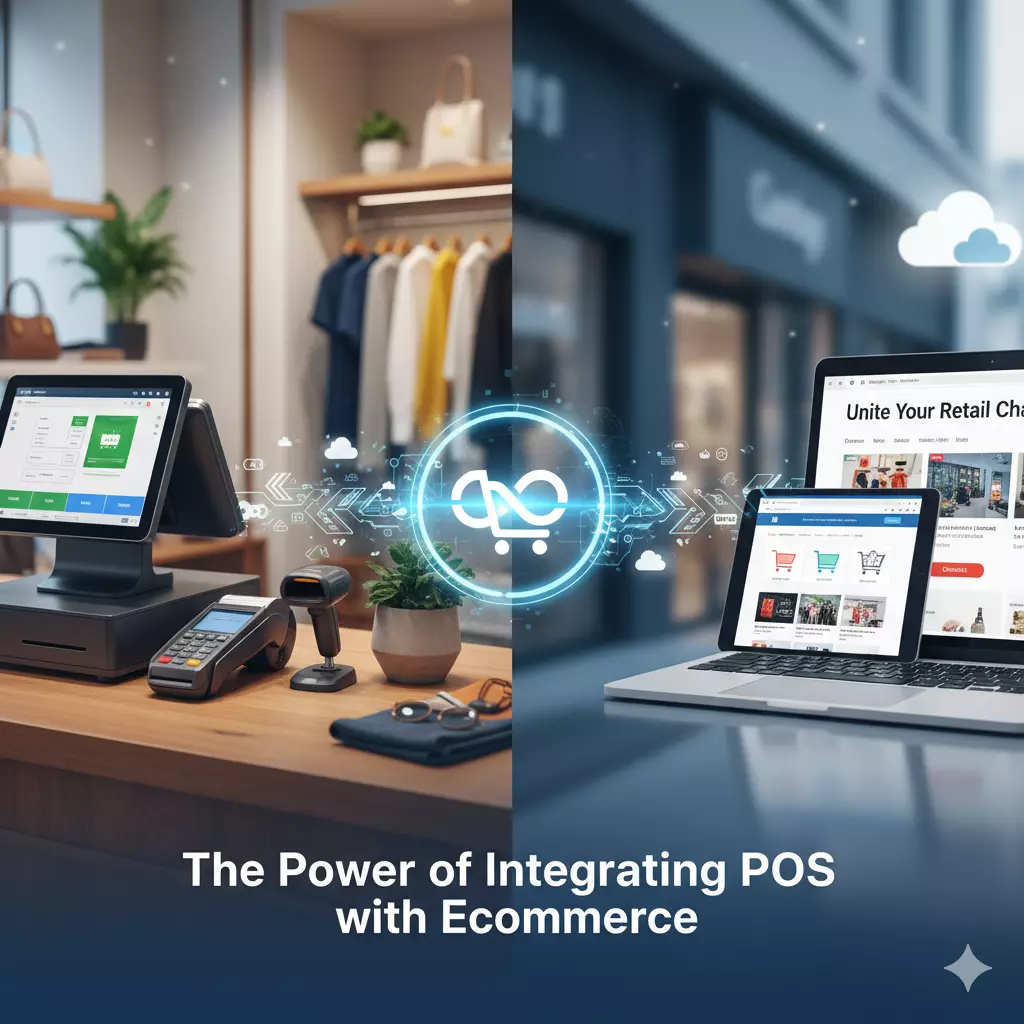
Unite Your Retail Channels: The Power of Integrating POS with eCommerce
In today’s market, being present where your customers are — in-store, online, and on major marketplaces — is essential. But broad reach often comes with broad headaches: multiple listings, separate inventories, and manual reconciliation across platforms.
For many retailers, the pain is real. A small fashion boutique might run a physical store with Square POS and simultaneously try to sell on Shopify and Amazon. Without proper integration, the owner ends up juggling spreadsheets and copying data manually — leading to mistakes, stock oversells, and unhappy customers.
Read: Designing the Perfect POS Display for Retail & Exhibitions
A Smarter Approach: Centralizing Through Integration
The solution lies in connecting your centralized POS system with your online and marketplace channels. With the right integration in place:
- Your product catalogue updates in one place and flows seamlessly across platforms.
- Inventory counts change in real time across all sales points: a sale in-store immediately reflects online, and vice versa.
- Pricing remains consistent, and processes whether you have one location or many become much simpler.
This kind of system empowers you to function like a truly omnichannel retailer, without doubling your workload.
What Integration Delivers for You
Here’s what you gain when you bring your POS and e-commerce together:
- Time savings. Stop entering the same data in multiple places. Free yourself to focus on growth instead of admin.
- Inventory accuracy. No more oversells because your system knows immediately when something sells.
- Improved customer experience. Your online offers and in-store inventory stay in sync — so you can confidently offer buy-online-pickup-in-store (BOPIS), reserve-online-pick-up-in-store (ROPIS) and other convenient services.
- Wider reach, fewer headaches. Selling on marketplaces like Amazon, Walmart or eBay becomes simpler when your backend is unified.
- Scalable operations. Whether you’re a one-person boutique or a chain of stores, a solid integration platform gives you the foundation to expand with confidence.
Putting It Into Practice
If you’re using Square in your store, here’s how to make this work:
- Choose an integration tool that links Square to your online storefront (Shopify, WooCommerce, Magento, BigCommerce and more).
- Set it up so catalog data, pricing, inventory and orders flow bi-directionally.
- Enable multi-location inventory if you have multiple stores — so local stock is visible online and vice versa.
- Launch BOPIS or ROPIS services to bring customers from online to your physical store, and back.
- Monitor operations in a unified dashboard so you can react quickly to any channel’s performance.
Read: Retail & POS Software for Supermarkets and Chains
Final Word
If you’re still manually syncing your sales channels with spreadsheets or multiple systems, you’re carrying a legacy process that will drag you down. Moving to an integrated ecosystem frees you to focus on what matters: customer experience, growth and expansion.
With your in-store POS as the anchor, and every online marketplace tied in, you’ll stop managing platforms and start managing retail.