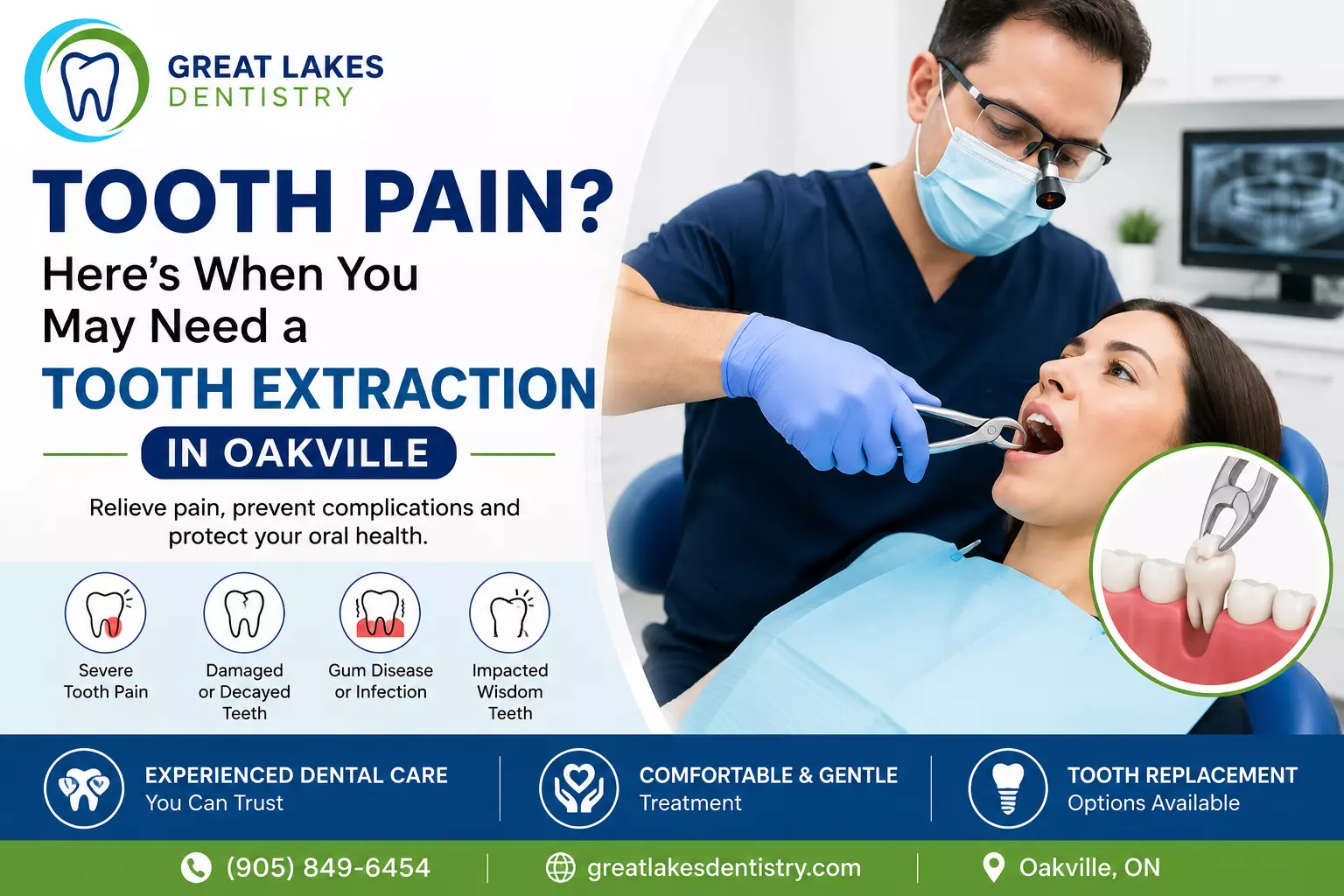
Tooth Pain? Here’s When You May Need a Tooth Extraction in Oakville
Tooth pain can range from mild discomfort to severe, persistent pain that affects your daily life.
While many dental problems can be treated with fillings, crowns, or root canal therapy, there are situations where removing a tooth may be the best solution for protecting your oral health.
Modern dentistry has made tooth extractions safer, faster, and more comfortable than ever before.
If you are experiencing ongoing dental pain, swelling, or infection, understanding when a tooth extraction may be necessary can help you seek treatment before the problem worsens.
In this guide, we’ll explain the common reasons for tooth extraction in Oakville, what to expect during the procedure, recovery tips, and answers to frequently asked questions.
What Is a Tooth Extraction?
A tooth extraction is a dental procedure in which a tooth is carefully removed from its socket in the jawbone. Dentists recommend extractions only when a tooth cannot be saved or when removing it is necessary to protect overall oral health.
Tooth extractions are commonly performed for severely damaged teeth, infections, overcrowding, impacted wisdom teeth, or advanced gum disease.
Common Signs You May Need a Tooth Extraction
Not all tooth pain means a tooth needs to be removed. However, certain symptoms may indicate serious dental problems that require professional attention.
Severe Tooth Pain
Persistent or intense tooth pain can signal deep decay, infection, or nerve damage. If the tooth cannot be restored with other treatments, extraction may be recommended.
Swollen or Bleeding Gums
Swelling around a tooth may indicate infection or advanced gum disease. If the supporting structures of the tooth are compromised, removal may be necessary.
Loose Teeth
Adult teeth should never feel loose. Severe gum disease or trauma can weaken the supporting bone and tissues, leading to tooth mobility.
Difficulty Chewing
Pain when chewing or biting down may indicate severe damage, infection, or a cracked tooth that cannot be repaired.
Facial Swelling or Jaw Pain
Dental infections can spread quickly and cause swelling in the face, jaw, or gums. Prompt dental care is essential to prevent complications.
Impacted Wisdom Teeth
Wisdom teeth that are trapped beneath the gums or growing improperly may cause pain, swelling, infection, and crowding.
Reasons Dentists Recommend Tooth Extraction
Dentists aim to preserve natural teeth whenever possible. However, there are situations where extraction becomes the healthiest option.
Severe Tooth Decay
When tooth decay reaches deep into the pulp and damages the tooth beyond repair, extraction may be necessary to prevent infection from spreading.
Advanced Gum Disease
Periodontal disease can weaken the gums and bone supporting the teeth. In severe cases, loose or damaged teeth may need removal.
Broken or Cracked Teeth
Some fractures extend below the gumline and cannot be effectively restored with crowns or fillings.
Dental Infections
Untreated infections can spread to surrounding tissues and even affect overall health. If antibiotics or root canal treatment are not effective, extraction may be required.
Orthodontic Treatment
In some orthodontic cases, teeth may be removed to create space and improve alignment before braces or Invisalign treatment.
Impacted Wisdom Teeth
Wisdom teeth often lack enough room to erupt properly, increasing the risk of pain, infection, crowding, and cyst formation.
Types of Tooth Extractions
There are two main types of tooth extractions.
Simple Extraction
A simple extraction is performed on teeth that are visible above the gumline. The dentist loosens the tooth and removes it carefully using specialized instruments.
Surgical Extraction
Surgical extractions are needed for impacted or severely damaged teeth. This procedure may involve making a small incision in the gum to safely remove the tooth.
What to Expect During a Tooth Extraction in Oakville
Understanding the extraction process can help reduce anxiety and make you feel more prepared.
Initial Consultation
Your dentist will examine your teeth and take digital X-rays to evaluate the condition of the tooth and surrounding structures.
Numbing the Area
Local anesthesia is used to numb the area around the tooth, ensuring you remain comfortable during the procedure.
Tooth Removal
The dentist carefully removes the tooth using gentle techniques designed to minimize discomfort and protect surrounding tissues.
Post-Procedure Instructions
After the extraction, your dentist will provide detailed instructions to help promote healing and reduce the risk of complications.
Is Tooth Extraction Painful?
Many patients worry about discomfort during a tooth extraction, but modern dental techniques make the procedure much more comfortable than most people expect.
You may feel pressure during the extraction, but you should not feel sharp pain. Mild soreness afterward is normal and can usually be managed with medication and proper aftercare.
Recovery After Tooth Extraction
Most patients recover from a tooth extraction within a few days to a week, depending on the complexity of the procedure.
Important Aftercare Tips
- Rest for the first 24 hours
- Avoid smoking and alcohol
- Eat soft foods like yogurt, soup, and mashed potatoes
- Avoid drinking through straws
- Apply ice packs to reduce swelling
- Keep the extraction area clean
- Follow all instructions from your dentist
Proper aftercare helps reduce the risk of dry socket and infection.
What Is Dry Socket?
Dry socket is a condition that occurs when the blood clot protecting the extraction site becomes dislodged too early. This can expose the bone and nerves, causing pain and delayed healing.
Avoiding smoking, straws, and vigorous rinsing can help prevent dry socket after tooth extraction.
Read: Dental Implants Oakville: Natural-Looking Tooth
Tooth Replacement Options After Extraction
After a tooth is removed, replacing it is often recommended to maintain proper bite alignment and oral health.
Dental Implants
Dental implants provide a durable and long-lasting solution for replacing missing teeth.
Dental Bridges
A dental bridge uses surrounding teeth to support an artificial replacement tooth.
Dentures
Partial dentures may be used to replace one or multiple missing teeth.
Your dentist can discuss the best tooth replacement option based on your needs and oral health goals.
Benefits of Early Dental Treatment
Ignoring tooth pain can lead to worsening infection, bone loss, and more extensive dental problems. Seeking early treatment offers several benefits:
- Prevents infections from spreading
- Reduces pain and discomfort
- Protects surrounding teeth and gums
- Improves long-term oral health
- Helps avoid emergency dental situations
Regular dental checkups can also identify potential problems before they become severe.
Choosing a Trusted Dentist for Tooth Extraction in Oakville
Choosing an experienced dental team ensures your treatment is performed safely and comfortably.
Modern dental clinics in Oakville use advanced technology and patient-focused care to provide gentle tooth extraction procedures with minimal discomfort.
Whether you need emergency dental care or wisdom tooth removal, professional guidance can help protect your oral health and support a smooth recovery.
Final Thoughts
Tooth pain should never be ignored. While many dental problems can be treated conservatively, there are times when tooth extraction in Oakville becomes necessary to protect your smile and overall health.
If you are experiencing severe pain, swelling, infection, or wisdom tooth issues, scheduling a dental examination is the best way to determine the right treatment option.
Modern tooth extraction procedures are safe, effective, and designed with patient comfort in mind.
Seeking prompt care can relieve pain, prevent complications, and help restore your oral health.
Frequently Asked Questions (FAQ)
How do I know if I need a tooth extraction?
You may need a tooth extraction if you have severe decay, infection, advanced gum disease, impacted wisdom teeth, or a tooth that cannot be repaired.
Is tooth extraction safe?
Yes. Tooth extraction is a common and safe dental procedure when performed by an experienced dentist.
How long does a tooth extraction take?
Simple extractions may take 20 to 40 minutes, while surgical extractions can take longer depending on complexity.
Can I drive after a tooth extraction?
If only local anesthesia is used, most patients can drive themselves home. However, if sedation is used, you will need someone to accompany you.
What foods can I eat after tooth extraction?
Soft foods such as yogurt, soup, applesauce, mashed potatoes, smoothies, and scrambled eggs are recommended during recovery.
How long does it take for the extraction site to heal?
Initial healing usually takes one to two weeks, although full bone healing may take longer.
Can I brush my teeth after tooth extraction?
Yes, but avoid brushing directly over the extraction site for the first day or two. Gentle oral hygiene is important for healing.
What should I avoid after tooth extraction?
Avoid smoking, alcohol, hard foods, straws, and vigorous rinsing for several days after the procedure.