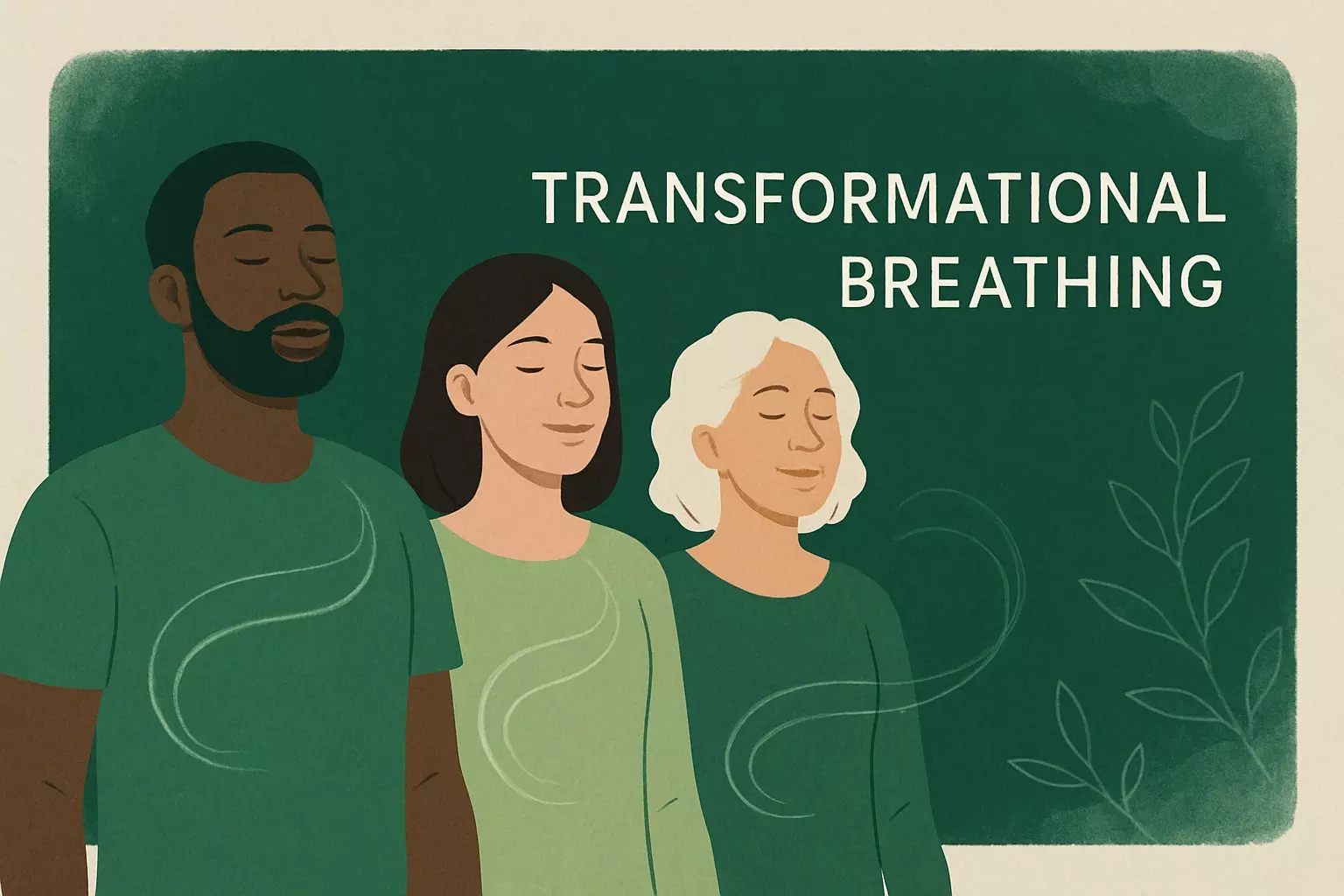
The Ultimate Guide to Transformational Breathing: Benefits, Techniques & How to Get Started
Source: https://biodynamicbreath.com/blogs/transformational-breathing/
Breath is life—and when used consciously, it becomes a tool for deep healing, growth and transformation. According to the BBTRI guide, transformational breathing offers a pathway to connect mind, body and spirit in ways that more conventional practices may not reach. (BBTR Institute)
In this post, we’ll explore what transformational breathing is, how it works, its core techniques, who it can benefit, how to practice it safely, and how to integrate it into daily life. Whether you’re new to breathwork or you’ve done sessions before and want to deepen your practice, this guide will give you a clear map forward.
Read: Breathwork Sessions for Trauma Release: A Complete Guide
What is Transformational Breathing?
Transformational breathing is a consciously guided breathwork practice that emphasises three core principles: rhythm, intention, and presence. (BBTR Institute)
Rather than the typical pause-after-inhale or pause-after-exhale, transformational breathing uses a connected, circular breathing pattern—meaning there is no gap between the inhale and the exhale. This creates a continuous flow of breath, allowing the body and nervous system to shift into a different state. (BBTR Institute)
It draws from ancient yogic and shamanic wisdom (where breath has long been a bridge between body and spirit) and has evolved through modern psychological, neuroscientific and therapeutic insights. (BBTR Institute)
How Transformational Breathing Works
At its core, the technique uses diaphragmatic breathing (engaging belly, rib-cage, chest) plus the continuous flow pattern to activate deeper physiological processes. (BBTR Institute)
Here’s what happens:
- Increased oxygenation — The deeper, fuller breaths bring more oxygen into the body, supporting cellular repair, energy, and vitality. (BBTR Institute)
- Nervous system regulation — The rhythm and sustained breathing help balance the sympathetic (“fight or flight”) and parasympathetic (“rest and digest”) branches, which can support deep relaxation, emotional release and higher resilience. (BBTR Institute)
- Patterns of tension/emotion being drawn into awareness — Because you’re engaging the breath continuously and deeply, physical tensions, stored emotions and subtle body-signals that had been unconscious often begin to surface. This gives opportunity for release or transformation. (BBTR Institute)
- Mind-body-spirit bridging — The practice creates a context in which insights, imagery or shifts in consciousness can arise. It’s not only about stress relief, but about growth, self-discovery and integration. (BBTR Institute)
Who Can Benefit?
Transformational breathing is accessible to many—but as with any powerful practice, you’ll want to move at your own pace and recognise limits. The BBTRI guide mentions it’s suitable for people of all backgrounds—especially those seeking stress relief, emotional healing or more vitality in life. (BBTR Institute)
Some specific benefits reported include:
- Reduced anxiety, improved mood, greater emotional clarity. (BBTR Institute)
- More energy and vitality: the enhanced breathing supports physical well-being. (BBTR Institute)
- Personal growth: deeper self-awareness, shifts in perspective, improved connection with self and others. (BBTR Institute)
That said, it’s not a substitute for medical or psychological treatment where needed. If you have cardiovascular conditions, significant mental-health issues, epilepsy, or are pregnant, you should proceed with guidance. (BBTR Institute)
Core Techniques of Transformational Breathing
Here are some of the key methods outlined:
1. The Three-Stage Breath
This method invites you to breathe in three parts: belly (diaphragm), then chest/rib cage, then exhale fully—ensuring full engagement of the respiratory system. (BBTR Institute)
Use a comfortable posture (sitting upright or lying down), keep the spine open, and allow the full exhale to release tension.
2. Conscious Connected Breathing
The hallmark of the practice: inhale and then exhale without pause. The rhythm becomes a continuous loop. This enables deeper flow and helps bypass habitual holding patterns. (BBTR Institute)
With this rhythm, you may begin to notice sensations, thoughts or emotions arising—let them move through you rather than resisting.
3. Sound & Movement Integration
Many transformational breathing sessions incorporate sound (toning, humming, sighs) and gentle movement (rocking, tapping, spontaneous expression) to assist emotional release and somatic decoding. (BBTR Institute)
These elements help the body to express what the breath is stirring.
4. Breath Holds and “Super-Ventilation”
In some sequences you may include brief holds (after inhale or exhale) or more rapid breathing phases (“super-ventilation”) to activate energy flow and facilitate release. (BBTR Institute)
These must be done with awareness and safety in mind.
5. Directional & Expansive Breathing
This invites you to “send” the breath to specific body areas (gut, heart region, ribcage) or to allow your torso to fully expand with each inhale—enhancing embodiment and resource building. (BBTR Institute)
How to Practice: Step-By-Step Guide
Here’s a suggested sequence for getting started—adaptable for a 10-20 minute session:
Preparation
Set your space: quiet room, comfortable surface (mat/blanket), optional eye-mask or bolster. Make sure you won’t be disturbed. Choose an intention: e.g., “I open to clarity”, or “I release what no longer serves”. (BBTR Institute)
Begin Practice
- Lie down or sit upright with relaxed spine.
- Start with a body scan: notice tension, allow conscious relaxation with each exhale.
- Move into the three-stage breath: inhale belly → rib cage/chest → exhale full.
- Transition into connected breathing: remove pauses between inhale & exhale; maintain rhythm.
- Optional: integrate sound (a gentle sigh, humming) or movement (rocking, tapping).
- Stay with this for the selected duration (10–20 min at start). Observe what arises: emotions, sensations, images. Let them flow—not forcing anything.
Return & Integration
- Gently allow your breathing to return to normal pace.
- Spend a few minutes lying/sitting quietly: notice your body, heartbeat, energy.
- Journal any reflections: what did you notice, what shifted?
- Take a few moments of grounding (e.g., feel your body on the floor, hold a warm drink, go outside).
- Honour the practice: it doesn’t end when the timer stops. Integration is key. (BBTR Institute)
Tips for Beginners
Start short (5–10 minutes) and build gradually. Consistency matters more than duration. Stay comfortable—never force deep breath or hold beyond your capacity. If dizziness or discomfort arises, ease back. Journal your experience and revisit what you notice week-to-week. (BBTR Institute)
Integrating Into Daily Life
Transformational breathing isn’t just a “session” practice—it can become a way of life. The guide suggests:
- Morning: short session (5–10 min) to set tone for the day.
- Midday: quick breath reset when stress or tension appears.
- Evening: mindful breathwork to release, reflect and prepare for rest. (BBTR Institute)
- Combine with other practices (yoga, meditation, walking in nature) for added effect.
- Use journaling and self-reflection to track shifts in mood, energy, insight.
- Consider workshops, guided classes or retreats when you want deeper immersion.
Safety & Contraindications
While beneficial, transformational breathing comes with important considerations. You should always ensure you’re safe to practice, especially if:
- You have heart or circulatory conditions, high blood pressure.
- You have epilepsy or seizure history, are pregnant, or recovering from major surgery.
- You are dealing with severe psychiatric conditions (complex PTSD, psychosis) without professional guidance.
- BBTRI emphasises the importance of trauma-informed facilitators, a safe container and listening to your body. (BBTR Institute)
- Start gently, move at your pace, and if strong emotions arise, consider integration support (therapist, facilitator, safe community).
Read: How long does a Mesotherapy session take?
Final Thoughts
Transformational breathing is more than a trend—it’s an invitation to deeper connection with your breath, body and life. Through rhythm, intention and presence you open a doorway to healing, clarity and vitality.
Start small. Stay gentle. Trust the process. Over time, as you integrate the practice into daily life, you may discover subtle but profound shifts: more ease, more energy, more embodied presence.
If you’re ready to explore this path, you’re not alone. You’ll find a community of practitioners, guided sessions and resources waiting to support you.
Contact Info
Biodynamic Breathwork & Trauma Release Institute (BBTRI)
Website: https://biodynamicbreath.com (BBTR Institute)
Email: [email protected] (BBTR Institute)