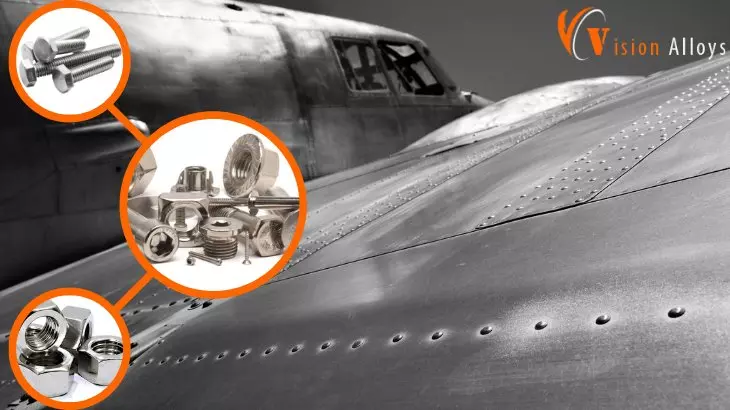
The Importance of Aircraft Fasteners in Aerospace Manufacturing
In the aerospace industry, every component of an aircraft must perform flawlessly under extreme conditions.
While engines, avionics, and flight control systems often receive the most attention, one of the most critical elements in aircraft construction is often overlooked — aircraft fasteners.
These small yet essential components play a major role in maintaining structural integrity, ensuring passenger safety, and supporting the long-term reliability of modern aircraft.
From commercial airliners to military jets and spacecraft, aircraft fasteners are fundamental to aerospace manufacturing and assembly processes.
What Are Aircraft Fasteners?
Aircraft fasteners are specialized hardware components used to join or secure different parts of an aircraft structure. Unlike conventional fasteners used in standard industrial applications, aerospace fasteners are engineered to withstand:
- Extreme temperature variations
- High vibration levels
- Heavy structural loads
- Pressure fluctuations
- Corrosion exposure
- Continuous fatigue stress
These fasteners are manufactured with exceptional precision and must comply with strict aerospace quality and safety standards.
Common types of aircraft fasteners include:
- Rivets
- Bolts
- Screws
- Nuts
- Lockbolts
- Pins
- Hi-lock fasteners
- Blind fasteners
Each type serves a specific purpose depending on the aircraft system or structural requirement.
Why Aircraft Fasteners Are Critical in Aerospace Manufacturing
1. Ensuring Structural Integrity
Aircraft structures experience tremendous aerodynamic forces during takeoff, flight, and landing. Fasteners help distribute these loads evenly across the airframe, preventing structural failures.
A single commercial aircraft may contain millions of fasteners, all working together to secure:
- Wings
- Fuselage sections
- Engine components
- Landing gear assemblies
- Interior structures
Even a minor fastener failure can compromise aircraft safety and operational performance.
2. Supporting Lightweight Aircraft Design
Modern aerospace engineering focuses heavily on reducing aircraft weight to improve fuel efficiency and reduce emissions. Aircraft fasteners are specifically designed to provide maximum strength while minimizing added weight.
Manufacturers often use advanced materials such as:
- Titanium
- Aluminum alloys
- Stainless steel
- Nickel-based alloys
- Composite-compatible fasteners
These materials provide excellent strength-to-weight ratios that support lightweight aerospace structures.
3. Improving Fatigue Resistance
Aircraft components endure repeated cycles of stress and vibration throughout their service life. Standard industrial fasteners may fail under such demanding conditions, but aerospace fasteners are engineered for superior fatigue resistance.
Proper fastener selection helps:
- Reduce crack propagation
- Prevent loosening under vibration
- Extend aircraft service life
- Improve long-term structural durability
This is particularly important in high-stress areas such as wings and engine mounts.
4. Corrosion Protection in Harsh Environments
Aircraft operate in highly corrosive environments, including humidity, rain, salt exposure, and extreme altitude conditions. Corrosion-resistant fasteners help maintain aircraft reliability and reduce maintenance costs.
Protective coatings and corrosion-resistant materials are commonly used to ensure long-term performance in demanding aerospace environments.
Common Applications of Aircraft Fasteners
Aircraft fasteners are used throughout nearly every section of an aircraft, including:
Airframe Assembly
Fasteners secure fuselage panels, wing structures, tail sections, and floor assemblies.
Engine Systems
High-temperature fasteners are used in turbine engines and exhaust systems where heat resistance is essential.
Interior Components
Seats, overhead bins, cabin panels, and cockpit equipment rely on precision fastening systems.
Avionics and Electrical Systems
Specialized fasteners help secure sensitive electronic systems while minimizing vibration-related damage.
Landing Gear Assemblies
Heavy-duty fasteners provide strength and reliability for landing gear operations under extreme loads.
The Role of Precision Manufacturing
Precision is essential in aerospace manufacturing. Aircraft fasteners must meet extremely tight tolerances to ensure proper fit, alignment, and performance.
Manufacturing processes often include:
- CNC machining
- Heat treatment
- Surface coating
- Non-destructive testing
- Dimensional inspection
- Quality certification
Aerospace manufacturers follow strict standards such as:
- AS9100
- NAS specifications
- MS standards
- FAA regulations
These standards help ensure consistency, traceability, and safety throughout the aerospace supply chain.
Read: Industrial Computed Tomography in Aerospace, Automotive, and
Challenges in Aircraft Fastener Selection
Selecting the right fastener involves several engineering considerations, including:
- Load requirements
- Material compatibility
- Corrosion resistance
- Temperature exposure
- Accessibility for maintenance
- Weight limitations
- Vibration resistance
Improper fastener selection can lead to structural damage, maintenance issues, or safety risks.
As aerospace technologies continue to evolve, manufacturers are also developing advanced fastening solutions for:
- Composite aircraft structures
- Electric aircraft
- Spacecraft applications
- High-speed aviation systems
Emerging Trends in Aerospace Fasteners
The aerospace industry continues to innovate fastener technology to support next-generation aircraft designs.
Key trends include:
Smart Fasteners
Integrated sensors may help monitor structural stress and maintenance needs in real time.
Lightweight Composite Fasteners
New materials are being developed for compatibility with carbon fiber aircraft structures.
Automated Fastening Systems
Robotics and automation are improving assembly precision and production efficiency.
Advanced Coatings
Modern coatings improve corrosion resistance and reduce maintenance requirements.
Conclusion
Although small in size, aircraft fasteners are among the most important components in aerospace manufacturing. They provide the structural strength, reliability, and safety required for modern aircraft to operate under extreme conditions.
As aerospace engineering continues advancing toward lighter, smarter, and more efficient aircraft, the importance of high-performance fastening systems will only continue to grow.
From structural assembly to vibration resistance and corrosion protection, aircraft fasteners remain a critical foundation of aviation safety and performance.
For aerospace manufacturers, investing in quality fasteners and precision assembly processes is essential for maintaining reliability, regulatory compliance, and long-term operational success.