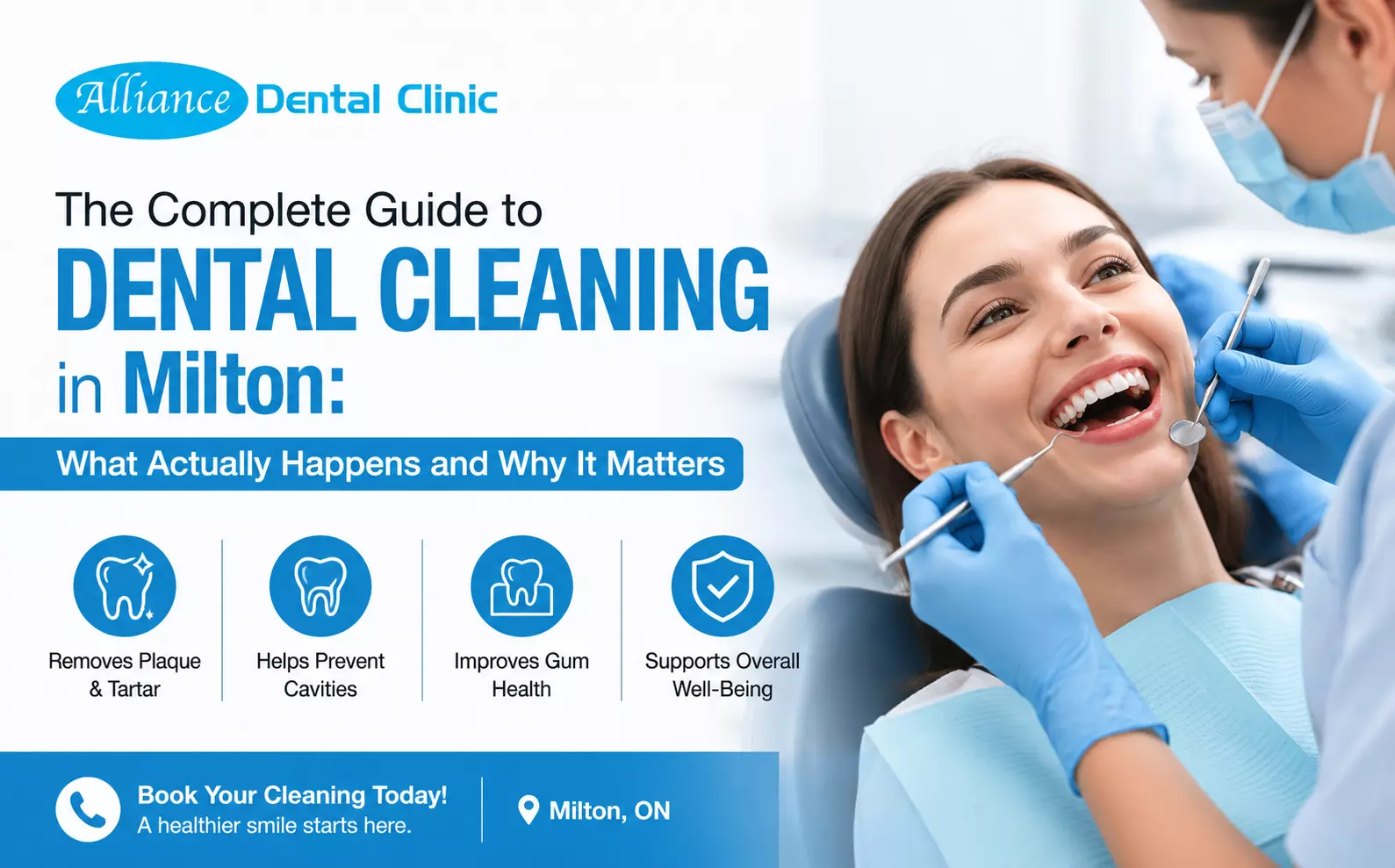
The Complete Guide to Dental Cleaning in Milton: What Actually Happens and Why It Matters
A professional dental cleaning in Milton typically takes 45–60 minutes and involves plaque and tartar removal, polishing, and a fluoride treatment, performed by a licensed dental hygienist.
Most adults benefit from a cleaning every six months, though patients with gum disease or high plaque buildup may need visits every three to four months.
The procedure is not just cosmetic — it's one of the most effective ways to prevent gum disease, cavities, and eventual tooth loss.
This guide breaks down what happens during a cleaning, why it's more clinically important than most people assume, and how to choose the right frequency for your own mouth.
Why Routine Cleanings Are More Than a "Polish"
Most people think of a dental cleaning as cosmetic upkeep — something that makes teeth look brighter. In reality, the primary goal is bacterial control.
Plaque is a soft, sticky biofilm that forms on teeth within hours of eating. If it isn't removed, it hardens into tartar (calculus) within 24–72 hours, and tartar can no longer be removed by brushing alone.
Once tartar builds up below the gumline, it triggers an inflammatory response. This is how gingivitis — the earliest stage of gum disease — begins. Left untreated, gingivitis can progress to periodontitis, a condition that damages the bone and connective tissue holding teeth in place.
According to the Canadian Dental Association, periodontal disease affects a significant portion of Canadian adults over 35, and much of it is preventable through consistent professional cleanings.
The Hidden Link Between Gum Health and Overall Health
Research over the past two decades has connected periodontal inflammation to systemic conditions, including cardiovascular disease and complications with diabetes management.
The mouth isn't an isolated system — chronic oral bacteria can enter the bloodstream and contribute to inflammation elsewhere in the body. This is one reason dental professionals increasingly frame cleanings as a health-maintenance visit, not a cosmetic one.
Read: How Teeth Scaling and Polishing Help Keep Your Smile Healthy
What Happens During a Professional Cleaning
Step 1: Physical and Visual Examination
Before any tools touch your teeth, the hygienist checks for visible signs of gum disease, cavities, or other concerns using a small mirror. In many Milton clinics, this step is paired with digital charting so any changes since your last visit are tracked over time.
Step 2: Scaling — Removing Plaque and Tartar
Using either a manual scaler or an ultrasonic device, the hygienist removes plaque and tartar from the tooth surface and just beneath the gumline.
Ultrasonic scalers use vibration and a fine water spray to break up deposits, which tends to be faster and more comfortable than manual scaling alone.
Step 3: Polishing
A gritty prophylaxis paste is applied with a rotating rubber tool to smooth the tooth surface and remove surface stains from coffee, tea, or wine. Polishing doesn't remove tartar — it's a finishing step after scaling.
Step 4: Flossing and Rinsing
The hygienist flosses between every tooth to catch anything the scaler missed, then rinses away debris.
Step 5: Fluoride Treatment (Optional but Recommended)
A fluoride gel, foam, or varnish is applied to strengthen enamel and reduce cavity risk, particularly useful for patients prone to decay.
How Often Should You Get a Dental Cleaning?
The standard recommendation is every six months, but this isn't a universal rule. Several factors affect ideal frequency:
- Gum disease history — Patients with periodontitis often need cleanings every 3–4 months to keep inflammation under control.
- Smoking or tobacco use — Tobacco accelerates tartar buildup and impairs healing, often warranting more frequent visits.
- Diabetes — Blood sugar fluctuations affect gum tissue healing and infection resistance.
- Orthodontic appliances — Braces and retainers create more surfaces for plaque to hide.
- Pregnancy — Hormonal changes increase susceptibility to "pregnancy gingivitis."
If you're unsure which category you fall into, a hygienist can assess your gum pocket depths and plaque levels at your next visit and recommend a personalized interval —
patients researching this can find a detailed breakdown of what a customized preventive schedule looks like in this dental cleaning milton resource, which outlines how clinics tailor recall intervals based on individual risk factors.
Common Myths About Dental Cleanings
"If my teeth don't hurt, I don't need a cleaning."
Gum disease is often painless in its early stages. By the time discomfort appears, damage may already be underway.
"Cleanings make teeth more sensitive, so I should skip them."
Mild sensitivity after a cleaning is temporary and usually indicates that tartar covering exposed root surfaces has been removed — not that damage was caused.
"Whitening toothpaste replaces the need for professional cleaning."
Whitening toothpaste addresses surface stains only. It cannot remove hardened tartar or reach below the gumline.
Signs You May Be Overdue for a Cleaning
- Bleeding gums when brushing or flossing
- Persistent bad breath despite good oral hygiene
- Visible tartar buildup near the gumline
- Gums that appear red, swollen, or receding
- A change in bite or tooth spacing
If any of these apply, scheduling a visit sooner rather than waiting for the six-month mark is generally the safer choice.
Choosing a Dental Provider in Milton
When selecting a clinic for routine cleanings, look for a few practical markers of quality care: hygienists who explain findings clearly rather than rushing through the appointment, use of digital charting to track changes over time, and a clinic that discusses personalized recall intervals rather than defaulting everyone to the same six-month schedule.
Final Thoughts
A dental cleaning is a small, recurring investment that prevents far larger problems — both in the mouth and, potentially, in overall health.
Understanding what happens during the appointment, and how often you personally need one, puts you in a better position to protect your long-term oral health rather than treating cleanings as an afterthought.