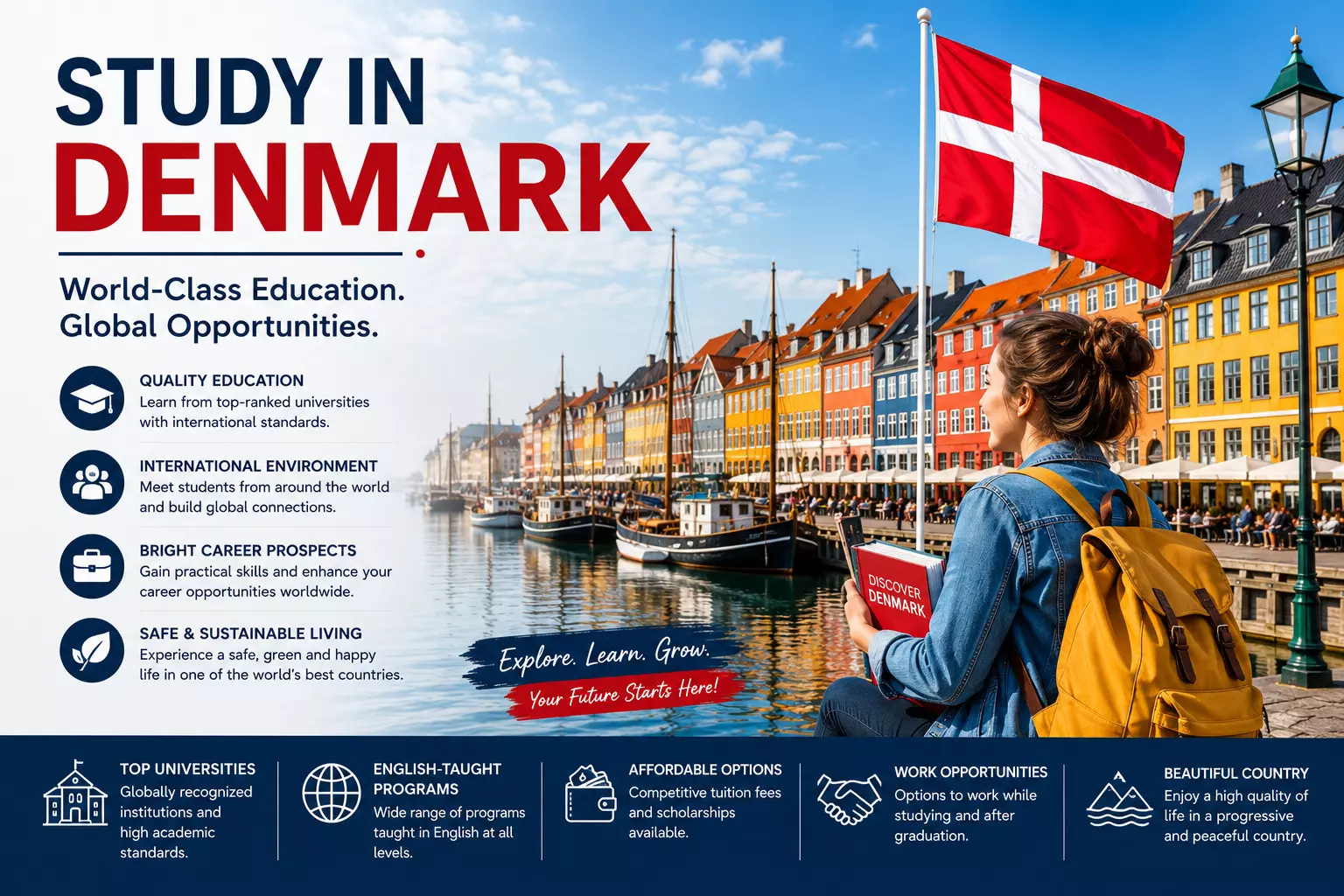
Scholarships in Denmark: Making Your Study Abroad Plans More Practical
Studying abroad can be an exciting goal, but financial planning often becomes one of the biggest parts of the decision. Tuition, accommodation, food, transportation, and everyday expenses all need to be considered before applying.
For students planning to Study in Denmark, understanding available funding options can make the overall planning process more organised.
Denmark is known for its modern approach to higher education, and international students can find programmes across areas such as engineering, technology, business, design, life sciences, and social sciences.
However, scholarship availability and eligibility vary depending on the university, programme, nationality, and level of study.
Understanding Scholarships in Denmark
Scholarships in Denmark are not a single nationwide benefit available to every international student. Different universities and funding programmes have their own eligibility rules, application procedures, and deadlines.
Some scholarships may cover part or all of tuition fees, while others can include financial support for living expenses. In certain cases, funding may be offered as a tuition-fee waiver rather than direct financial assistance.
This is why students should always read the official scholarship conditions carefully before applying.
Who Can Apply?
Eligibility depends on the specific scholarship. Some opportunities are aimed at highly qualified international students, while others are linked to particular programmes or partnerships.
Academic performance may be considered, but it is not necessarily the only factor. Depending on the opportunity, universities may also look at the student's academic background, programme choice, motivation, and other application requirements.
Students should avoid assuming that admission to a Danish university automatically means they will receive a scholarship. Admission and funding are often separate processes.
Study in Denmark for Indian Students
For students planning to Study in Denmark for Indian Students, financial preparation should begin well before the application deadline.
Indian applicants should first identify programmes that match their academic background and then check whether those programmes offer scholarships or tuition-fee waivers.
It is also important to understand the difference between university-specific funding and broader scholarship schemes. The eligibility conditions, documents, and deadlines can be completely different.
A useful approach is to create a simple spreadsheet containing:
- University and programme name
- Tuition fee
- Scholarship name
- Eligibility criteria
- Application deadline
- Required documents
- Scholarship coverage
- Application method
This can make the funding search much easier to manage.
Universities in Denmark and Funding Options
When researching Universities in Denmark, students should check each institution's official scholarship and tuition information. Funding may be connected to specific master's programmes, faculties, or international student categories.
Some institutions automatically consider eligible applicants for certain awards, while others require a separate scholarship application. The process can therefore differ significantly from one university to another.
Students should also check whether a scholarship is renewable and whether maintaining a particular academic standard is required.
English-Taught Courses and Scholarships
One reason Denmark attracts international applicants is the availability of programmes taught in English. Students can find English-language programmes at different levels and across various academic disciplines.
However, finding an English-Taught Course in Denmark does not automatically mean that the programme comes with funding. Students should check the programme's fee structure and scholarship opportunities separately.
Before applying, it is useful to confirm the language requirement as well. Universities may ask applicants to provide recognised proof of English proficiency depending on their educational background and programme.
Read: My Daily Routine While Preparing for the SSE-Engineer
Scholarships for Master's Students
Students considering Masters in Denmark should pay particular attention to university-specific funding. Many scholarship opportunities for international students are connected to full-degree master's programmes.
A master's applicant should research funding at the same time as researching the programme itself. Waiting until after receiving an admission offer may mean missing an earlier scholarship deadline.
Applicants should also consider the total cost of studying and living in Denmark rather than focusing only on tuition. Even with a tuition waiver, students may still need sufficient funds for accommodation, food, transportation, insurance, and other expenses.
Planning Your Budget
A scholarship can reduce financial pressure, but students should still prepare a complete budget. Monthly expenses can vary depending on the city, accommodation choice, lifestyle, and personal needs.
A practical budget should include:
- Tuition fees
- Accommodation
- Food and groceries
- Local transportation
- Health and insurance-related expenses
- Study materials
- Mobile and internet costs
- Personal and leisure expenses
Having an emergency fund is also sensible because unexpected expenses can arise during an international study experience.
How to Improve Your Scholarship Application
There is no universal formula for receiving a scholarship, but a well-prepared application can help present your academic background clearly.
Start by reading the scholarship criteria carefully. Prepare your documents early and make sure your academic history, motivation, and future goals are presented consistently across the application.
If a motivation letter is required, avoid using generic statements. Explain why the particular programme fits your academic interests and how it connects with your future plans.
Most importantly, follow the university's instructions exactly. Missing a required document or deadline can affect an otherwise strong application.
Don't Choose a University Only Because of Funding
Financial support is important, but it should not be the only factor behind a university decision. The programme curriculum, teaching approach, location, academic facilities, student support, and future plans should also be considered.
A scholarship that covers part of the cost may not necessarily make a programme affordable if living expenses are significantly higher than expected. Looking at the complete financial picture gives students a more realistic understanding of their options.
Final Thoughts
For students who want to Study in Denmark, scholarships can help make international education more financially manageable, but each opportunity comes with its own rules and conditions.
Researching Scholarships in Denmark alongside tuition, living costs, university requirements, and programme details can help students plan their study-abroad journey with greater confidence.