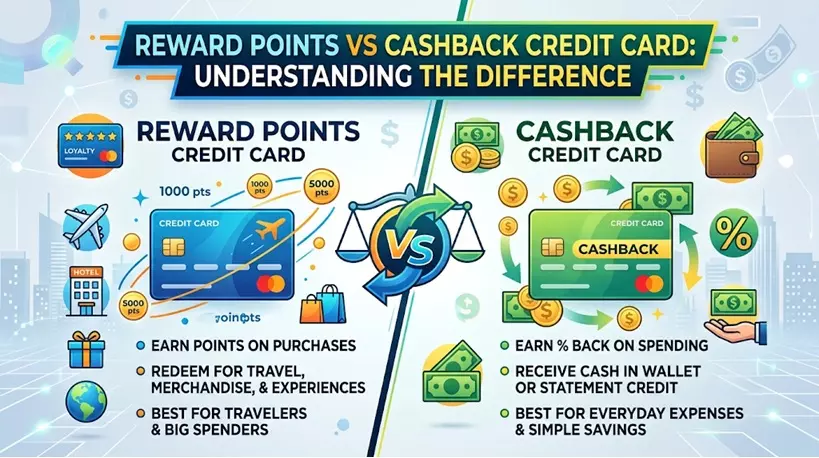
Reward Points vs Cashback Credit Card: Understanding the Difference
Credit cards have become an essential financial tool for managing everyday expenses while earning valuable benefits on purchases.
Among the most popular reward structures offered by issuers are reward points and cashback programmes. While both options provide savings and added value, they function differently and cater to distinct spending preferences.
For individuals evaluating a cashback credit card, understanding how cashback compares with reward points can help determine which option offers greater value based on personal spending habits. Additionally, knowing the various cashback credit card benefits available can make the card selection process more effective.
What is a cashback credit card?
A cashback credit card rewards cardholders by returning a percentage of their eligible spending as cashback. Instead of earning points that require redemption, users receive direct monetary value that may be credited to their account or adjusted against outstanding balances.
One of the primary this credit card benefits is simplicity. Cardholders can easily understand the value earned on transactions without having to calculate conversion rates or redemption values.
What Are Reward Points?
Reward points are loyalty incentives earned on eligible credit card transactions. The accumulated points can typically be redeemed for various products and services, including:
- Gift vouchers
- Merchandise
- Travel bookings
- Hotel stays
- Statement credits
Unlike other credit cards, reward-based cards often provide flexibility in redemption options. However, the value of reward points may vary depending on how they are redeemed.
Key Differences Between Reward Points and Cashback
While both reward points and cashback help cardholders earn value on their spending, they differ significantly in how the rewards are earned, redeemed, and utilised.
Understanding these differences can help you choose a credit card that aligns with your spending habits and financial goals, allowing you to maximise the benefits offered by your card.
1. Nature of Rewards
A cashback credit card offers direct financial savings by returning a portion of spending to the cardholder.
Reward points, on the other hand, accumulate over time and must generally be redeemed through the issuer’s rewards programme.
For users seeking straightforward savings, cashback credit card benefits may be easier to understand and utilise.
2. Redemption Process
One of the major cashback credit card benefits is the minimal effort required for redemption. Cashback is often automatically credited or can be easily claimed.
Reward points may involve:
- Redemption thresholds
- Expiry dates
- Category-specific redemption options
As a result, some users may find cashback programs more convenient.
3. Flexibility
Reward points usually offer greater flexibility because they can be redeemed across multiple categories.
A cashback credit card primarily provides direct monetary value, which may appeal to users who prioritise immediate savings over lifestyle rewards.
4. Value Maximisation
In certain cases, reward points can provide a higher effective return when redeemed strategically for travel or premium benefits.
However, the predictable nature of cashback credit card benefits often makes cashback more attractive to users who prefer transparency and certainty.
Read: Credit Card Spends: Smart Habits to Stay Debt-Free
Who Should Choose a Cashback Credit Card?
A cashback credit card may be suitable for individuals who:
- Prefer direct and measurable savings
- Frequently spend on everyday purchases
- Want uncomplicated reward structures
- Value immediate returns on spending
The straightforward nature of cashback credit card benefits makes these cards particularly appealing to first-time credit card users and budget-conscious consumers.
Who Should Choose Reward Points?
Reward-point-based cards may be more suitable for users who:
- Spend significantly across multiple categories
- Travel frequently
- Enjoy redeeming rewards for experiences and merchandise
- Are willing to track and optimise redemption opportunities
Such users may be able to extract greater value from reward programs compared to standard cashback offerings.
Factors to Consider Before Choosing
When comparing reward points and a cashback credit card, consider the following:
- Spending Patterns: Identify the categories where you spend the most and evaluate potential returns.
- Redemption Preferences: Determine whether you prefer direct savings or flexible reward options.
- Ease of Use: Review how rewards are earned, tracked, and redeemed.
- Annual Fees: Assess whether the benefits justify the card’s associated costs.
Evaluating these factors can help maximise the value derived from available cashback credit card benefits or reward programmes.
In Conclusion, both reward points and cashback programmes offer valuable incentives for credit card users. A cashback credit card provides straightforward financial savings and easy redemption, while reward-point cards offer flexibility and the potential for enhanced value through strategic redemptions.
When selecting a card, it is important to evaluate spending habits, redemption preferences, and overall financial goals. By carefully comparing available options and understanding the available cashback credit card benefits, consumers can choose a credit card that delivers meaningful and long-term value.