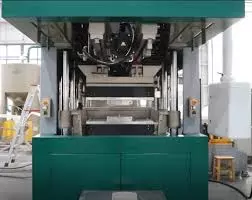
Reciprocating High-End Pulp Molding Machine for Sustainable Packaging Solutions
In today’s world, sustainable packaging is no longer a trend; it’s a necessity. With increasing environmental concerns and strict regulations against single-use plastics, businesses are seeking eco-friendly alternatives.
One of the most efficient solutions for producing biodegradable and recyclable packaging is the Reciprocating High-End Pulp Molding Machine.
This innovative technology allows manufacturers to create molded pulp products, such as trays, containers, and packaging inserts, efficiently and with minimal environmental impact.
By leveraging this machine, companies can not only reduce their carbon footprint but also meet growing consumer demand for sustainable products.
The Reciprocating High-End Pulp Molding Machine operates with advanced automation features that ensure high precision and uniformity in the molding process.
Unlike conventional molding equipment, the reciprocating mechanism ensures continuous, smooth production, significantly reducing waste and downtime.
These machines are designed to handle high-volume production without compromising quality, making them ideal for businesses looking to scale their sustainable packaging solutions.
With its ability to process recycled paper, cardboard, and other pulp materials, this machine is a cornerstone for industries committed to environmentally responsible manufacturing.
Advanced Technology Behind the Reciprocating High-End Pulp Molding Machine
The Reciprocating High-End Pulp Molding Machine stands out because of its advanced technological design. It incorporates a reciprocating mold mechanism that moves up and down during production, which ensures even distribution of pulp material and eliminates the risk of weak spots in molded products.
This precise movement is essential for creating high-quality packaging items that can support weight and resist deformation during transport and storage.
Moreover, these machines come with integrated control systems that allow operators to monitor production parameters, such as temperature, pulp consistency, and cycle time.
This automation reduces human error and ensures consistent output, which is vital for large-scale production. Manufacturers can also customize the machine to produce different shapes and sizes, making it versatile for a wide range of packaging applications.
The combination of automation, precision, and adaptability makes this machine a game-changer in the pulp molding industry.
Environmental Benefits of Using Reciprocating High-End Pulp Molding Machines
One of the most significant advantages of using a Reciprocating High-End Pulp Molding Machine is its contribution to sustainability.
Traditional plastic packaging contributes heavily to pollution and landfill waste. In contrast, molded pulp products created by these machines are biodegradable and can be recycled multiple times, providing a truly eco-friendly solution.
By adopting this technology, companies can significantly reduce their environmental impact while still delivering high-quality packaging.
In addition, these machines allow manufacturers to utilize recycled paper and cardboard, further promoting a circular economy.
The reduction in energy consumption and waste production also aligns with global environmental standards, making the Reciprocating High-End Pulp Molding Machine a preferred choice for green businesses.
Companies investing in this technology not only benefit the planet but also enhance their brand reputation among environmentally conscious consumers.
Applications in the Packaging Industry
The versatility of the Reciprocating High-End Pulp Molding Machine makes it suitable for various sectors. In the food industry, it produces trays, cups, and egg cartons that are fully biodegradable and safe for direct contact with food.
The machine’s precision ensures that these products maintain structural integrity, protecting contents during shipping and storage.
Additionally, it can create custom-designed packaging for electronics, cosmetics, and other delicate items, offering cushioning and protection without the use of plastic or foam.
Beyond food and electronics, this machine is also widely used in industrial packaging, such as pallets, partitions, and protective inserts.
Companies can adapt the molds to meet specific product requirements, ensuring safety and minimizing material waste. By providing a wide range of applications, the Reciprocating High-End Pulp Molding Machine enables businesses to transition to sustainable packaging solutions without compromising quality or efficiency.
Read: Choosing the Right Bitzer Compressor for Reliable Marine
Cost Efficiency and Productivity Advantages
Investing in a Reciprocating High-End Pulp Molding Machine is not only environmentally beneficial but also economically advantageous.
These machines are designed for high productivity, with fast cycle times and minimal downtime. The automated processes reduce labor costs while increasing output, making them a cost-effective solution for large-scale production.
Over time, the investment in this technology pays off through reduced material waste, lower energy consumption, and decreased reliance on expensive plastic packaging.
Furthermore, the durability and low maintenance requirements of these machines ensure long-term operational efficiency.
Businesses can run continuous production cycles with minimal interruptions, meeting high-volume demands without sacrificing quality.
The combination of sustainability, versatility, and cost efficiency makes the Reciprocating High-End Pulp Molding Machine an essential tool for companies aiming to lead in green packaging solutions while maintaining profitability.
Future of Sustainable Packaging with Reciprocating High-End Pulp Molding Machines
As global awareness of environmental issues grows, the demand for sustainable packaging solutions will continue to rise.
The Reciprocating High-End Pulp Molding Machine is at the forefront of this shift, enabling manufacturers to meet market demands while adhering to eco-friendly practices. With ongoing innovations in automation, energy efficiency, and material optimization, these machines are expected to become even more advanced and capable in the coming years.
Companies that adopt this technology early can gain a competitive advantage by offering environmentally responsible products that appeal to conscious consumers.
Moreover, as governments and organizations implement stricter sustainability regulations, businesses equipped with Reciprocating High-End Pulp Molding Machines will be well-positioned to comply and thrive.
The future of packaging lies in machines that combine efficiency, innovation, and sustainability, and the reciprocating high-end pulp molding machine embodies this vision perfectly.