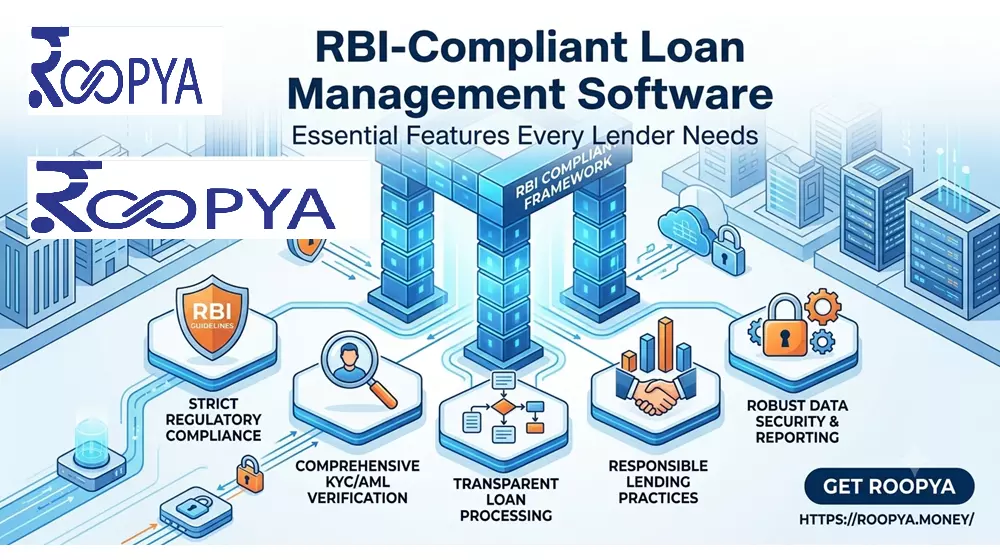
RBI-Compliant Loan Management Software: Essential Features Every Lender Needs
India's lending ecosystem has evolved rapidly over the past decade. Digital lending has become the preferred approach for banks, NBFCs, fintech companies, cooperative lenders, and microfinance institutions.
However, with this rapid growth comes increasing regulatory responsibility. The Reserve Bank of India (RBI) has introduced stringent regulations governing digital lending, KYC, customer consent, data privacy, audit trails, disclosures, and risk management. These guidelines make compliance an essential part of every lender's technology strategy.
Traditional loan management systems often struggle to keep pace with changing regulations. Manual processes, disconnected systems, spreadsheet-based operations, and legacy software increase compliance risks while slowing loan processing.
Modern Loan Management Software (LMS) solves these challenges by embedding compliance directly into lending workflows. A robust platform helps lenders automate loan origination, servicing, collections, reporting, and customer communications while maintaining adherence to RBI regulations.
Roopya provides a modern, no-code lending platform designed specifically for Indian lenders. The platform combines Loan Origination System (LOS), Loan Management System (LMS),
Business Rule Engine (BRE), AI-powered automation, and compliance-first architecture into a unified solution that supports banks, NBFCs, fintechs, and digital lenders.
Why RBI Compliance Matters
Regulatory compliance is no longer optional.
Failure to comply can result in:
- Financial penalties
- Regulatory scrutiny
- Customer complaints
- Reputational damage
- Operational disruptions
- Increased audit costs
RBI's digital lending framework emphasizes:
- Transparent borrower communication
- Explicit customer consent
- Secure handling of personal data
- Digital audit trails
- Fair lending practices
- Secure technology infrastructure
- Responsible outsourcing and lender oversight
A compliant Loan Management Software reduces operational risk by ensuring these controls are built into everyday processes.
Essential Features of RBI-Compliant Loan Management Software
1. Digital Loan Origination
An integrated Loan Origination System should support:
- Online applications
- Dynamic forms
- Automated eligibility checks
- Digital onboarding
- Workflow automation
- Multi-product lending
Automation reduces processing time while improving consistency across applications. Roopya's LOS supports configurable digital application journeys and automated decisioning.
2. Automated KYC & Identity Verification
Customer verification is central to compliance.
The software should support:
- Aadhaar verification
- PAN verification
- CKYC integration
- Video KYC
- OCR-based document extraction
- Automated validation
These capabilities help reduce fraud and accelerate onboarding while aligning with KYC requirements.
3. Consent Management
Borrower consent must be captured, stored, and traceable.
A compliant platform should:
- Record explicit consent
- Maintain timestamped logs
- Allow consent withdrawal where applicable
- Restrict unnecessary data collection
Proper consent management strengthens transparency and supports evolving privacy obligations.
4. Complete Audit Trails
Every user action should be logged, including:
- Loan approvals
- Credit policy changes
- Document uploads
- Login activity
- Interest modifications
- Collection actions
Comprehensive audit trails simplify internal reviews and regulatory inspections.
5. Business Rule Engine (BRE)
A configurable BRE enables lenders to automate:
- Eligibility rules
- Credit scoring
- Approval workflows
- Risk segmentation
- Pricing logic
- Exception handling
No-code configuration allows business teams to update policies without software redevelopment.
6. Secure Data Management
A compliant LMS should include:
- Encryption at rest
- Encryption in transit
- Role-based access control
- Multi-factor authentication
- Secure backups
- Data localization in India
Strong security protects borrower information and reduces operational risk.
7. Automated Loan Servicing
After disbursement, lenders need automation for:
- EMI schedules
- Interest calculations
- Prepayments
- Foreclosures
- Moratorium handling
- Penalty computation
- Customer servicing
Automated servicing improves accuracy while reducing manual work.
Read: Features of Modern Loan Origination Software
8. Collections Management
An advanced LMS should include:
- Automated reminders
- Collection workflows
- Promise-to-pay tracking
- Delinquency monitoring
- Agent allocation
- Settlement management
These capabilities improve recovery efficiency while maintaining standardized processes.
9. Regulatory Reporting
Modern lenders generate significant compliance reports.
Software should support:
- Portfolio reports
- Audit reports
- Regulatory exports
- Loan lifecycle reports
- Compliance dashboards
- Risk reports
Automated reporting saves time and improves accuracy.
10. Credit Bureau Integration
Integration with major bureaus enables:
- Instant credit pulls
- Credit history analysis
- Risk assessment
- Portfolio monitoring
Roopya supports integrations with leading credit bureaus for streamlined underwriting.
11. AI-Powered Automation
Artificial intelligence enhances:
- Fraud detection
- Document verification
- Credit scoring
- OCR
- Customer communication
- Workflow optimization
AI helps lenders improve speed without compromising governance.
12. No-Code Product Configuration
Business teams should be able to configure:
- Loan products
- Interest structures
- Charges
- Repayment methods
- Eligibility
- Workflows
without writing code.
13. API-First Architecture
Modern lending platforms integrate with:
- Payment gateways
- eSign providers
- KYC vendors
- Account Aggregators
- Credit bureaus
- CRM
- Core banking systems
An API-first approach simplifies ecosystem connectivity.
Benefits of RBI-Compliant Loan Management Software
Organizations adopting compliance-first lending platforms typically experience:
- Faster loan approvals
- Improved borrower experience
- Lower operational costs
- Reduced manual errors
- Better regulatory readiness
- Enhanced data security
- Improved productivity
- Scalable operations
- Stronger portfolio visibility
- Better decision-making through analytics
Why Choose Roopya?
Roopya is built specifically for Indian lending institutions, combining LOS and LMS in a unified platform with no-code configuration, AI-enabled workflows, 300+ integrations, role-based security, comprehensive audit trails, and support for RBI digital lending requirements.
The platform is continuously updated to reflect regulatory changes, helping lenders remain compliant while scaling efficiently.
Compliance is a strategic advantage rather than merely a regulatory obligation. A modern RBI-compliant Loan Management Software enables lenders to automate operations, strengthen governance, improve customer trust, and adapt to evolving regulations.
By choosing a platform with built-in compliance, security, automation, and scalability, financial institutions can accelerate growth while maintaining confidence in their lending processes.
Frequently Asked Questions (FAQ)
1. What is RBI-compliant Loan Management Software?
It is a lending platform designed to support lending operations while incorporating features that help financial institutions meet applicable RBI requirements, such as audit trails, customer consent management, secure data handling, KYC workflows, and regulatory reporting.
2. Why is RBI compliance important for lenders?
Compliance helps reduce regulatory risk, improves transparency, protects customer data, and supports responsible digital lending practices.
3. Does Roopya support RBI Digital Lending Guidelines?
Yes. Roopya states that its platform is built with compliance features aligned to RBI digital lending requirements, KYC workflows, audit trails, and data localization.
4. Can Loan Management Software automate KYC?
Yes. Modern platforms support digital KYC, PAN verification, Aadhaar-based verification, OCR, and Video KYC integrations.
5. What security features should an LMS include?
Encryption, role-based access control, audit logs, multi-factor authentication, secure hosting, and data localization are key features.
6. Can Roopya integrate with existing banking systems?
Yes. Roopya provides API-based integrations for core banking systems, payment gateways, credit bureaus, KYC providers, and other fintech services.
7. Who should use Loan Management Software?
Banks, NBFCs, fintech companies, housing finance companies, MFIs, cooperative lenders, and digital lending businesses.
8. How does automation improve compliance?
Automation standardizes workflows, maintains audit records, enforces business rules consistently, reduces manual errors, and simplifies reporting.