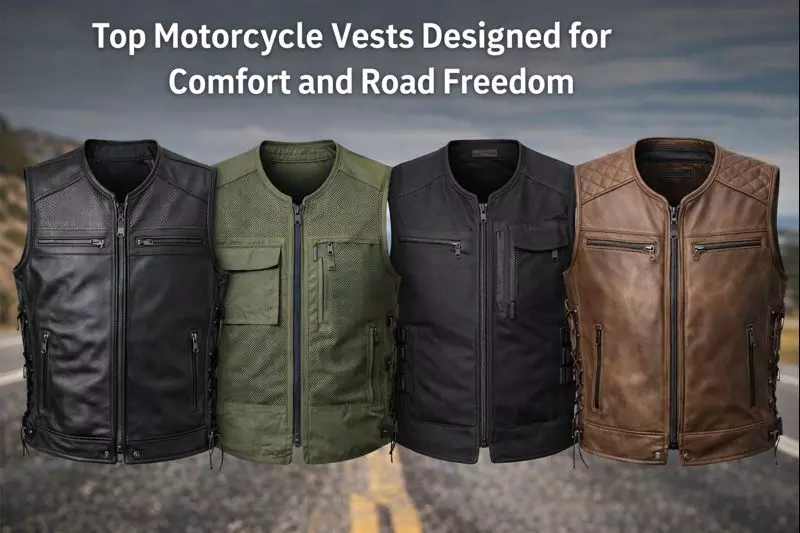
Top Motorcycle Vests Designed for Comfort and Road Freedom
Motorcycle vests are a core component of rider apparel, engineered to balance comfort, protection, and unrestricted movement.
Unlike full-sleeve jackets, motorcycle vests provide essential coverage to the torso while allowing greater airflow and mobility—qualities highly valued during long-distance touring, warm-weather riding, and urban cruising.
In professional riding contexts, vests are selected not only for style but for their functional role in layering systems, impact protection compatibility, and long-term durability.
This article provides a comprehensive, fact-driven examination of motorcycle vests, with a focused analysis of Men's
Motorcycle Vests and Women's Motorcycle Vests. It explains how these garments are designed, how they are used in real riding conditions, and what standards and best practices guide expert selection.
The goal is to equip readers with reliable, expert-level knowledge for informed decision-making and long-term riding safety.
Understanding Motorcycle Vests in Professional Riding Gear Systems
Motorcycle vests are sleeveless riding garments designed to protect the rider’s core while maximizing freedom of movement. In industry terms, they function as modular outerwear, meaning they can be worn independently or layered over base layers, hoodies, or armored jackets.
Key functional roles include:
- Core Protection: Shields the chest and back from wind, debris, and light abrasion.
- Mobility Optimization: Eliminates shoulder and arm restriction common in full jackets.
- Thermal Regulation: Allows airflow while maintaining warmth at the torso.
- Accessory Integration: Supports pockets, conceal-carry compartments, and back armor inserts in some designs.
According to general apparel design principles outlined in textile and garment engineering references such as Wikipedia’s overview of protective clothing, rider gear must balance ergonomics, material strength, and environmental adaptability—principles that directly inform motorcycle vest construction.
Materials and Construction Standards
Leather Motorcycle Vests
Leather remains a benchmark material due to its abrasion resistance and longevity. Full-grain and top-grain leather are commonly used in premium vests, offering:
- High tensile strength
- Natural wind resistance
- Long service life when properly maintained
Leather vests are widely used in cruiser and touring segments where durability and classic styling are prioritized.
Textile and Hybrid Vests
Textile vests utilize materials such as polyester, nylon, or Cordura® blends. These fabrics are engineered for:
- Reduced weight
- Improved ventilation
- Water-resistant or waterproof treatments
Hybrid designs may combine leather panels with textile sections to optimize both protection and airflow.
Men's Motorcycle Vests: Design, Use Cases, and Selection Criteria
Men's Motorcycle Vests are engineered around male riding ergonomics, accounting for shoulder width, torso length, and riding posture. In professional riding environments, these vests are commonly used by touring riders, club riders, and daily commuters.
Key Features
- Reinforced stitching at stress points
- Adjustable side laces or straps for fit tuning
- Multiple external and internal pockets for storage
- Compatibility with back armor inserts in select models
Practical Applications
Men’s motorcycle vests are frequently used for:
- Long-distance highway riding where arm fatigue reduction is important
- Warm-climate touring requiring airflow without sacrificing core protection
- Layered riding systems in variable weather conditions
Industry best practices recommend selecting a vest that fits snugly at the torso without restricting breathing or upper-body movement, especially when worn over additional layers.
Women's Motorcycle Vests: Purpose-Built Engineering and Fit
Women's Motorcycle Vests are not simply scaled-down versions of men’s designs. They are constructed using female-specific pattern grading to ensure proper fit, comfort, and safety.
Design Considerations
- Contoured shaping at the waist and chest
- Shorter torso lengths for proper riding posture
- Strategic seam placement to prevent pressure points
Functional Benefits
Women’s vests are widely used in both recreational and professional riding scenarios where comfort and mobility are critical. Proper fit improves:
- Stability at highway speeds
- Reduced garment shifting during riding
- Long-term comfort on extended rides
Experts emphasize that improper fit can compromise both comfort and protective performance, making gender-specific designs an essential consideration.
Comfort, Mobility, and Road Freedom
Motorcycle vests are favored for their ability to enhance road freedom—a term used in riding communities to describe unrestricted physical movement combined with essential protection. By removing sleeves, vests:
- Reduce upper-body heat buildup
- Improve shoulder articulation
- Allow seamless integration with gloves and arm protection
In warm-weather riding, vests are often paired with armored base layers to maintain safety while maximizing ventilation.
Expert Insights and Best Practices
Professional riders and gear specialists consistently recommend the following best practices:
- Material Matching: Choose leather for abrasion priority; textile for ventilation and weather adaptability.
- Layer Compatibility: Ensure the vest fits correctly over intended base layers.
- Functional Storage: Prioritize secure closures (snaps or zippers) to prevent pocket failure at speed.
- Maintenance Awareness: Leather requires conditioning; textiles benefit from periodic reproofing treatments.
These practices are rooted in long-term rider safety and gear longevity standards.
Read: Why Breathable Materials Matter in Motorcycle Safety Gear?
Common Mistakes and Misconceptions
Misconception 1: Motorcycle vests provide no protection
While not equivalent to full jackets, vests offer meaningful wind, debris, and abrasion resistance to the torso.
Misconception 2: One fit works for all riders
Improper fit reduces comfort and can cause garment instability at speed.
Misconception 3: Vests are only for style
In professional contexts, vests are selected primarily for mobility, layering efficiency, and thermal regulation.
Frequently Asked Questions (FAQs)
1. What is the primary purpose of a motorcycle vest?
The primary purpose is to protect the rider’s core while maximizing mobility and airflow.
2. Are motorcycle vests suitable for long-distance riding?
Yes. They are widely used in touring for reduced arm fatigue and improved comfort.
3. How should a motorcycle vest fit?
It should sit snugly against the torso without restricting breathing or movement.
4. Can motorcycle vests be worn year-round?
They are most effective in warm to moderate conditions and as part of a layered system in cooler weather.
5. Are leather vests safer than textile vests?
Leather offers superior abrasion resistance, while textile vests excel in ventilation and weight reduction.
6. Do women need gender-specific motorcycle vests?
Yes. Gender-specific designs ensure proper fit, comfort, and riding stability.
7. Can armor be added to motorcycle vests?
Some designs include pockets for back armor inserts, depending on the manufacturer.
8. How long does a quality motorcycle vest last?
With proper care, leather vests can last many years; textile vests depend on fabric quality and usage.
9. Are motorcycle vests appropriate for highway speeds?
Yes, when properly fitted and securely fastened.
10. How should motorcycle vests be maintained?
Leather requires conditioning; textile vests should be cleaned according to manufacturer guidelines.