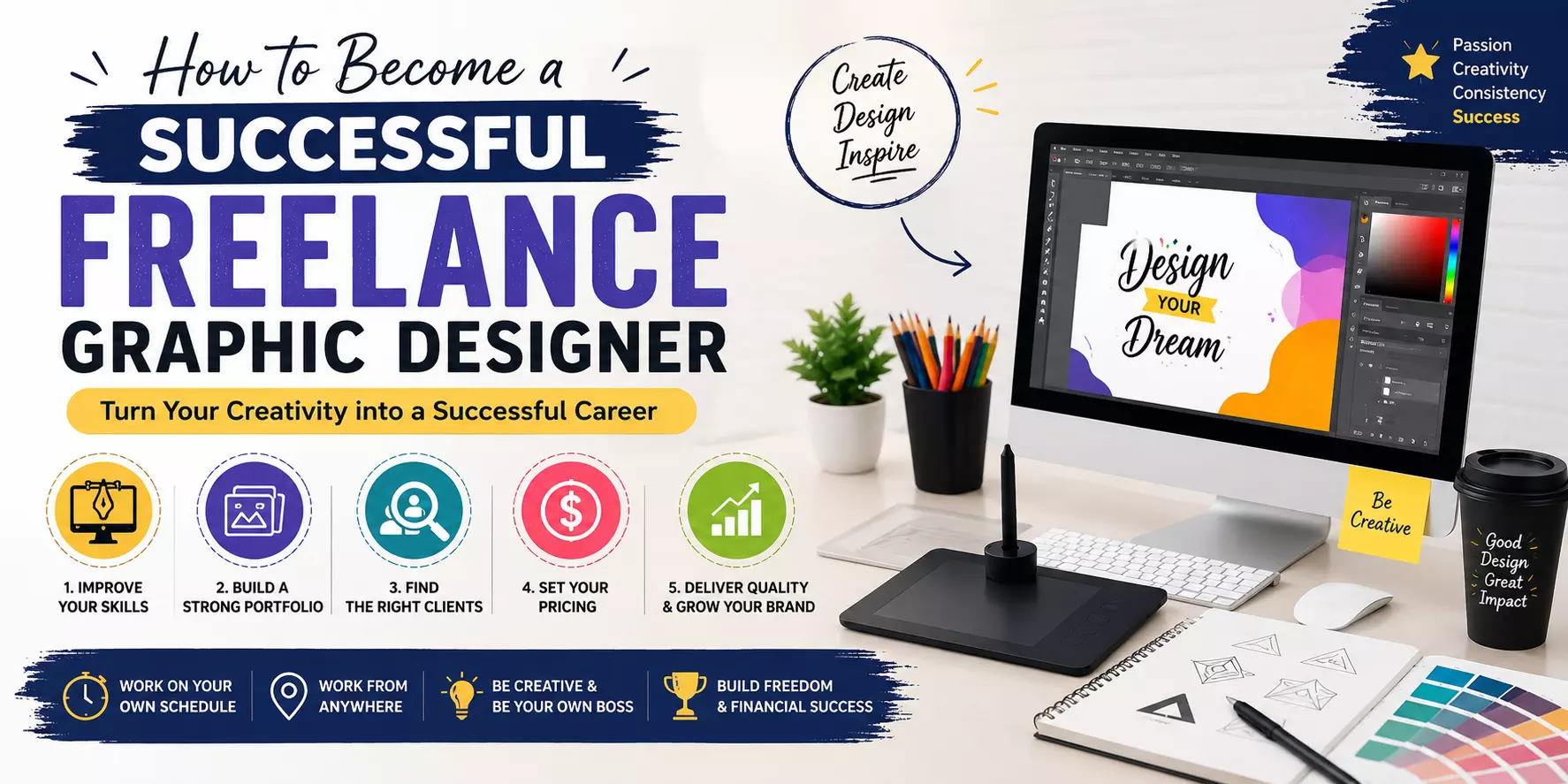
How to Become a Successful Freelance Graphic Designer
Freelancing has become one of the most popular career choices for creative professionals, and graphic design is no exception.
With businesses increasingly relying on visual content for branding, marketing, and communication, the demand for skilled freelance graphic designers continues to grow.
From designing logos and social media graphics to creating websites and marketing materials, freelance designers have countless opportunities to work with clients from around the world.
The best part about freelancing is the freedom it offers. You can choose your clients, set your own schedule, work from anywhere, and build a career based on your creativity and expertise.
However, becoming a successful freelance graphic designer requires more than just design skills. It involves building a strong portfolio, marketing your services, managing clients, and continuously improving your knowledge.
In this article, you'll learn practical steps to start and grow a successful freelance graphic design career.
What Does a Freelance Graphic Designer Do?
A freelance graphic designer creates visual content for businesses, organizations, and individuals on a project basis rather than working as a full-time employee. Freelancers may work with multiple clients simultaneously and handle a variety of design projects.
Common services include:
- Logo design
- Brand identity design
- Social media graphics
- Website and UI graphics
- Business cards and brochures
- Flyers and posters
- Packaging design
- Infographics
- Presentation design
- Digital advertisements
Freelance designers often collaborate with startups, marketing agencies, e-commerce businesses, and entrepreneurs.
Learn the Essential Graphic Design Skills
Before offering your services, build a strong foundation in graphic design principles.
Key skills include:
- Typography
- Color theory
- Layout and composition
- Branding
- Visual storytelling
- Image editing
- Design thinking
- Creativity and problem-solving
You should also become proficient in industry-standard design software such as:
- Adobe Photoshop
- Adobe Illustrator
- Adobe InDesign
- Canva
- Figma
- Adobe XD
Learning these tools will help you deliver professional-quality work and meet client expectations.
Build a Strong Portfolio
Your portfolio is your most powerful marketing tool. Potential clients want to see your design style, creativity, and problem-solving abilities before hiring you.
Include projects such as:
- Logo designs
- Branding projects
- Social media posts
- Website mockups
- Print designs
- Packaging designs
- Personal creative projects
If you're just starting and don't have client work yet, create sample projects for fictional brands or redesign existing designs as practice. Focus on quality rather than quantity, and explain the goals and outcomes of each project.
Choose Your Niche
Although many freelancers work on different types of projects, specializing in a niche can help you stand out from the competition.
Popular graphic design niches include:
- Brand identity design
- Social media design
- UI/UX design
- Packaging design
- Print design
- Motion graphics
- Illustration
- Presentation design
- E-commerce graphics
Choosing a niche allows you to develop expertise and attract clients looking for specialized skills.
Create Your Personal Brand
As a freelancer, you are your own brand. A professional online presence builds trust and helps attract clients.
Your personal brand should include:
- A professional logo
- Portfolio website
- LinkedIn profile
- Behance or Dribbble portfolio
- Professional social media accounts
- Consistent visual identity
Share your work regularly, post design tips, and engage with your audience to increase visibility.
Set Competitive Pricing
Pricing your services correctly is essential for long-term success.
You can charge clients using different pricing models:
- Hourly rates
- Fixed project pricing
- Retainer agreements
- Package-based pricing
When setting your rates, consider:
- Your experience
- Project complexity
- Time required
- Market demand
- Client budget
Avoid underpricing your work. Charge based on the value you provide rather than simply competing on cost.
Find Freelance Clients
One of the biggest challenges for beginners is finding clients. Fortunately, there are many ways to secure freelance projects.
Effective methods include:
- Freelance marketplaces
- LinkedIn networking
- Personal referrals
- Social media marketing
- Portfolio websites
- Cold email outreach
- Local businesses
- Digital marketing agencies
Building relationships and consistently showcasing your work can lead to repeat business and referrals.
Deliver Excellent Customer Service
Your reputation plays a significant role in your freelancing success.
Always:
- Respond promptly to client messages.
- Understand project requirements clearly.
- Meet deadlines consistently.
- Accept feedback professionally.
- Maintain clear communication throughout the project.
- Deliver organized, high-quality files.
Satisfied clients are more likely to leave positive reviews and recommend your services to others.
Read: What are the principles of visual hierarchy in graphic design?
Continue Learning and Improving
Graphic design trends and technology evolve constantly. Successful freelancers invest in continuous learning.
Stay updated by:
- Taking online courses
- Reading design blogs
- Following industry experts
- Watching tutorials
- Practicing new techniques
- Learning AI-powered design tools
Expanding your skills allows you to offer more services and remain competitive.
Develop Business Skills
Freelancing is more than designing graphics. You also need basic business and management skills.
Important areas include:
- Time management
- Client communication
- Project management
- Invoicing
- Contracts
- Negotiation
- Financial planning
- Marketing your services
Strong business skills help you build a sustainable freelance career.
Build Long-Term Client Relationships
Repeat clients provide a stable source of income and reduce the need to constantly search for new projects.
To encourage long-term partnerships:
- Deliver consistent quality.
- Meet deadlines.
- Be reliable and professional.
- Offer creative suggestions.
- Stay in touch after project completion.
- Provide excellent support.
Long-term clients often become your best source of referrals and ongoing work.
Common Challenges Freelance Graphic Designers Face
Freelancing comes with challenges, but planning ahead can help you overcome them.
Common challenges include:
- Finding regular clients
- Managing inconsistent income
- Handling multiple deadlines
- Dealing with revisions
- Balancing work and personal life
- Staying motivated
By building strong systems, improving your skills, and maintaining professionalism, you can successfully navigate these challenges.
Tips for Long-Term Freelancing Success
- Build a strong portfolio.
- Keep improving your design skills.
- Network consistently.
- Learn basic marketing.
- Create a professional online presence.
- Deliver projects on time.
- Ask clients for testimonials.
- Stay organized.
- Invest in quality tools.
- Never stop learning.
Success in freelancing comes from consistency, dedication, and delivering value to every client.
Conclusion
Becoming a successful freelance graphic designer is a journey that combines creativity, technical expertise, and business knowledge.
While mastering design software and visual principles is essential, long-term success depends on building a strong portfolio, developing a personal brand, communicating effectively with clients, and continuously improving your skills.
The growing demand for digital content means there has never been a better time to start a freelance graphic design career.
By focusing on quality work, maintaining professionalism, and building lasting client relationships, you can create a rewarding career with the flexibility to work on projects you enjoy and the opportunity to grow your income over time.
Frequently Asked Questions (FAQs)
1. How do I start freelancing as a graphic designer?
Start by learning graphic design fundamentals, mastering popular design tools, creating a professional portfolio, and promoting your services through networking, social media, and freelance platforms.
2. Do I need a degree to become a freelance graphic designer?
No. A degree is not mandatory. Clients usually value your portfolio, creativity, skills, and ability to deliver high-quality work more than formal qualifications.
3. Which software should freelance graphic designers learn?
Popular tools include Adobe Photoshop, Adobe Illustrator, Adobe InDesign, Figma, Canva, and Adobe XD. Learning multiple tools increases your versatility.
4. How can I get my first freelance graphic design client?
You can find your first client through freelance marketplaces, LinkedIn, referrals, social media, local businesses, or by reaching out to potential clients with a personalized portfolio and proposal.
5. Is freelance graphic design a good career?
Yes. Freelance graphic design offers flexibility, creative freedom, and strong earning potential. With consistent skill development and effective client management, it can become a successful and sustainable career.