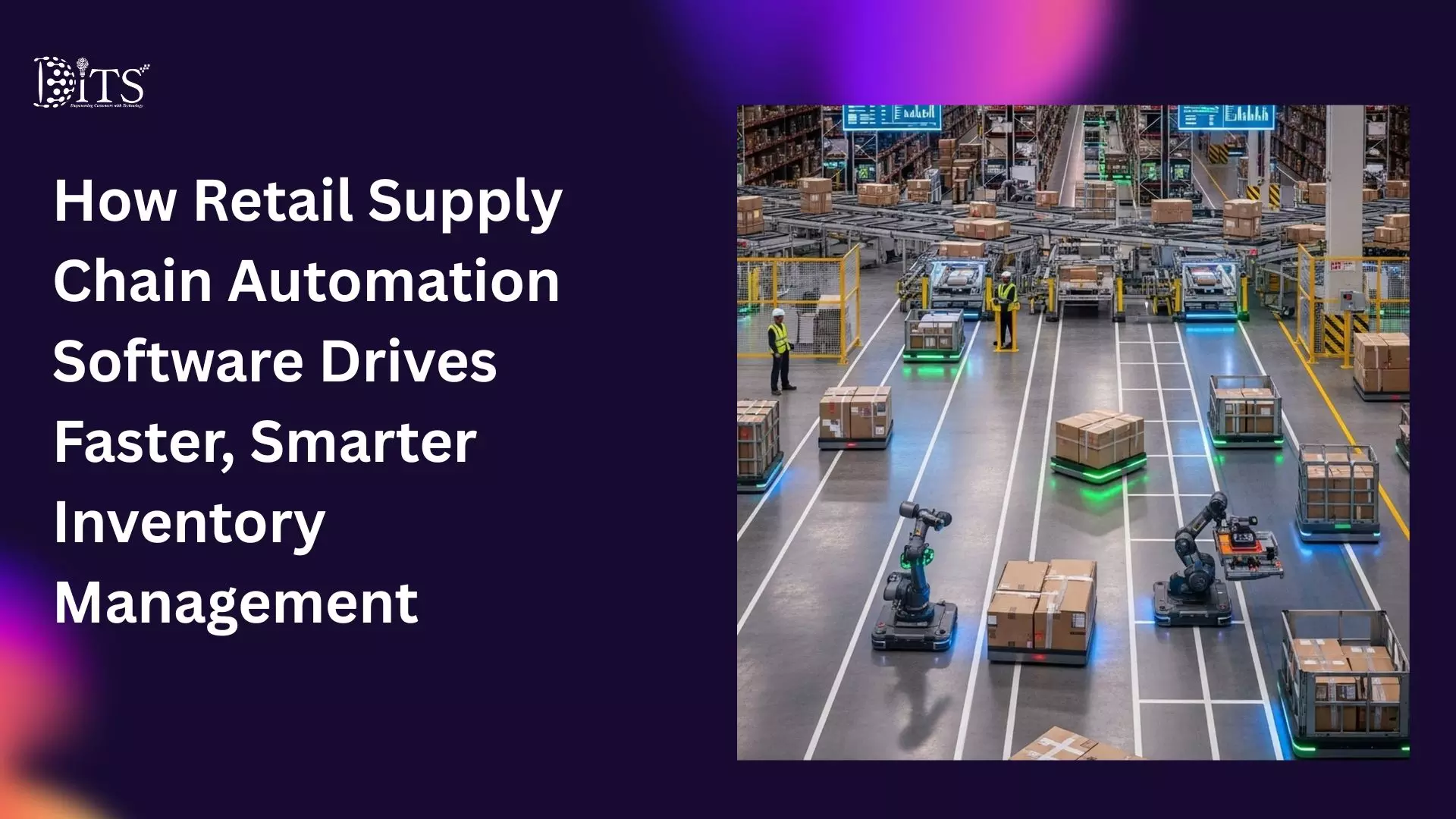
How Retail Supply Chain Automation Software Drives Faster, Smarter Inventory Management
In retail, speed isn’t just an advantage it’s survival. And automation is the engine powering the new retail economy.
Today’s retail landscape is more competitive than ever. Customer expectations are rising, supply chains are more complex, and businesses are under constant pressure to deliver products quickly, accurately, and cost-effectively. Traditional inventory management methods simply cannot keep up with this pace.
This is where retail supply chain automation software comes in — providing retailers with the tools to streamline operations, reduce errors, optimize stock levels, and make smarter decisions powered by real-time data.
In this blog, we explore how automation is transforming retail inventory management and reshaping the future of retail operations.
Why Manual Retail Processes Can’t Keep Up Anymore
Retailers operating with spreadsheets, manual stock checks, or disconnected systems often face:
- Stockouts and overstocks due to poor visibility
- Delayed replenishments
- Human errors during order processing
- Slow warehouse picking and fulfillment
- Lack of real-time reporting
- Inaccurate demand forecasting
These issues create operational bottlenecks, reduce profitability, and negatively affect customer satisfaction.
Automation eliminates these inefficiencies and creates a smarter, faster workflow from procurement to delivery.
How Retail Supply Chain Automation Software Improves Inventory Management
1. Real-Time Stock Visibility Across All Channels
Automation provides live data on stock levels across warehouses, stores, and online channels.
This means no more guessing — retailers know exactly what’s available, where it is, and when to restock.
2. Automated Replenishment That Prevents Stockouts
Instead of waiting for manual reorder checks, the system triggers automated replenishment based on:
- Sales trends
- Minimum stock thresholds
- Seasonal patterns
- Forecasted demand
This ensures shelves remain stocked without over-ordering.
3. Intelligent Forecasting Powered by Data
AI-driven automation software can analyze:
- Historical sales
- Seasonal demand
- Customer buying behaviour
- Market trends
This helps retailers plan smarter and reduce inventory waste.
4. Faster Warehouse Operations Through Automation
Automation accelerates warehouse functions such as:
- Picking
- Packing
- Sorting
- Labeling
- Order routing
This reduces human errors and speeds up fulfillment, enabling same-day or next-day delivery expectations.
Read: The Best Software for Water Delivery Management
5. Integrated Supplier & Order Management
With automated workflows, retailers can:
- Sync purchase orders with suppliers
- Track shipments in real time
- Automate invoice matching
- Reduce manual paperwork
This creates a seamless supply chain with fewer delays.
6. Reduced Operational Costs
By cutting down on manual labour, preventing errors, and optimizing stock levels, retailers see immediate savings in:
- Labour hours
- Storage costs
- Overstocked inventory
- Rush shipping fees
Automation ensures every resource is used efficiently.
Key Features of Modern Retail Supply Chain Automation Software
A strong system typically offers:
- Real-time inventory dashboards
- Multi-location stock management
- Automated purchase orders
- Barcode and RFID scanning
- Warehouse automation tools
- Supplier integration
- Predictive analytics
- Automated alerts and workflows
- Seamless integration with POS, ERP, CRM, and eCommerce systems
These capabilities help retailers build end-to-end supply chain visibility.
Who Benefits the Most from Supply Chain Automation?
Retailers with Multiple Stores
Unified visibility ends the challenge of managing stock across locations.
E-Commerce Brands
Automation enables faster fulfillment and accurate order processing.
Grocery & FMCG Retailers
Perishable product cycles require precise forecasting and fast restocking.
Warehouses & Distribution Centers
Automation boosts speed and accuracy at scale.
Omni-Channel Retailers
Automation connects online and offline inventory into one system.
The Future of Retail Inventory Management: Smart, Predictive, Automated
Retailers are increasingly investing in:
- AI-powered forecasting
- IoT sensors for warehouse automation
- Autonomous inventory counting
- Predictive restocking
- Integrated logistics networks
These innovations will drive even greater speed, accuracy, and agility in the supply chain.
Conclusion
Automation is no longer optional for retailers — it’s essential for staying competitive. By reducing manual work, improving accuracy, and delivering real-time insights, automation empowers retailers to manage inventory with speed and confidence. As the industry continues to evolve, the retailers that adopt intelligent tools will lead the market with better planning, higher efficiency, and superior customer experience. This is the transformative power of retail supply chain automation software.