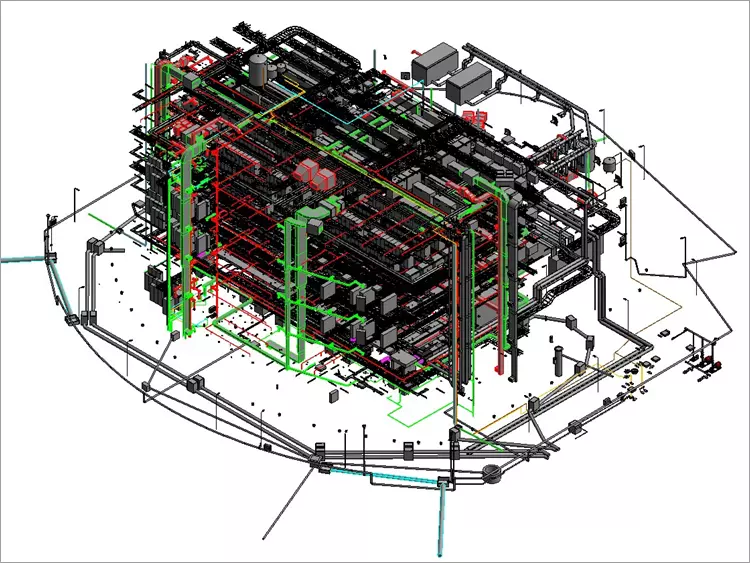
How MEP BIM Improves Construction Coordination
The construction industry is rapidly shifting toward digital solutions. Building a modern structure requires immense precision, especially when integrating complex internal systems. In the past, teams relied heavily on 2D blueprints to plan these intricate networks. This often led to misinterpretations, unexpected delays, and expensive modifications on the job site.
Building Information Modeling (BIM) has completely transformed how teams plan and execute building projects. Specifically, MEP BIM Modeling services bring mechanical, electrical, and plumbing systems into a unified digital environment. This allows stakeholders to visualize the exact layout of every pipe, duct, and wire before physical construction begins.
By leveraging detailed 3D models, teams can anticipate potential issues and resolve them early in the design phase. This proactive approach ensures smoother coordination, keeps budgets under control, and ultimately leads to better project outcomes for everyone involved.
Understanding the Core Components
MEP systems are the lifelines of any building. They ensure a structure is habitable, safe, and comfortable. Integrating these three distinct disciplines into a single model requires a deep understanding of how they interact.
Mechanical Systems
The mechanical component primarily deals with heating, ventilation, and air conditioning (HVAC). These systems require significant physical space for large equipment, ductwork, and exhaust units. Careful planning ensures these large elements do not interfere with the building's structural integrity or other internal systems.
Electrical Systems
Electrical layouts include power supply, lighting, fire alarms, and communication lines. Routing these conduits and cable trays safely requires meticulous attention to detail. Electrical components must be placed at safe distances from water lines and heating elements to comply with strict safety codes.
Plumbing Systems
Plumbing encompasses water supply, wastewater drainage, and natural gas lines. Gravity heavily influences drainage systems, meaning pipes must maintain specific slopes. Integrating plumbing into the main 3D model ensures these critical slopes are maintained without hitting other structural or mechanical
elements.
Key Benefits of BIM for Coordination
Transitioning to a 3D digital model offers immediate, tangible benefits for project coordination. It removes the guesswork from the planning phase and replaces it with exact data.
Accurate Clash Detection
One of the most valuable features of BIM software is automatic clash detection. If an air conditioning duct is modeled to pass straight through a plumbing pipe, the software instantly flags the collision. Teams can then adjust the routing digitally. Finding and fixing this clash on a computer screen takes minutes, whereas discovering it during physical construction could halt progress for days.
Spatial Optimization
Modern buildings often have limited space above ceilings and inside walls. BIM helps engineers pack mechanical, electrical, and plumbing components into these tight spaces efficiently. It ensures there is enough room for the systems themselves, as well as adequate clearance for future maintenance workers to access the equipment.
Drastically Reduced Rework
Mistakes on a construction site are costly. When systems are installed incorrectly due to poor planning, they must be torn out and rebuilt. Because MEP BIM modeling resolves spatial conflicts before construction starts, the amount of physical rework drops significantly. This keeps the project moving forward smoothly.
Enhancing Collaboration Across Teams
Construction projects involve multiple specialized teams. Architects design the building's look and feel, structural engineers ensure it stands tall, and MEP contractors make it livable. Historically, these groups worked in isolated silos, updating their specific drawings and hoping they matched the others.
Shared 3D models break down these communication barriers. Everyone works from the same central, updated file. When the architect lowers a ceiling, the mechanical engineer immediately sees how that change affects their ductwork. This real-time visibility fosters a highly collaborative environment. Contractors can leave digital notes, ask questions, and propose routing changes directly within the model.
Read: Can Resource Management Software Integrate with My Project
Impact on Project Timelines and Cost-Efficiency
Time is money in the construction world. Any delay can trigger a domino effect, pushing back subsequent trades and extending the final delivery date.
Early error detection is the primary way BIM saves budgets. The cost to move a digital pipe is essentially zero. The cost to move a physical pipe involves labor, wasted materials, and schedule delays. By investing time upfront to build an accurate virtual model, owners and developers protect their budgets from unexpected cost overruns. Furthermore, contractors can pull exact material quantities directly from the model. This precise material takeoff prevents over-ordering and reduces job site waste.
Real-World Success with MEP BIM
Consider the construction of a modern high-rise hospital. Healthcare facilities require extremely complex MEP systems, including medical gas lines, specialized ventilation, and redundant electrical grids. In projects of this scale, relying on traditional 2D overlays is nearly impossible.
By utilizing a shared 3D model, the hospital's design team was able to route medical gas lines around structural beams and HVAC ducts flawlessly. They prefabricated large sections of the plumbing off-site based on exact model dimensions. This prefabrication drastically accelerated the installation process once the materials arrived on site.
Experienced firms like Chudasama Outsourcing understand exactly how these advanced methods transform chaotic construction sites into highly organized operations.
Future Trends in Construction Technology
The capabilities of BIM software continue to expand. Artificial intelligence is beginning to play a role in generative design, where the software automatically suggests the most efficient routing for pipes and cables.
Virtual reality (VR) and augmented reality (AR) are also becoming common on job sites. A contractor can put on an AR headset and see the digital MEP model overlaid onto the physical empty room. This allows them to verify installation locations with incredible accuracy.
Additionally, these detailed construction models are increasingly being handed over to facility managers as "Digital Twins." This gives the building owner a complete, interactive map of their property for future maintenance and renovations.
Setting Your Next Project Up for Success
Adopting a new workflow requires careful planning. To get the most out of your digital models, establish clear communication protocols early. Ensure that all contractors and engineers agree on the software platforms and the frequency of model updates.
Require regular coordination meetings where teams review the latest clash detection reports together. Investing in professional MEP BIM Modeling services can provide the technical expertise needed to manage these complex digital environments. By embracing this technology, you can eliminate costly surprises, streamline your construction schedule, and deliver a superior final product.