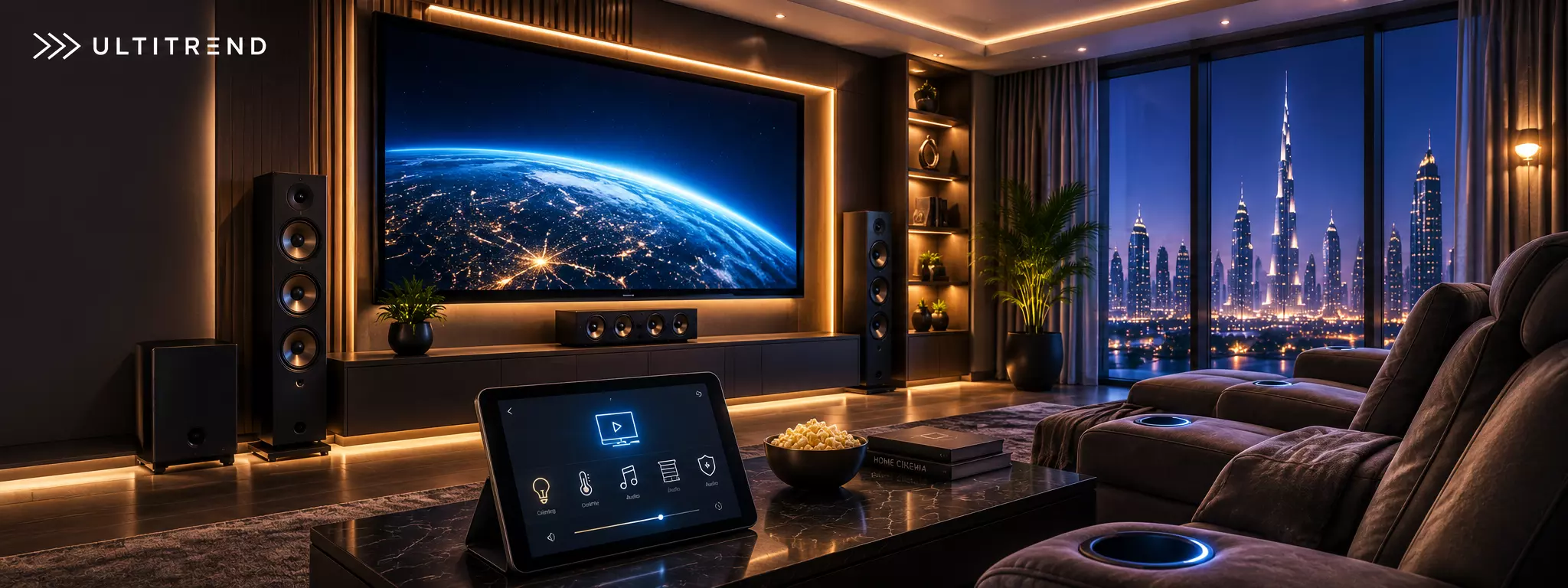
Home Automation AV Solutions in Dubai: Cinema Design
Most home cinema disappointments trace back to the same root cause: equipment purchased before the room was ever properly designed around it.
A great projector in a poorly treated space still sounds hollow, and great speakers in a badly proportioned room still sound off no matter how much they cost
Home automation AV solutions in Dubai exist precisely to solve this gap between buying good equipment and actually building a room that performs the way it should. Here's what genuinely goes into designing and integrating a home cinema properly, beyond just picking a screen size.
Why Room Design Comes Before Equipment Selection
This is the single most common mistake homeowners make, and it's almost always avoidable with the right planning order.
The Problem With Equipment-First Thinking
Buying a projector, screen, and speakers before understanding the room's dimensions, acoustics, and seating layout means fitting equipment into constraints that weren't considered from the start.
This routinely leads to compromised viewing angles, uneven sound, and rooms that never quite deliver what the equipment specs promised.
What Should Actually Come First
Room dimensions and proportions, since these determine ideal screen size and seating distance.
Acoustic characteristics of the space: bare walls and hard flooring behave very differently from a properly treated room. Lighting and shading requirements, since ambient light control affects picture quality as much as the projector itself.
Getting these fundamentals right before equipment shopping consistently produces better results than the reverse approach, even with a more modest budget.
Getting Viewing Distance and Screen Size Right
This is one of the more technical decisions, but it directly determines whether a cinema room feels genuinely immersive or just uncomfortable.
General Guidelines Worth Following
For 4K projection, a seating distance of roughly 1 to 1.5 times the screen's diagonal size tends to work well. For 1080p setups, that range extends to 1.5 to 2.5 times the diagonal. Sitting too close causes visible pixelation and eye strain, while sitting too far reduces the immersive impact a large screen is meant to deliver.
A Practical Way to Test This
Before finalising seating placement, sit at the intended viewing spot and check whether the screen comfortably fills your central field of vision without needing to turn your head to take in the edges.
Read: Top 10 Home Automation Dubai Trends You Should Know
Seating Layout for Multi-Row Cinema Rooms
Larger villa cinema rooms often accommodate multiple rows, and getting this layout wrong is one of the more common design oversights.
Why Row Elevation Matters
Each additional row typically needs 6 to 8 inches of elevation above the row in front to prevent sightlines from being blocked. Flat flooring across multiple rows almost guarantees someone's view gets obstructed, regardless of how good the screen or projector actually is.
Viewing Angle Considerations
Seats positioned within roughly 30 degrees of the screen's center generally deliver the best picture and sound experience.
Beyond 40 degrees, both color accuracy and audio balance noticeably decline, which matters particularly for wider rooms where straight-row seating can push edge seats outside that ideal range.
Acoustic Treatment: Where Sound Quality Actually Gets Decided
Speaker quality matters, but the room itself frequently has a bigger impact on how sound actually performs than most homeowners expect.
What Untreated Rooms Get Wrong
Bare walls create reflections that muddy dialogue clarity and create harsh, echoey sound.
Corners allow bass frequencies to build up unevenly, causing boomy or inconsistent low-end response depending on where you're sitting. Hard flooring and ceilings reflect high frequencies, adding unwanted harshness to sound that a treated room simply doesn't produce.
What Proper Treatment Involves
Absorption panels at first-reflection points, the specific spots where sound bounces once before reaching your ears, reduce harshness without deadening the room entirely.
Bass traps in corners address low-frequency buildup, often delivering a more noticeable improvement than upgrading the subwoofer itself. Diffusion on rear walls scatters remaining reflections without making the space feel acoustically flat and lifeless.
Speaker Placement and Its Relationship to Seating
Speaker placement and seating position aren't separate decisions; they need to be planned together from the start.
Core Placement Principles
Front left and right speakers should form an equal triangle relative to the primary seating position.
Centre channel speakers need to align with ear height at the main seats for clear dialogue. Surround speakers generally perform best positioned slightly behind and above seated ear level, rather than at the same height as the front speakers.
Getting this relationship wrong is one of the most common reasons an otherwise well-equipped cinema room still sounds unbalanced.
Automation: Where the Room Actually Comes Together
Room design and acoustics determine how good a cinema room can sound and look. Automation determines whether using it actually feels effortless.
What a Properly Integrated System Handles Automatically
Lighting dimming to a preset level the moment playback starts, rather than requiring a manual adjustment. Motorised blinds closing automatically to eliminate glare before a movie begins.
Climate settings adjusting for a comfortable viewing temperature without separate manual input. Audio, video, and lighting all responding to a single "movie night" command rather than needing three or four separate actions.
Why KNX Performs Well for This Specific Application
Cinema rooms need precise timing, lights dimming just before the screen brightens, and audio switching without any noticeable lag.
KNX automation's wired, low-latency architecture handles this kind of coordination more reliably than larger wireless setups, which is particularly relevant for villa-scale properties where the cinema room is one of many zones within a broader smart home automation in Dubai system.
Connecting the Cinema Room to the Rest of the Home
A cinema room that operates in complete isolation from the rest of a property misses a meaningful part of what proper integration actually offers.
Practical Examples Worth Considering
Playback pausing automatically if a doorbell rings or an entry sensor triggers elsewhere in the home.
The cinema room climate coordinates with the property's broader zoned climate control rather than operating independently. Security alerts from smart home security systems in Dubai display briefly on screen without fully interrupting whatever's playing.
This level of integration is what separates a standalone entertainment room from a cinema space that genuinely feels like part of a connected home rather than an isolated addition.
Planning Cinema Rooms During New Construction vs Renovation
Timing significantly affects what's realistically achievable, and it's worth understanding this before getting attached to a specific design.
New Construction Advantages
Cabling, acoustic treatment structure, and control system wiring can all be planned alongside the build itself, avoiding the compromises that come with retrofitting into a finished space.
Renovation Considerations
Adding a proper cinema room to an existing property generally means opening walls for cabling and acoustic treatment, which is more disruptive but achievable if planned properly rather than treated as a quick equipment upgrade.
If you're planning a cinema room as part of a larger renovation or new build, it's worth involving both AV and automation specialists early, since seating layout, acoustic treatment, and control system design all genuinely affect each other.
Common Mistakes Worth Avoiding
Buying equipment before finalising room dimensions and seating layout. Skipping acoustic treatment entirely, assuming speaker quality alone will deliver good sound.
Choosing a wireless-only control system for a room where precise automation timing genuinely matters. Ignoring row elevation in multi-row seating, leading to blocked sightlines. Treating the cinema room as isolated from the rest of the property's smart home automation system in Dubai.
Conclusion
A genuinely great home cinema comes from proper sequencing, room design, and acoustics first; equipment selection second; and automation tying it all together last.
Home automation AV solutions in Dubai exist specifically to handle that final piece, making sure lighting, shading, audio, and video respond together seamlessly rather than requiring manual coordination every time the room gets used.
Whether it's a modest media room or a fully integrated villa cinema space, the difference between a good result and a genuinely great one almost always comes down to planning the room properly before buying anything.
Plan Your Home Cinema Properly
If you're designing a home cinema and want the room, the equipment, and the automation to work together from the start rather than being pieced together afterwards, proper planning makes all the difference.
Get in touch for a free consultation on home automation AV solutions tailored to your cinema room, from acoustic design to full integration with your broader smart home system.
Frequently Asked Questions
Should I choose equipment or plan the room first for a home cinema?
Room design should come first; dimensions, acoustics, and seating layout all determine what equipment will actually perform well, rather than fitting a room around pre-purchased gear.
How much does acoustic treatment actually affect sound quality?
Significantly, room reflections and bass buildup can make excellent speakers sound worse than a modest system in a properly treated space.
What's the ideal viewing distance for a 4K home cinema screen?
Roughly 1 to 1.5 times the screen's diagonal size generally provides the best balance of detail and immersion without noticeable pixelation.
Why is KNX automation recommended for cinema room integration?
Its wired, low-latency architecture handles the precise timing cinema rooms need, with lighting, shading, and AV responding together without noticeable lag.
Can a cinema room be connected to home security systems?
Yes, playback can pause automatically for doorbell or entry alerts, and security notifications from smart home security systems can display briefly without fully interrupting content.