What to Do When Your Garage Door Torsion Spring Breaks
A garage door torsion spring is one of the most important parts of a garage door system.
It helps balance the heavy door and makes it possible for the opener or a person to raise and lower the door with less effort. Because torsion springs are under high tension and are used every time the garage door operates, they eventually wear out and may break.
A broken torsion spring can be stressful for any homeowner. The garage door may suddenly stop working, become extremely heavy, or remain stuck in one position. The good news is that knowing what to do can help you stay safe and prevent additional damage.
This guide explains the warning signs of a broken torsion spring, what you should do immediately, what you should avoid doing, and why professional repair is the safest option.
What Is a Garage Door Torsion Spring?
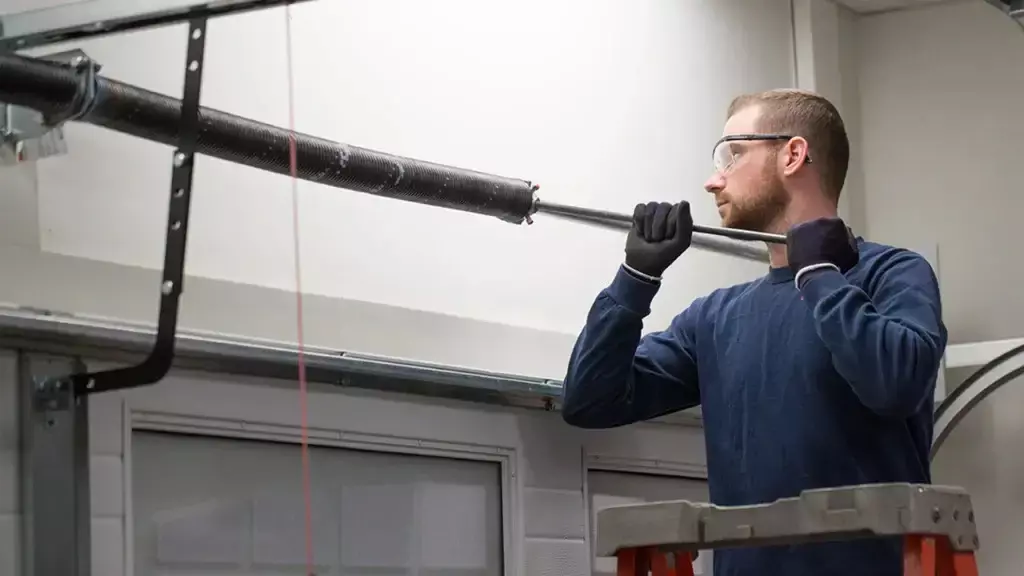
A torsion spring is a tightly wound metal spring usually mounted horizontally above the garage door. Its job is to store mechanical energy and use that energy to help balance the weight of the door.
When the garage door closes, the spring winds up and stores energy. When the door opens, the spring releases some of that energy to help lift the door.
A typical garage door may weigh hundreds of pounds, so the spring system plays an important role in making the door manageable.
Because the spring stores a large amount of energy, it can be dangerous to handle without proper training and specialized tools.
How Do You Know If a Torsion Spring Has Broken?
A broken torsion spring often produces noticeable signs. Some failures happen suddenly, while others may be preceded by weeks or months of wear.
Look for these common signs:
- The garage door suddenly will not open.
- The door feels unusually heavy.
- The opener runs but the door does not move.
- You hear a loud popping or banging sound.
- There is a visible gap in the torsion spring.
- The garage door looks uneven.
- The door closes too quickly.
- Cables appear loose or displaced.
- The garage door becomes difficult to operate manually.
If you notice one or more of these signs, stop operating the door until the problem can be properly inspected.
Read: Gas Spring Applications in Modern Vehicles
Step 1: Stop Using the Garage Door
The first thing to do after discovering a broken torsion spring is to stop using the garage door.
Do not repeatedly press the remote control to see if the door will eventually open.
A garage door opener is designed to work with a properly balanced door. When the spring breaks, the opener may be unable to safely handle the full weight of the door.
Repeated attempts to operate the system can put additional stress on the opener and other components.
If the door is closed, leave it closed until it can be inspected.
Step 2: Keep Children and Pets Away
Garage doors contain many moving and high-tension components.
If a spring breaks, cables, brackets, or other parts may also be affected. Children and pets should stay away from the garage door until the system has been inspected.
Make sure everyone in the household understands that the garage door should not be used until it is repaired.
This simple step can help prevent accidental injuries.
Step 3: Do Not Touch the Broken Spring
One of the most important safety rules is to avoid touching the torsion spring.
Even when a spring appears broken, other parts of the spring system may still contain significant tension.
Do not:
- Pull on the spring.
- Try to unwind the spring.
- Cut the spring.
- Attempt to reconnect the spring.
- Use household tools to adjust it.
- Try to remove the spring.
Torsion spring repairs require specialized tools and knowledge. Attempting the work without proper training can result in serious injury.
Step 4: Avoid Pulling on Loose Cables
A broken spring can sometimes cause garage door cables to become loose.
Loose cables may look like they can simply be put back into place, but this can be dangerous.
Cables work together with springs, drums, and other components. Moving one part without understanding the entire system can cause unexpected movement.
If a cable is loose, leave it alone and have the system inspected by a qualified technician.
Step 5: Keep the Door in Its Current Position
If the garage door is closed when the spring breaks, it is usually best to leave it closed.
If the door is partially open, do not attempt to force it downward or upward.
A garage door is heavy, and a damaged spring system may not provide the balance needed to control it safely.
Trying to manually move a damaged door can result in:
- Back injuries
- Pinched fingers
- Falling door panels
- Damaged tracks
- Damaged cables
- Additional property damage
A professional can determine the safest way to handle the door.
Step 6: Check for Visible Damage From a Safe Distance
You can perform a basic visual inspection without touching anything.
Look for obvious signs such as:
- A separated torsion spring
- Bent tracks
- Loose cables
- Damaged rollers
- Broken brackets
- Misaligned panels
- Unusual gaps
- Visible rust or corrosion
Do not move components to get a closer look.
If something appears damaged, simply provide that information to the technician.
Step 7: Contact a Professional Garage Door Technician
Once you have made the area safe, arrange for professional service.
A qualified technician can inspect the complete garage door system and determine what caused the failure.
For homeowners who need professional help with torsion springs garage cincinnati, a trained technician can inspect the spring system, identify related damage, and recommend the appropriate repair.
Professional inspection is important because the broken spring may not be the only issue.
Why Professional Torsion Spring Repair Is Important
Torsion springs are under high tension. Replacing or adjusting one requires specific tools and techniques.
A professional technician can safely:
- Identify the correct spring.
- Remove the damaged spring.
- Install the replacement.
- Adjust spring tension.
- Check door balance.
- Inspect cables and drums.
- Check rollers and tracks.
- Test the garage door opener.
- Verify safe operation.
This comprehensive approach helps ensure the garage door works properly after the repair.
Why You Should Not Replace a Torsion Spring Yourself
- DIY projects can be useful for many household tasks, but torsion spring replacement is not a good project for an inexperienced homeowner.
- The main concern is stored mechanical energy.
- If a spring or winding tool is handled incorrectly, it can move suddenly and cause serious injuries.
- A professional technician has the appropriate equipment and experience to work with these components.
- The cost of professional repair is generally much less concerning than the potential consequences of an unsafe DIY attempt.
Can You Still Use the Garage Door Opener?
It is best not to use the opener when a torsion spring is broken.
The opener motor is not designed to compensate for a failed spring system.
Repeated operation may cause additional stress to:
- The motor
- Drive mechanism
- Gears
- Chain or belt
- Mounting components
If you press the button and hear the motor running while the door does not move, stop using the opener.
A technician can inspect the opener after the spring problem has been addressed.
How a Broken Spring Can Affect Other Garage Door Components
A garage door is a system of interconnected components. A spring failure can affect more than just the spring itself.
Garage Door Opener
The opener may be forced to work harder than normal.
Cables
Cables can become loose or come off their drums depending on how the system fails.
Rollers
An unbalanced door may place additional stress on rollers.
Tracks
A door that is moved improperly can potentially damage or bend tracks.
Drums
The cable drums may be affected if the cables become loose.
This is why a professional should inspect the entire system after a spring failure.
What Causes Torsion Springs to Break?
Garage door torsion springs are wear components. They are designed to handle many operating cycles, but they eventually wear out.
Common causes of failure include:
Normal Wear and Tear
Every opening and closing cycle places stress on the spring.
Age
Older springs are more likely to fail because they have completed many operating cycles.
Rust
Corrosion can weaken the metal and affect spring performance.
Poor Maintenance
A neglected garage door may place unnecessary stress on its components.
Incorrect Spring Installation
An improperly sized or installed spring may not work correctly with the door.
Heavy Usage
A garage door that is used many times every day may experience faster spring wear.
How Weather Can Affect Garage Door Springs
- Weather conditions can also affect garage door components over time.
- Cincinnati experiences changing temperatures throughout the year, along with rain, snow, humidity, and seasonal weather changes.
- Moisture can contribute to rust and corrosion. Temperature changes can also affect materials and lubricants.
- Homeowners can reduce environmental wear by keeping the garage area clean and dry and scheduling regular inspections.
How to Prevent Future Garage Door Spring Problems
No spring lasts forever, but regular maintenance can help you identify problems early.
Schedule Regular Inspections
Professional inspections can identify worn springs and other components before a complete failure occurs.
Watch for Unusual Noises
Grinding, squeaking, popping, or loud snapping sounds should not be ignored.
Pay Attention to Door Balance
If the door suddenly feels heavier or uneven, have it inspected.
Keep Moving Parts Clean
Dirt and debris can interfere with proper garage door operation.
Address Rust Early
Visible corrosion should be evaluated before it becomes extensive.
Do Not Ignore Small Problems
A door that operates differently than usual may be giving you an early warning.
Garage Door Torsion Spring Safety Checklist
If your torsion spring breaks, remember these important safety rules:
- Stop using the garage door.
- Do not operate the opener repeatedly.
- Keep children away from the area.
- Keep pets away from the door.
- Do not touch the spring.
- Do not pull on loose cables.
- Do not attempt DIY spring replacement.
- Do not force the door open or closed.
- Do not stand underneath a damaged door.
- Contact a qualified professional for inspection.
When Is a Broken Spring an Emergency?
A broken spring may require prompt attention if the garage door is preventing access to your vehicle, creating a security concern, or stuck in an unsafe position.
You should seek professional assistance promptly if:
- The door is stuck open.
- The door is partially open.
- The door cannot be safely closed.
- A cable has come loose.
- The door is severely tilted.
- The opener is struggling.
- There is visible damage to multiple components.
- The garage cannot be safely secured.
Do not try to solve an emergency by forcing the door yourself.
Final Thoughts
A broken garage door torsion spring can happen without much warning. Although the problem can be inconvenient, the most important thing is to respond safely.
Stop using the garage door, keep children and pets away, and avoid touching the spring, cables, or other high-tension components. Do not repeatedly operate the garage door opener, and never attempt to replace a torsion spring without proper training and specialized tools.
Professional inspection can determine whether the spring is the only damaged component or whether other parts of the garage door system also need attention.