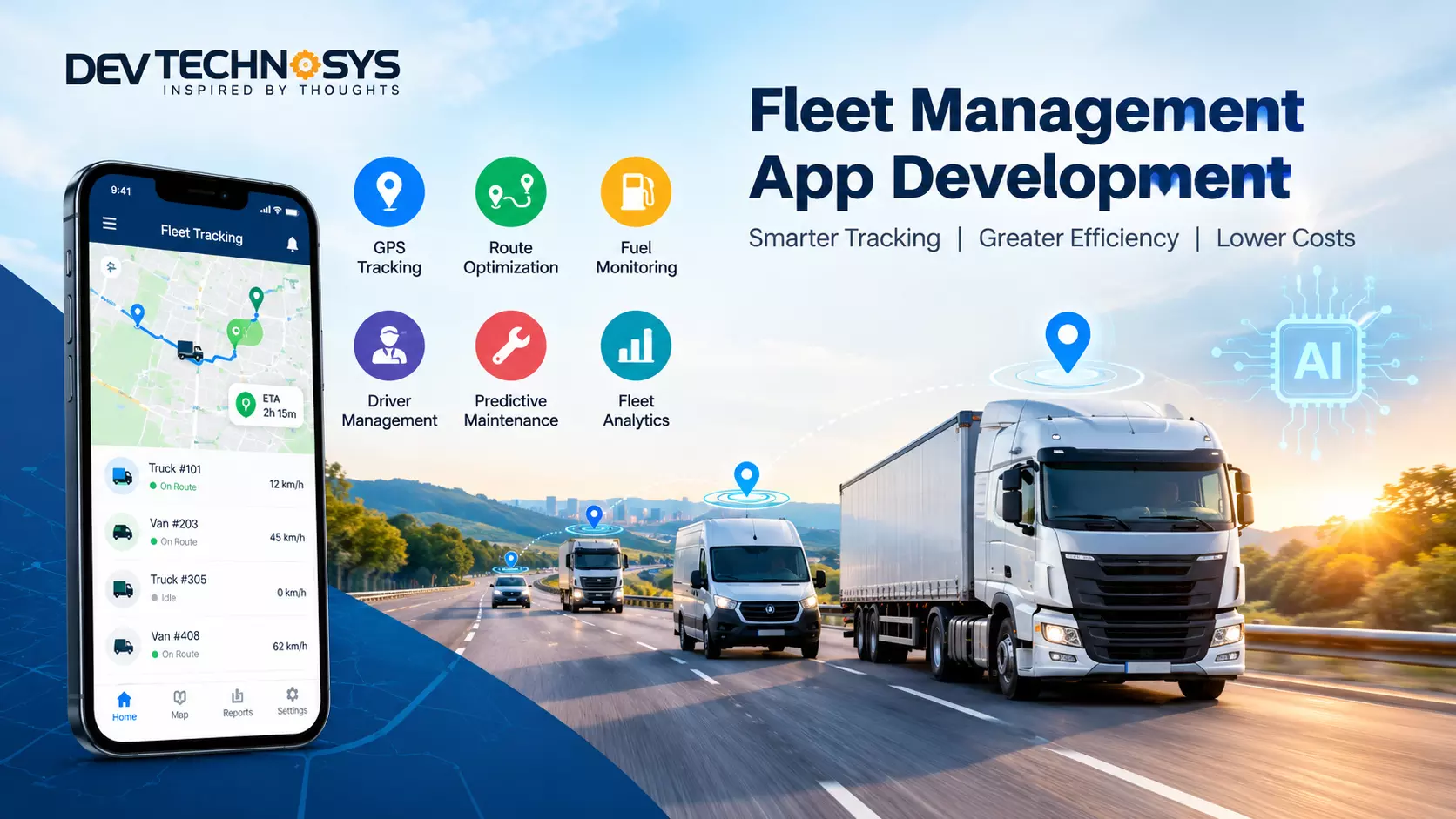
Fleet Management App Development: Key Features, Benefits, and AI-Powered Optimization
Managing a fleet of vehicles efficiently is essential for logistics companies, transportation businesses, delivery services, and organizations that depend on vehicle operations.
Without the right technology, businesses may struggle with rising fuel expenses, vehicle breakdowns, delivery delays, and limited visibility into driver performance.
Fleet management app development helps businesses overcome these challenges through digital tools that simplify vehicle tracking, route planning, maintenance scheduling, and fleet performance monitoring.
Modern fleet management software combines GPS technology, automation, data analytics, and artificial intelligence (AI) to help businesses improve operational efficiency and make informed decisions.
What Is Fleet Management App Development?
Fleet management app development involves creating mobile or web-based applications that help businesses manage vehicles, drivers, trips, fuel consumption, maintenance schedules, and deliveries from a centralized platform.
These applications provide fleet managers with real-time information about vehicle locations, routes, operating conditions, and delivery progress. Drivers can use mobile applications to receive assignments, access navigation instructions, report issues, and update delivery statuses.
A customized fleet management solution can be designed according to the specific requirements of logistics providers, e-commerce companies, construction businesses, public transportation operators, and field service organizations.
Key Features of Fleet Management Software
1. Real-Time GPS Vehicle Tracking
GPS tracking is one of the most important features of fleet management software. It enables managers to monitor vehicle locations, review travel routes, and check estimated arrival times.
Real-time tracking improves visibility into fleet operations and helps managers respond to unexpected delays. Geofencing can also generate alerts when vehicles enter or leave predefined areas, supporting better operational control.
For delivery businesses, GPS tracking helps customers receive more accurate delivery updates and improves coordination between drivers and dispatch teams.
2. AI-Powered Route Optimization
Route optimization helps businesses identify efficient routes based on factors such as traffic conditions, distance, delivery locations, vehicle capacity, and delivery deadlines.
AI-powered route optimization can analyze available operational data to recommend suitable routes and adjust plans when conditions change. This can help reduce unnecessary mileage, avoid avoidable delays, and improve vehicle utilization.
For companies managing multiple deliveries daily, optimized routing can support better scheduling and more efficient resource allocation.
3. Fuel Monitoring and Expense Management
Fuel expenses represent a significant operating cost for many fleet-dependent businesses. Fleet management applications can record fuel consumption, monitor refueling activity, and compare vehicle performance over time.
By reviewing fuel usage, idling patterns, and travel distances, managers can identify potential inefficiencies and take corrective action. Integrating fuel monitoring with expense management tools can also simplify budgeting and financial reporting.
4. Driver Management and Performance Monitoring
Effective driver management helps businesses maintain safer and more productive fleet operations. Fleet management applications can store driver details, manage assignments, track working schedules, and record performance information.
Depending on available vehicle data and device integrations, driver monitoring features can identify patterns such as excessive idling, speeding, harsh braking, and deviations from assigned routes.
These insights help managers provide targeted training, encourage safer driving practices, and improve accountability.
5. Predictive Vehicle Maintenance
Unexpected vehicle breakdowns can disrupt delivery schedules and increase repair costs. Fleet maintenance software helps businesses schedule inspections, track service history, and receive reminders for routine maintenance.
Advanced solutions can use mileage records, engine diagnostics, telematics, and sensor data to identify warning signs of potential vehicle problems. Predictive maintenance tools may help businesses plan repairs before certain failures occur, reducing avoidable downtime.
6. Fleet Analytics and Reporting
Fleet analytics dashboards provide information about vehicle utilization, fuel consumption, maintenance expenses, driver performance, and delivery efficiency.
Managers can use these reports to identify recurring problems, compare operational performance, and make more informed decisions. Clear reporting also helps businesses evaluate whether their fleet management strategies are meeting operational goals.
Read: Launching Your Own Car Rental Management Software and
Benefits of Fleet Management App Development
Implementing fleet management software offers several practical advantages.
Improved operational efficiency: Automation reduces manual work associated with dispatching, vehicle records, and maintenance planning.
Better cost control: Fuel monitoring, route optimization, and maintenance tracking help businesses identify opportunities to control operating expenses.
Enhanced safety: Driver performance information, vehicle alerts, and maintenance reminders support safer fleet operations.
Greater transparency: Centralized dashboards provide a clearer view of vehicle locations, delivery progress, and fleet availability.
Improved customer satisfaction: Accurate tracking information and timely delivery updates help businesses communicate more effectively with customers.
These benefits depend on the quality of implementation, available data, employee adoption, and the specific needs of each business.
How AI Is Transforming Fleet Management
Artificial intelligence is expanding the capabilities of modern fleet management applications. AI systems can analyze historical journeys, traffic information, fuel consumption, and vehicle performance to identify operational patterns.
For example, predictive analytics can help estimate maintenance requirements, while intelligent dispatching can recommend suitable drivers and vehicles for available assignments. AI-based demand forecasting may also help delivery businesses plan fleet capacity around expected order volumes.
When combined with GPS tracking and telematics, these capabilities can support faster decision-making and more responsive fleet operations. Businesses should ensure that AI recommendations are tested and reviewed before being used for critical operational decisions.
The Fleet Management App Development Process
Developing a reliable fleet management application requires a structured approach.
First, businesses should identify their requirements, target users, fleet size, and operational challenges. The next step is to plan the application architecture, design intuitive interfaces, and select suitable technologies.
During development, the team implements essential features such as GPS tracking, vehicle management, route planning, and reporting. Integrations with ERP systems, fuel monitoring devices, telematics platforms, or logistics software can be added according to project requirements.
Thorough testing helps identify performance, usability, security, and integration issues before deployment. After launch, ongoing maintenance, software updates, and performance monitoring help keep the application reliable as business needs evolve.
Why Choose Dev Technosys for Fleet Management App Development?
Dev Technosys provides fleet management app development services designed to help businesses monitor vehicles, optimize routes, manage drivers, track fuel consumption, and improve maintenance planning.
Its solutions can incorporate features such as GPS tracking, dispatch automation, fleet analytics, and telematics integration according to business requirements.
Businesses seeking a customized fleet management application should evaluate their provider's technical capabilities, integration experience, security practices, scalability, and post-launch support.
A solution designed around actual operational workflows can help organizations manage their fleets more effectively as they grow.
Conclusion
Fleet management app development helps businesses improve vehicle visibility, manage drivers, optimize routes, control fuel expenses, and reduce avoidable maintenance disruptions.
By combining GPS tracking, automation, data analytics, and AI-powered features, organizations can make better operational decisions and improve fleet utilization.
For companies looking to modernize transportation, logistics, or delivery operations, investing in customized fleet management software can provide a foundation for more efficient and scalable business processes.
With the right development strategy and technology partner, businesses can build a fleet management solution that supports their current needs and future growth.