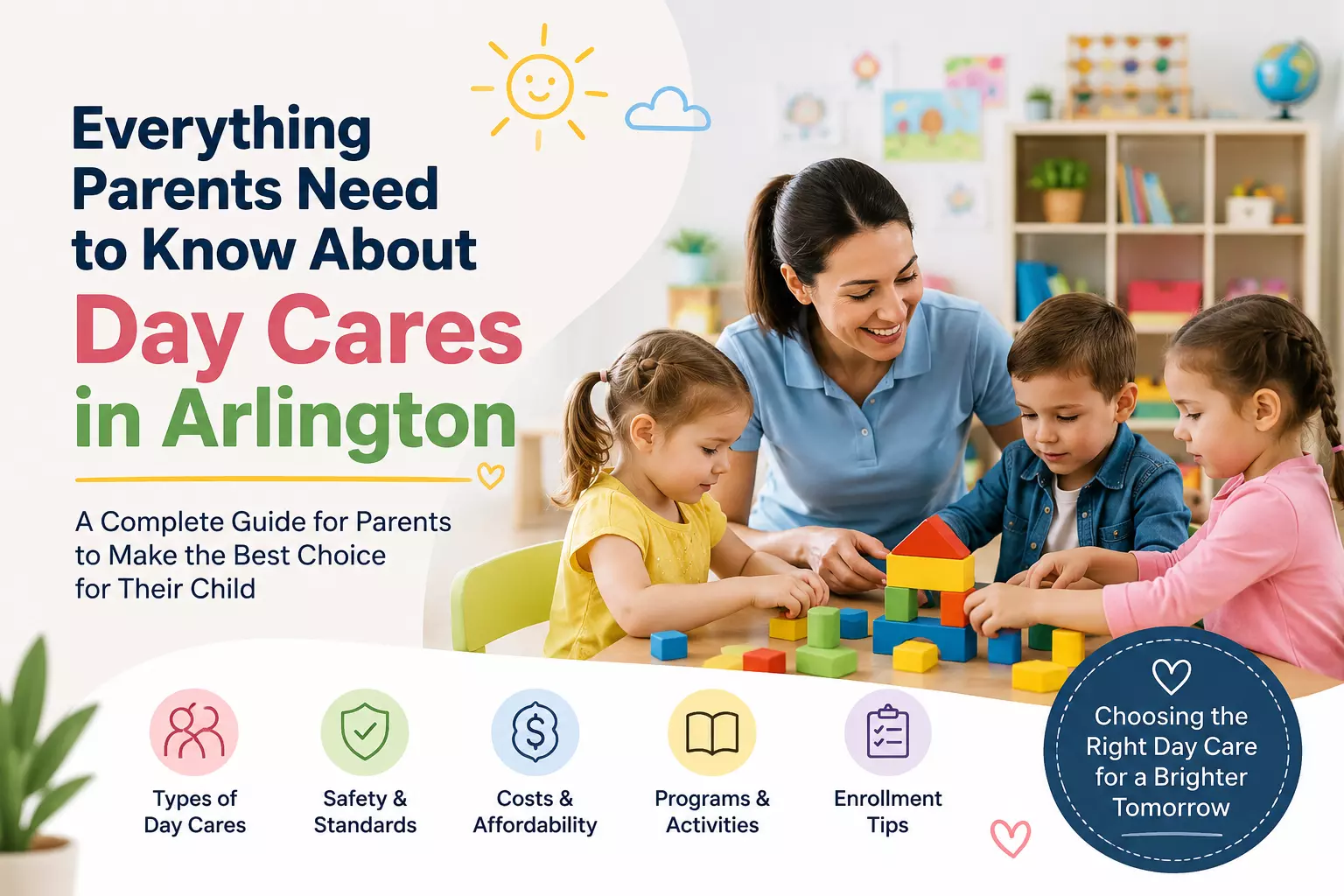
Everything Parents Need to Know About Day Cares in Arlington
Choosing the right childcare provider is one of the most important decisions parents make during their child’s early years.
With a variety of options available, many families are researching day cares in Arlington to find programs that offer safety, education, and nurturing support.
Whether you are a first-time parent or looking to switch childcare providers, understanding what to expect from local daycare programs can help you make a confident and informed decision.
Why Quality Childcare Matters
Early childhood is a critical period for learning and development. During these formative years, children build the foundation for future academic success, social skills, and emotional well-being.
A quality daycare program provides more than supervision—it creates opportunities for children to learn, explore, and grow in a supportive environment.
Professional caregivers help children develop communication skills, problem-solving abilities, creativity, and independence through structured activities and positive interactions. The right daycare can have a lasting impact on a child’s confidence and readiness for school.
Types of Daycare Options Available
Parents in Arlington have access to a variety of childcare settings designed to meet different family needs.
Understanding the differences can help narrow down the best choice.
Childcare Centers
Childcare centers typically serve larger groups of children and offer organized educational programs.
These facilities often provide age-specific classrooms, trained staff, and structured schedules that include learning activities, outdoor play, meals, and rest periods.
Home Daycare Programs
Home-based daycare providers care for children in a residential setting. These programs generally have smaller group sizes, allowing for more personalized attention.
Many parents appreciate the home-like atmosphere and close relationships that often develop between caregivers and families.
Part-Time and Full-Time Care
Some families require full-day childcare while others only need care for a few hours each week.
Many daycare providers offer flexible enrollment options to accommodate varying schedules and family needs.
What to Look for in a Daycare Program
Finding the right daycare involves evaluating several important factors beyond location and cost.
Safety and Security
Safety should always be a top priority. Parents should ensure that a daycare follows proper health and safety procedures, including secure entrances, emergency preparedness plans, child supervision protocols, and cleanliness standards.
A well-maintained environment helps reduce risks and provides peace of mind for families.
Qualified Caregivers
The quality of caregivers directly influences a child's experience. Look for providers who have relevant training, childcare experience, and a genuine passion for working with children.
Strong caregivers create positive relationships with children and support their emotional, social, and cognitive development.
Learning Opportunities
The best daycare programs balance play and education. Activities such as reading, storytelling, music, arts and crafts, sensory exploration, and hands-on learning encourage curiosity and skill development.
Children learn best through engaging experiences that allow them to explore the world around them.
Communication with Parents
Effective communication is essential. Parents should feel informed about their child’s daily activities, behavior, progress, and milestones.
Many daycare providers offer regular updates, daily reports, and parent meetings to maintain open communication.
A strong partnership between caregivers and parents benefits children by ensuring consistency and support both at home and in daycare.
Benefits of Daycare for Children
Many parents worry about spending time away from their children, but quality daycare offers numerous developmental advantages.
Social Skill Development
Daycare provides opportunities for children to interact with peers and learn valuable social skills.
Through group activities and play, children practice sharing, cooperation, empathy, communication, and conflict resolution.
These experiences help prepare children for future classroom environments and social situations.
Emotional Growth
Being part of a daycare community allows children to build confidence and independence. They learn to adapt to routines, interact with different adults, and manage emotions in a supportive setting.
Positive relationships with caregivers also contribute to a child's sense of security and self-esteem.
Early Academic Readiness
Many daycare programs incorporate age-appropriate educational activities that support early literacy, numeracy, language development, and critical thinking skills.
Children who participate in high-quality early learning experiences often enter kindergarten better prepared for academic success.
Questions Parents Should Ask
Before enrolling a child, parents should schedule a visit and ask important questions to evaluate the program.
Some useful questions include:
- What is the caregiver-to-child ratio?
- What safety measures are in place?
- How are daily schedules structured?
- What educational activities are offered?
- How does the program handle discipline and behavior management?
- What is the communication process with parents?
- How are meals and snacks managed?
- What are the policies regarding illness and emergencies?
The answers to these questions can provide valuable insight into the quality and philosophy of the daycare program.
Understanding Costs and Value
Childcare is a significant investment for many families. Costs can vary depending on factors such as location, age group, hours of care, and program features.
While affordability is important, parents should also consider the overall value provided.
A daycare that offers experienced caregivers, educational enrichment, safety measures, and strong communication may justify a higher tuition rate.
Investing in quality childcare often contributes positively to a child's development and long-term success.
The Importance of Visiting Daycare Facilities
Online research is helpful, but visiting a daycare in person provides a clearer picture of the environment. During a visit, parents can observe how caregivers interact with children, assess cleanliness, and evaluate the overall atmosphere.
Pay attention to whether children appear engaged, happy, and comfortable. A welcoming environment often reflects a positive childcare experience.
Trusting your instincts is also important. If a facility feels warm, organized, and child-focused, it may be a good fit for your family.
Read: Comparing Home-Based vs. Center-Based Day Care in
Supporting Working Families
Daycare programs play an essential role in supporting working parents.
Reliable childcare allows parents to pursue careers, education, and personal responsibilities while knowing their children are in a safe and nurturing environment.
Many providers offer flexible scheduling options, extended hours, and programs designed to meet the needs of busy families. This flexibility helps reduce stress and promotes a healthy work-life balance.
Why Arlington Families Continue to Choose Daycare
As family needs evolve, quality daycare remains an important resource for parents seeking dependable childcare and early education opportunities.
Families increasingly value programs that combine safety, learning, social development, and personalized care.
Daycare providers in Arlington continue to adapt to these expectations by creating environments where children can thrive emotionally, socially, and academically.
Conclusion
Selecting the right daycare is a major decision that can shape a child’s early experiences and development.
By understanding what to look for, asking the right questions, and carefully evaluating available options, parents can find a program that meets their family’s needs.
The best daycares provide more than a place for children to spend the day—they offer opportunities for learning, growth, friendship, and confidence-building.
For families exploring childcare options, taking the time to research and compare programs can lead to a rewarding experience for both parents and children.