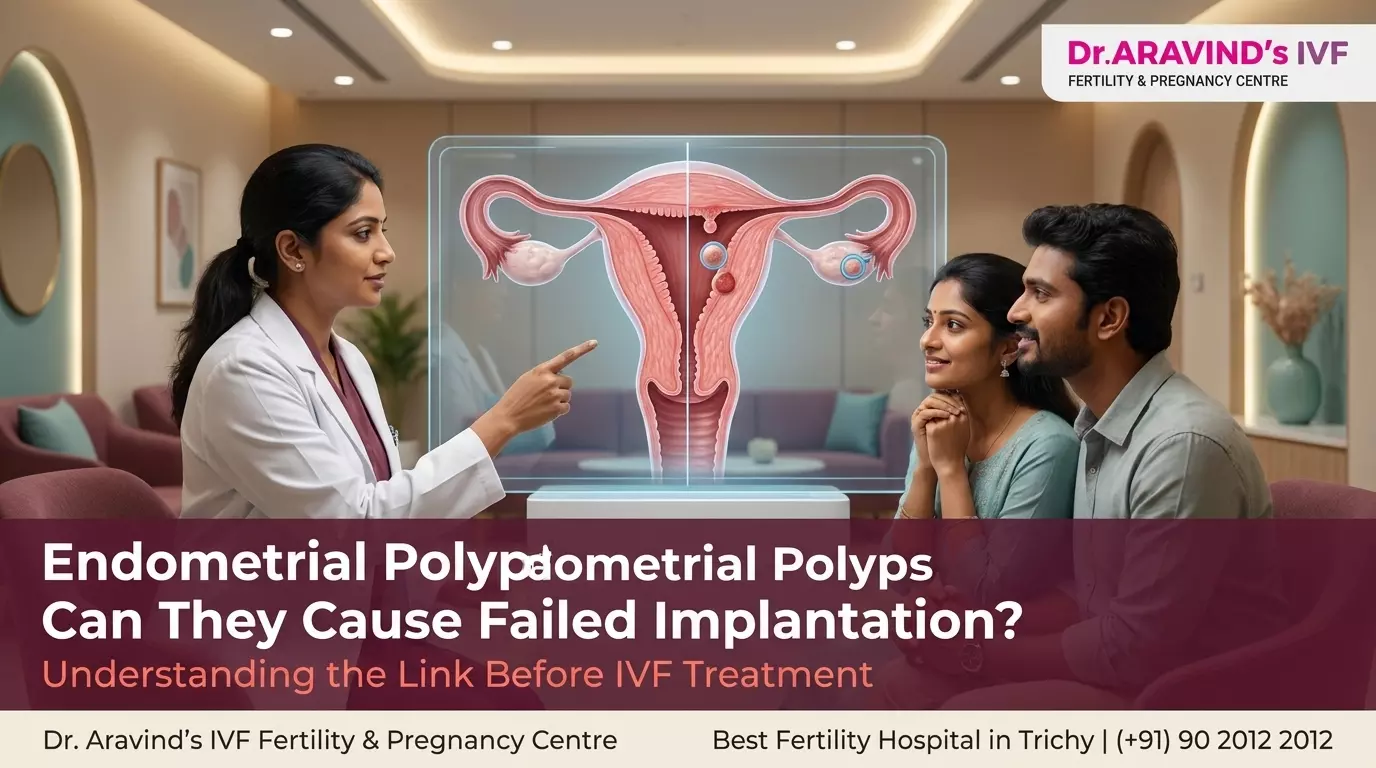
Understanding the Link Between Endometrial Polyps and Failed Implantation
For a successful pregnancy, a healthy embryo must attach to a healthy uterine lining. This process is called implantation. When implantation repeatedly fails, many couples wonder what could be preventing pregnancy despite good-quality embryos.
One possible factor is the presence of endometrial polyps.
Although not every polyp affects fertility, certain polyps may interfere with embryo implantation and reduce the chances of pregnancy. If you are looking for the best fertility hospital in Trichy, understanding this connection can help you seek the right evaluation before beginning fertility treatment.
What Are Endometrial Polyps?
Endometrial polyps are soft tissue growths that develop from the lining of the uterus (endometrium).
They are usually benign but can vary in size and location. Some women experience symptoms, while others only discover them during fertility investigations.
Common symptoms include:
- Heavy menstrual bleeding
- Irregular periods
- Spotting between menstrual cycles
- Bleeding after menopause
- Difficulty conceiving
- Recurrent pregnancy loss
What Is Failed Implantation?
Implantation occurs when a fertilized embryo attaches to the uterine lining and begins to grow. If the embryo cannot attach successfully, pregnancy does not occur.
Repeated implantation failure may result from several factors, including:
- Poor embryo quality
- Hormonal imbalance
- Uterine abnormalities
- Endometrial polyps
- Thin endometrial lining
- Genetic factors
A complete fertility evaluation is necessary to identify the exact cause.
How Can Endometrial Polyps Affect Implantation?
The uterus provides the environment where an embryo develops during early pregnancy. When a polyp is present, it may change this environment.
Depending on its size and location, a polyp may:
- Occupy valuable implantation space
- Distort the uterine cavity
- Trigger local inflammation
- Affect blood flow to the endometrium
- Reduce endometrial receptivity
However, not every endometrial polyp prevents pregnancy. Small polyps located away from the implantation site may have little effect, while larger polyps or multiple growths are more likely to influence fertility.
Read: IVF and Vitamin D: Why Deficiency Undermines Fertility
How Are Polyps Diagnosed?
Accurate diagnosis is the first step before planning treatment.
Your fertility specialist may recommend:
- Transvaginal ultrasound
- Saline infusion sonography
- Diagnostic hysteroscopy
Hysteroscopy allows direct visualisation of the uterine cavity and is considered one of the most reliable methods for diagnosing endometrial polyps.
If clinically appropriate, the polyp can often be removed during the same procedure.
Can Removing Polyps Improve Implantation?
For selected women, yes.
Studies suggest that removing polyps that interfere with the uterine cavity may improve implantation and pregnancy outcomes. However, treatment decisions should always be individualised.
At a leading fertility hospital in Trichy, specialists evaluate factors such as:
- Polyp size
- Number of polyps
- Location
- Previous IVF failures
- History of miscarriage
- Overall reproductive health
This personalised approach helps determine whether hysteroscopic removal is likely to benefit the patient.
Why Expert Evaluation Matters
Every fertility journey is unique. Some women may benefit from immediate treatment, while others can safely proceed without surgery.
At Dr. Aravind's IVF Fertility & Pregnancy Centre, experienced fertility specialists perform comprehensive fertility assessments using advanced diagnostic technology.
Recognised by many couples as one of the best IVF centre in India options, the clinic develops evidence-based treatment plans tailored to each patient's needs rather than following routine protocols.
Patients visiting the fertility centre in Trichy receive personalised care focused on improving uterine health, embryo implantation, and overall fertility outcomes.
If you'd like to learn more about natural conception with uterine polyps, you can also read this related article:
Conclusion
Endometrial polyps do not always cause failed implantation, but in some women they can reduce the likelihood of successful embryo attachment. Early diagnosis and appropriate treatment can improve the uterine environment and support better fertility outcomes.
If you are planning IVF or have experienced repeated implantation failure, consult the specialists at Dr. Aravind's IVF Fertility & Pregnancy Centre.
As the best fertility hospital in Trichy, the clinic combines advanced reproductive technology with personalised fertility care to help couples move closer to their dream of parenthood.
Frequently Asked Questions
Can endometrial polyps cause implantation failure?
Yes. Depending on their size and location, some polyps may interfere with embryo implantation.
Does every endometrial polyp need to be removed?
No. Treatment depends on the polyp's characteristics, symptoms, and fertility history.
Is hysteroscopy the best way to diagnose polyps?
Hysteroscopy is considered one of the most accurate methods because it allows direct visualisation of the uterine cavity.
Can IVF succeed after polyp removal?
Many women achieve successful pregnancies after appropriate treatment, although IVF success depends on several factors beyond uterine health.