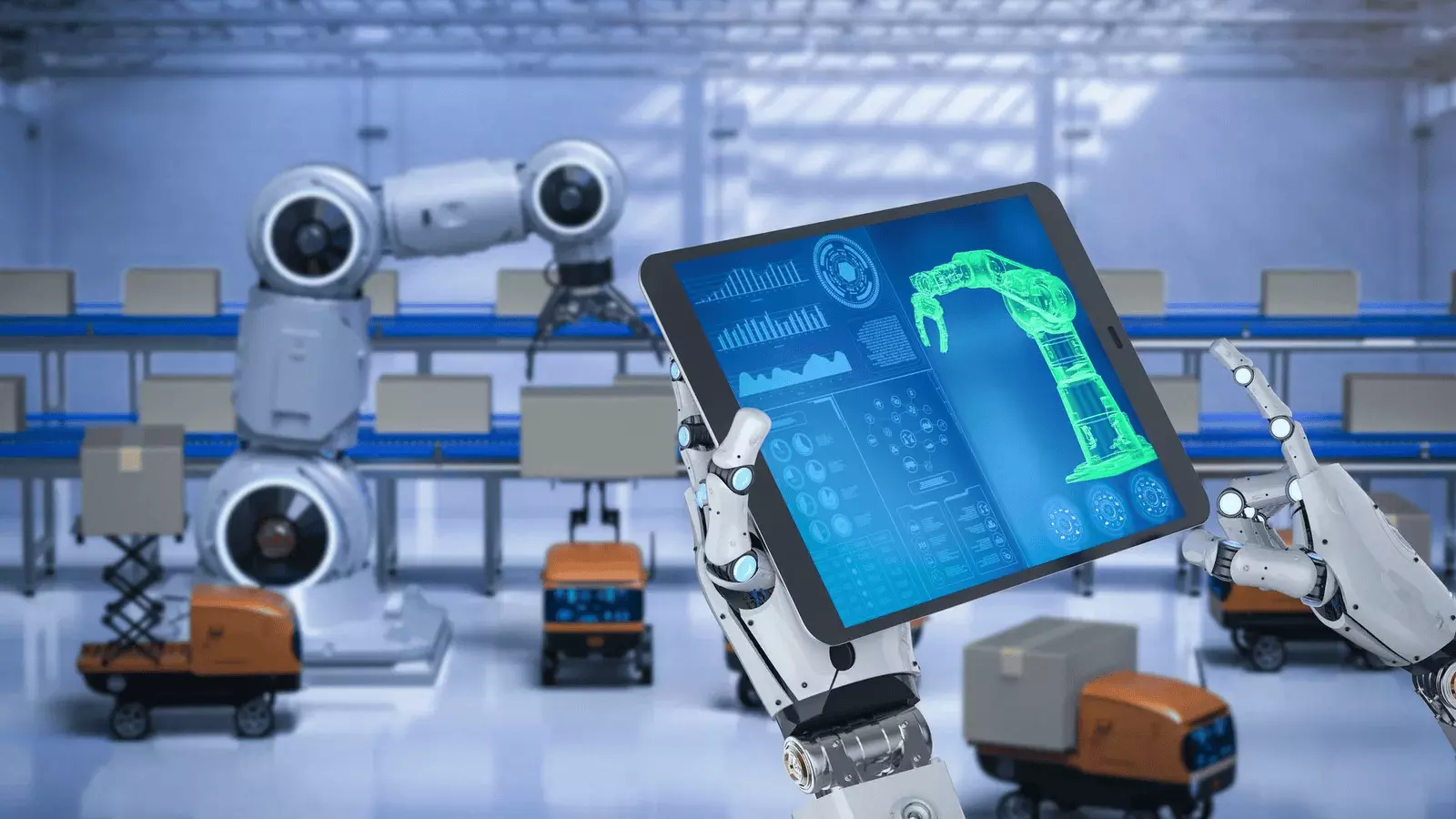
edge ai robotics smart manufacturing drives factory growth
Edge AI robotics smart manufacturing is transforming industrial production by bringing artificial intelligence directly into robotic systems, machines, and factory equipment.
Instead of depending entirely on distant cloud servers, manufacturers can process data locally, make faster decisions, and respond to changing production conditions in real time.
This approach improves operational efficiency, supports predictive maintenance, strengthens quality control, and helps factories build more flexible, connected, and intelligent manufacturing environments.
What Is Edge AI in Robotics and Smart Manufacturing?
Edge AI combines artificial intelligence with edge computing, allowing machines to analyze information close to where it is generated.
In manufacturing, this means industrial robots, sensors, cameras, and connected equipment can process operational data without sending every request to a centralized cloud platform.
Traditional industrial automation often depends on predefined instructions. Edge AI introduces another level of intelligence. Robots can interpret sensor readings, recognize objects, identify unusual conditions, and adjust selected actions based on what they observe.
For example, a robotic arm equipped with computer vision can identify different components moving along a conveyor belt and adjust its movements accordingly. Local processing makes these responses faster and reduces dependence on continuous internet connectivity.
This combination is becoming important as manufacturers move toward Industry 4.0, intelligent production systems, and increasingly autonomous factory operations.
Why Manufacturers Are Adopting Edge AI Robotics
Manufacturing environments generate enormous amounts of information through industrial sensors, connected machines, cameras, and production monitoring systems. Sending all this data to cloud infrastructure can introduce latency, increase bandwidth requirements, and complicate real-time operations.
Edge AI addresses these limitations by processing important information directly on or near industrial equipment.
Speed is one of its biggest advantages. A robot inspecting a manufactured component cannot always wait for a remote server to evaluate an image before deciding what to do next. Local intelligence allows the system to respond almost immediately.
There are other benefits, too. Manufacturers can reduce unnecessary data transfers, maintain operations during certain connectivity interruptions, and gain greater control over sensitive production information.
For businesses managing multiple production lines, these improvements can support more consistent operations and better resource utilization.
These developments also reflect important AI tech trends, particularly the growing movement toward distributed intelligence and autonomous industrial systems.
How Edge AI Improves Industrial Robotics
Edge AI gives industrial robots greater awareness of their surroundings. Rather than simply repeating programmed movements, intelligent robotic systems can use local data to understand changing conditions and make adjustments within their operating limits.
Computer vision is an important part of this development. Cameras connected to edge processing units can help robots recognize components, inspect surfaces, identify defects, and determine object positions.
Collaborative robots, commonly called cobots, can also benefit from intelligent perception. In suitable applications, they can detect nearby objects and people through approved safety systems, helping manufacturers coordinate human and robotic activities.
Another application involves adaptive material handling. Robots can identify variations in component placement and modify their gripping or positioning strategies rather than relying on perfectly arranged inputs.
These capabilities do not eliminate the need for engineering supervision. Instead, they make automation systems more responsive and adaptable to the practical conditions found on modern factory floors.
Real-Time Decision-Making on the Factory Floor
Manufacturing operations often require decisions within milliseconds. A production line may need to identify a defective component, adjust a robotic movement, or respond to an unexpected machine condition without interrupting the entire process.
Edge AI supports these requirements by reducing the distance between data collection and decision-making.
Consider an automated assembly line. Sensors monitor component positions, while cameras examine individual products as they move through different stages. An edge AI system can evaluate this information locally and communicate instructions to the relevant equipment.
The result is a more coordinated production environment. Machines can respond to changing conditions without constantly depending on external computing resources.
This approach is particularly useful in high-speed manufacturing, where delays can affect product consistency, equipment utilization, and production schedules.
As covered across AI Tech Park's AI news and industry articles, these developments demonstrate how artificial intelligence is moving beyond experimental applications into practical enterprise environments.
Predictive Maintenance and Quality Control
Equipment failure can create significant disruption in manufacturing. Unexpected breakdowns may delay orders, increase maintenance expenses, and reduce production capacity.
Edge AI can help manufacturers identify potential equipment problems before they develop into serious failures.
Sensors attached to motors, robotic joints, bearings, and other machinery collect information about vibration, temperature, pressure, and operating performance. Local AI models analyze these signals to recognize unusual patterns that could indicate equipment deterioration.
Maintenance teams can use these insights to investigate problems and schedule servicing more effectively. This supports condition-based maintenance instead of relying exclusively on fixed maintenance intervals.
Quality control is another important application. Edge-powered computer vision systems can inspect products during production, detecting surface irregularities, incorrect assembly, dimensional inconsistencies, and other visible defects.
Identifying problems earlier helps reduce material waste and limits the number of defective products reaching later production stages.
Together, predictive maintenance and automated inspection can improve reliability while helping manufacturers maintain consistent quality standards.
The Role of Edge AI in Industrial Automation
Edge AI does not operate independently of the wider manufacturing ecosystem. Its value increases when connected with industrial IoT devices, programmable logic controllers, manufacturing execution systems, and enterprise resource planning platforms.
These technologies provide different layers of operational intelligence.
For example, industrial IoT sensors collect machine information, while edge computing processes time-sensitive data. AI models interpret patterns, and automation systems execute approved responses.
This creates a connected manufacturing environment where production equipment can exchange information and coordinate activities more effectively.
Digital twins can further strengthen this approach by helping engineers simulate manufacturing processes, monitor equipment behavior, and evaluate possible operational improvements.
However, successful integration requires compatibility between legacy equipment and newer technologies. Manufacturers need to evaluate existing infrastructure before introducing intelligent robotic systems across entire production facilities.
Challenges Manufacturers Need to Consider
Despite its advantages, implementing edge AI robotics smart manufacturing requires careful planning.
Hardware investment is one consideration. Industrial-grade processors, cameras, sensors, networking equipment, and robotic systems can increase initial implementation costs.
Cybersecurity is equally important. Connected machines and distributed computing devices introduce additional points that organizations must protect.
Strong access controls, network segmentation, secure software updates, and continuous monitoring should form part of the deployment strategy.
Model performance also requires attention. AI systems must be trained and tested using representative industrial data. Changes in lighting, product materials, machine conditions, or production processes can affect model accuracy.
Manufacturers should also consider employee training, maintenance responsibilities, data governance, and integration requirements.
Starting with a focused use case, such as visual inspection or equipment monitoring, can help organizations evaluate performance before expanding deployment.
What the Future Holds for Smart Manufacturing
The next stage of manufacturing automation will likely involve closer collaboration between edge AI, robotics, machine learning, computer vision, and industrial connectivity.
As edge hardware becomes more capable, manufacturers will have greater opportunities to deploy sophisticated AI models closer to production equipment.
Intelligent robots could become better at adapting to product variations, coordinating tasks, and responding to changing operational requirements. Multiple machines may also exchange locally processed information to improve production coordination.
Advances in 5G connectivity, private industrial networks, and specialized AI processors could further support these applications. Meanwhile, improvements in model optimization may make advanced capabilities more accessible to manufacturers with different infrastructure budgets.
For decision-makers following Ai technology news, the important development is not simply the arrival of smarter robots. It is the growing ability to combine local intelligence with connected industrial operations.
Manufacturers that evaluate these technologies strategically can build a foundation for more responsive, efficient, and resilient production systems.
Conclusion
Edge AI robotics smart manufacturing represents an important shift in how industrial facilities approach automation and production intelligence.
By processing information closer to machines, manufacturers can support faster decisions, more adaptable robots, predictive maintenance, and improved quality inspection.
Successful adoption will depend on reliable infrastructure, cybersecurity, workforce readiness, and clearly defined business objectives. As industrial AI continues to mature, edge-powered robotics will play an increasingly important role in building the next generation of smart factories.