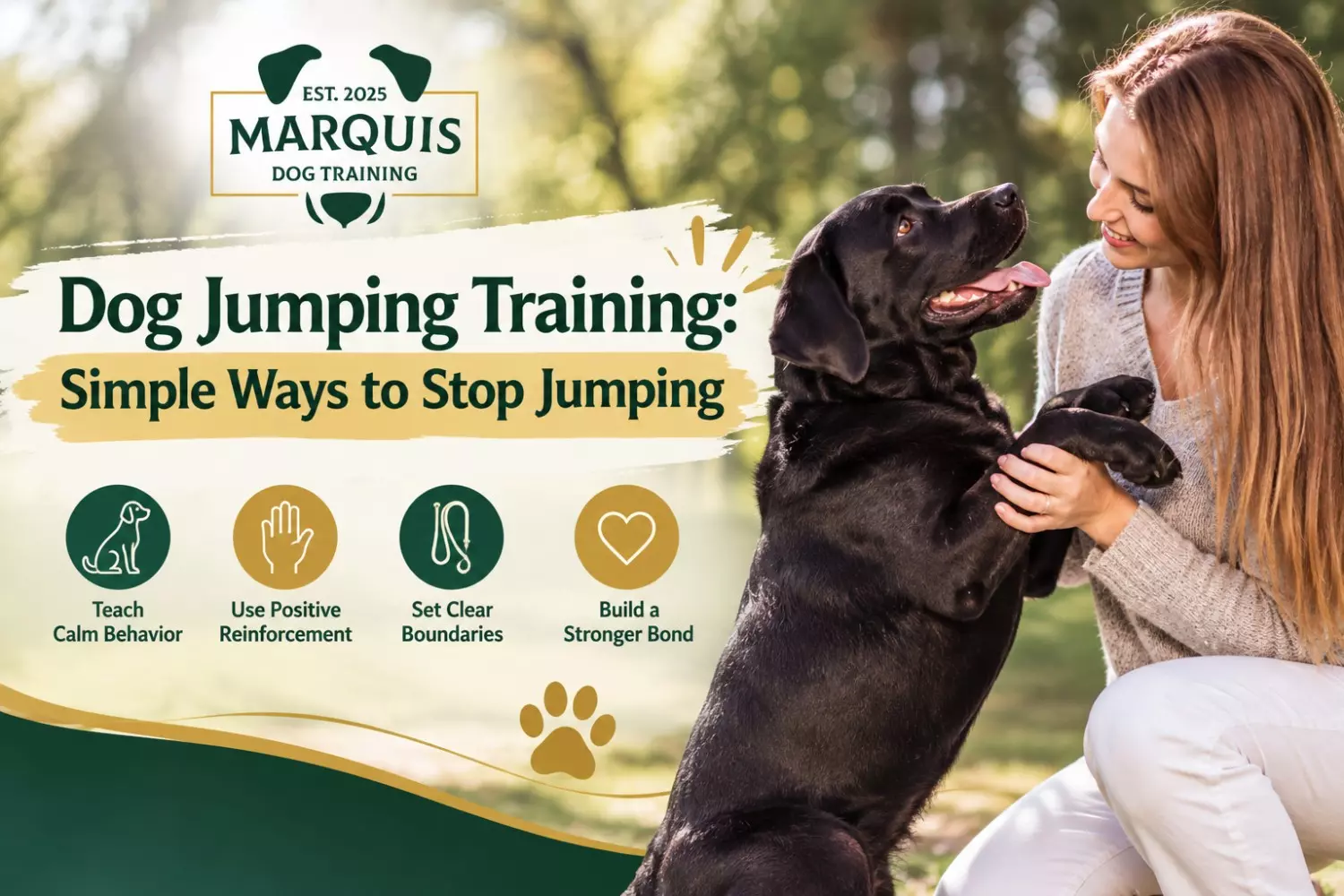
Dog Jumping Training: Simple Ways to Stop Jumping
A dog jumping on people can seem cute when they are young, but it can quickly become a frustrating habit. Dogs often jump because they want attention, greeting, play, or access to something they enjoy. Without clear guidance, they may learn that jumping gets them what they want.
Effective dog jumping training teaches your dog that calm behavior gets attention while jumping does not.
The goal is not to punish your dog, but to show them what to do instead. With consistency, patience, and clear rewards, most dogs can learn to greet people with four paws on the floor.
Why Do Dogs Jump on People?
Jumping is usually a learned behavior rather than an attempt to be difficult. Dogs naturally greet one another at close range, and puppies may jump toward people to reach their hands or faces.
Common reasons include:
- Seeking attention or affection
- Excitement when someone arrives
- Wanting to play
- Greeting unfamiliar people
- Receiving attention after jumping in the past
- Difficulty controlling excitement
Understanding the reason behind the behavior helps you choose a better training approach.
Dog Jumping Training: Teach an Alternative Behavior
The most effective approach is to teach your dog what you want them to do instead of simply telling them what not to do.
A useful alternative is sitting for greetings. When your dog approaches someone without jumping, reward the calm behavior immediately.
Start With Calm Greetings
Begin training in a quiet environment with limited distractions. Ask your dog to sit, then reward them for remaining calm.
If they stand up and jump, avoid pushing them away or giving attention. Wait until their paws return to the floor, then reward the calm behavior.
This teaches a simple lesson: calm behavior earns attention, while jumping does not.
Practice With Different People
Once your dog understands the basic exercise, gradually introduce other people. Ask friends or family members to follow the same rules.
Everyone should respond consistently. If one person rewards jumping while another ignores it, your dog may become confused about which behavior works.
How to Train a Dog Not to Jump During Greetings
If you are wondering how to train a dog not to jump, timing and consistency matter more than force.
Try this simple process:
- Have your dog on a leash when practicing greetings.
- Ask for a sit before someone approaches.
- Reward four paws on the floor.
- Allow the person to give attention only while your dog remains calm.
- If your dog jumps, have the person step back or turn away.
- Wait for calm behavior and try again.
- Repeat the exercise regularly.
Keep training sessions short. Several successful repetitions are usually more useful than one long session.
Read: Tired of Tug of War Walks Meet the Leash Thats Changing
Use Positive Reinforcement
Positive reinforcement is a practical way to build reliable behavior. Instead of focusing only on correcting mistakes, reward the behavior you want to see more often.
Rewards can include:
- Small treats
- Praise
- Petting
- A favorite toy
- Access to a person or activity
The reward should happen soon after the desired behavior so your dog can understand the connection.
Train Dog Not to Jump in Everyday Situations
Training should not happen only during planned sessions. Everyday moments provide valuable opportunities to reinforce good manners.
For example, practice when:
- You come home from work
- Someone knocks on the door
- Your dog meets a neighbor
- You prepare their food
- You get ready for a walk
- Your dog becomes excited during play
If your dog learns to remain calm in several situations, the behavior is more likely to become a reliable habit.
Common Mistakes to Avoid
Some reactions can accidentally make jumping stronger.
Giving Attention After Jumping
Talking, touching, pushing, or making eye contact can still feel rewarding to a social dog. If possible, remove attention until your dog is calm.
Being Inconsistent
Allowing jumping sometimes and correcting it at other times can slow progress. Everyone who interacts with your dog should follow the same basic rules.
Expecting Immediate Results
Dogs learn at different speeds. Excitement, age, environment, and previous habits can all affect training. Focus on steady improvement rather than perfection.
Using Harsh Corrections
Punishment can increase stress and may make greetings more difficult. Clear boundaries paired with appropriate rewards are often a more productive training strategy.
Frequently Asked Questions
1. How long does dog jumping training take?
The timeline depends on the dog and how established the habit is. Consistent daily practice can produce noticeable improvements, but reliable behavior takes repetition.
2. Should I push my dog down when they jump?
It is generally better to avoid pushing. Physical attention can accidentally reward jumping. Instead, remove attention and reward your dog when all four paws are on the floor.
3. What should I do if my dog jumps on guests?
Manage the greeting before it starts. Use a leash or another safe setup, ask for calm behavior, and have guests give attention only when your dog remains grounded.
4. Can older dogs learn not to jump?
Yes. Older dogs can learn new behaviors. They may need more repetition if jumping has been reinforced for years, but age does not prevent training.
5. Should I use treats to stop jumping?
Treats can be useful, especially when teaching a new behavior. Gradually build the behavior so your dog learns to respond reliably rather than depending on a treat every time.
6. What if my dog jumps because they are extremely excited?
Start with lower levels of excitement and slowly increase distractions. Teaching calm behaviors such as sitting, waiting, and settling can help your dog develop better impulse control.
Conclusion
Successful dog jumping training is built on consistency, timing, and clear communication. Instead of simply trying to stop jumping, teach your dog that calm greetings lead to attention, affection, and rewards.
If you are struggling with how to train a dog not to jump, professional guidance can make the process easier and more consistent. Marquis Dog Training uses practical, lifestyle-focused training to help families build calmer and more reliable behavior at home and in everyday situations.