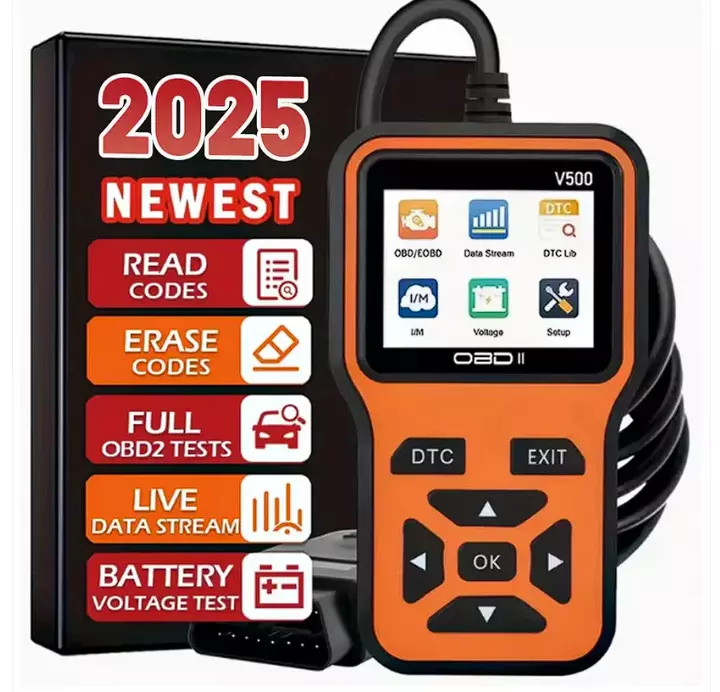
Diagnostic Tools for Accurate Testing, Reliable Results, and Everyday Use
Diagnostic tools play an important role in identifying issues, checking equipment, and gathering useful information across automotive, electronic, industrial, and technical applications.
Whether you work in a workshop, maintain equipment, troubleshoot electronic devices, or handle routine inspections, choosing suitable diagnostic tools can make testing more organized and efficient.
Different tools are designed for different purposes. Some help identify vehicle fault codes, while others measure electrical values, detect signals, or assess the condition of specific components.
Understanding the intended use, compatibility, measurement capabilities, and operating requirements of each product can help you select tools that suit your needs.
Explore the Diagnostic Tools collection at Global Swanky to discover tools and equipment for testing, troubleshooting, inspection, and everyday technical tasks.
What Are Diagnostic Tools?
Diagnostic tools are devices or instruments used to examine systems, identify potential problems, and collect information about performance or condition. They are commonly used in automotive repair, electronics, equipment maintenance, and technical troubleshooting.
Examples include vehicle code readers, multimeters, voltage testers, signal detectors, and specialized testing instruments. Each tool serves a particular purpose and provides different types of information.
For example, a vehicle diagnostic scanner can retrieve supported fault codes from a compatible vehicle system.
A digital multimeter measures electrical properties such as voltage, current, and resistance within its specified limits. Signal detectors can identify certain signals or activity, depending on their design and capabilities.
Diagnostic tools can help narrow down possible causes of a problem, but readings and alerts may require further investigation. Selecting the correct instrument and following its instructions are essential for obtaining useful results.
Key Features and Benefits
When choosing diagnostic tools, consider features that support accuracy, ease of use, durability, and compatibility.
- Accurate Measurements: Suitable instruments help provide measurements within their stated specifications.
- Clear Displays: Readable screens make results easier to interpret.
- Fault Detection: Compatible diagnostic devices help identify certain system errors.
- Easy Operation: Straightforward controls simplify routine testing.
- Portable Design: Compact tools are convenient for workshops and field use.
- Broad Compatibility: Supported systems and connections vary by model.
- Durable Construction: Quality materials help tools withstand regular handling.
- Multiple Functions: Some instruments combine several testing capabilities.
- Reliable Connections: Suitable probes, cables, and connectors support proper operation.
- Practical Storage: Cases and organized accessories help protect equipment between uses.
Always review measurement ranges, accuracy specifications, supported systems, safety ratings, included accessories, and operating instructions before purchasing.
Different Types of Diagnostic Tools
Automotive Diagnostic Scanners
Automotive diagnostic scanners connect to compatible vehicle diagnostic systems to retrieve fault codes and selected operating information. Depending on the model, they may provide engine codes, live data, readiness information, or access to additional vehicle systems.
Basic code readers often focus on a limited range of diagnostic functions, while more advanced scanners may support additional modules and service features. Vehicle coverage can differ by make, model, year, and diagnostic protocol.
Before choosing a scanner, confirm compatibility with your vehicle and check which systems it can access. Review connection requirements, display options, software updates, and whether the device requires a smartphone or computer.
A fault code is a starting point for troubleshooting rather than a complete diagnosis. Further inspection may be necessary to identify the underlying cause and determine the appropriate repair.
Digital Multimeters
Digital multimeters are used to measure electrical properties such as voltage, current, and resistance. They are useful in electronics work, electrical troubleshooting, and selected equipment maintenance tasks.
Features vary by instrument and may include continuity testing, diode testing, capacitance measurement, or other functions. Measurement ranges, accuracy, input protection, and display resolution differ between models.
When selecting a multimeter, consider the types of measurements you need, the expected electrical conditions, probe quality, and the instrument's safety ratings. Make sure the tool is suitable for the intended circuit and measurement category.
Follow the manufacturer's instructions for connecting probes and selecting measurement settings. Incorrect use can damage equipment or create an electrical hazard, particularly when working with high-energy circuits.
Voltage Testers
Voltage testers help determine whether electrical voltage is present in a particular application. Different designs include contact testers, non-contact voltage detectors, and instruments intended for specific electrical systems.
Some testers provide a simple visual or audible indication, while others offer additional measurement information. Their detection range and suitable applications depend on the model.
Check the supported voltage range, safety rating, battery requirements, and instructions before use. Test the instrument according to the manufacturer's recommended procedure, and do not assume that a single indication confirms an entire circuit is safe.
Use an appropriate tester for the electrical environment and seek qualified assistance when working with unfamiliar or hazardous installations.
Signal Detectors
Signal detectors are designed to identify certain types of electronic or radio-frequency activity, depending on the device. They may be used for selected technical inspections, equipment checks, or signal-related troubleshooting.
Available features can include adjustable sensitivity, indicator lights, audible alerts, or a display. Detection range and supported signal types vary, and environmental interference may affect results.
Before purchasing, review the frequency ranges, detection capabilities, operating environment, and limitations specified by the manufacturer. Consider whether the device is intended for general signal detection or a more specialized application.
A detector should not be assumed to identify every signal source or provide conclusive results in all environments. Follow the instructions and use additional testing methods when necessary.
Electronic Component Testers
Electronic component testers help examine selected components and identify certain electrical characteristics. Depending on their design, they may test resistors, capacitors, diodes, transistors, and other supported components.
Some instruments automatically identify connected components, while others require the user to select a test mode or enter specific parameters. Supported component types and measurement ranges differ between devices.
Check which components the tester supports, whether it requires an external power source, and how results are displayed. Confirm that the component can be tested safely using the chosen method.
Where required, disconnect components from powered circuits and follow appropriate discharge procedures before testing. Consult the instrument manual to avoid damaging the tool or component.
Temperature Measurement Tools
Temperature diagnostic tools help measure surface or environmental temperatures in selected applications. Depending on the design, options may include contact thermometers and infrared temperature meters.
Infrared devices measure surface temperature without direct contact, making them useful for some inspections. However, readings can be affected by surface characteristics, distance, environmental conditions, and instrument specifications.
When choosing a temperature tool, review its measurement range, stated accuracy, response time, and intended use. Consider whether you need contact measurement or non-contact readings.
Use the instrument within its specified limits and follow the manufacturer's guidance when measuring hot equipment, moving machinery, or other potentially hazardous surfaces.
Pressure and Fluid Testing Instruments
Pressure and fluid testing instruments help assess selected pressure levels or fluid-related conditions in compatible systems. Their applications may include vehicle maintenance, machinery, plumbing, and other technical environments.
Different instruments are designed for different pressures, connection types, fluids, and operating conditions. A tool suitable for one system may not be appropriate for another.
Before purchasing, verify the pressure range, connection specifications, material compatibility, and any required adapters. Check whether the instrument is intended for the particular system you plan to test.
Never exceed the tool's rated limits or use an instrument with incompatible fluids or fittings. Follow safety instructions and depressurize systems where required before connecting or removing equipment.
Cable and Connection Testers
Cable testers help identify certain wiring and connection problems in supported cable types. Depending on the model, they may check continuity, wire mapping, selected connection faults, or other characteristics.
These tools are useful when organizing installations, troubleshooting connections, or verifying cables before use. Supported connectors and cable categories vary by product.
Check compatibility with the cable type, connector design, and testing functions you require. Consider the included adapters, display indicators, portability, and power source.
A basic continuity test does not necessarily verify signal quality, bandwidth, or the performance of a complete network. Select a tester with capabilities appropriate to the task.
Mechanical Inspection Tools
Mechanical inspection tools help assess dimensions, movement, alignment, and selected physical characteristics. Depending on the application, these may include gauges, measuring instruments, and specialized inspection devices.
Different tools provide different levels of precision and are designed for particular materials or measurement tasks. Correct use and calibration can influence the usefulness of the results.
Review the measurement range, resolution, construction, and calibration requirements before selecting an instrument. Consider whether the tool is intended for workshop use, field inspections, or more controlled measurement environments.
Store measuring tools properly and protect their contact surfaces from damage. Follow manufacturer guidance for cleaning, calibration, and periodic inspection.
Read: Benefits and Risks of Nuclear Cardiology for Heart Health
How to Choose the Right Diagnostic Tools
Identify Your Testing Requirements
Start by defining the system or component you need to examine. Automotive fault-code checks, electrical measurements, cable testing, and signal detection require different instruments.
Make a list of the measurements or information you need to collect. This helps narrow the options and prevents you from choosing a tool with unnecessary functions or insufficient capabilities.
If your work involves several different systems, compare whether a multifunction instrument can meet your requirements or whether specialized tools would be more suitable.
Check Compatibility and Specifications
Compatibility is essential when selecting diagnostic equipment. Automotive scanners may support only certain vehicles or systems, while electrical testers have specific measurement limits and safety ratings.
Review the manufacturer's specifications, supported connections, operating conditions, and required accessories. For digital devices, check software requirements, supported operating systems, and update availability when applicable.
If specifications are unclear, confirm them before ordering rather than assuming that a product will work with your equipment.
Consider Accuracy and Measurement Range
Choose a tool with a measurement range and accuracy suitable for your intended tasks. A device that cannot measure the required range may provide incomplete information or be unsuitable for the application.
Review the stated accuracy, resolution, tolerance, and calibration information. For repeated measurements, consider whether the instrument provides consistent results under the expected conditions.
Use readings within the limits specified by the manufacturer and seek additional testing when results appear inconsistent.
Evaluate Build Quality and Durability
Diagnostic tools may be used frequently in workshops, garages, field locations, or technical environments. Consider the quality of the housing, probes, cables, connectors, buttons, and protective case.
If you work in demanding conditions, review the stated resistance to dust, moisture, impact, or temperature changes. Do not assume a tool is suitable for harsh environments unless its specifications confirm this.
A well-designed instrument with replaceable accessories and clear maintenance guidance may provide better long-term value.
Review Ease of Use
Look for clear displays, understandable controls, useful indicators, and instructions that match your experience level. Some advanced instruments require technical knowledge to configure and interpret correctly.
Consider whether you need automatic testing functions, data storage, connectivity, or report generation. Choose features that help with your actual workflow rather than paying for functions you are unlikely to use.
For tools used by several people, straightforward operation and consistent procedures can make routine testing easier to manage.
Check Safety Requirements
Diagnostic work may involve electrical energy, hot surfaces, pressurized systems, or moving equipment. Choose instruments rated for the intended application and follow the manufacturer's safety instructions.
Inspect cables, probes, insulation, connectors, and housings before use. Do not use equipment that is damaged or exceeds its stated limits.
When testing involves high voltage, complex vehicle systems, or other hazardous conditions, seek assistance from a qualified professional if you do not have the necessary training.
Compare Price and Overall Value
Compare products based on their specifications, supported functions, build quality, accessories, and maintenance needs. The least expensive tool may not offer the measurement range or compatibility you require.
Consider calibration, replacement probes, batteries, software subscriptions, and other ongoing costs where applicable. For occasional tasks, a simple instrument may be sufficient; frequent professional use may require more advanced features.
Choose a diagnostic tool that meets your requirements and provides practical value over its expected service life.
Diagnostic Tools Care and Maintenance Tips
Proper care helps preserve diagnostic tool performance and usability.
- Inspect Before Use: Check cables, probes, housings, and connectors for damage.
- Keep Tools Clean: Use cleaning methods approved by the manufacturer.
- Store Securely: Use cases or suitable storage areas to protect instruments.
- Check Batteries: Replace batteries according to the recommended schedule.
- Follow Calibration Guidance: Arrange calibration when required for the instrument and application.
- Protect Test Leads: Avoid pulling, twisting, or sharply bending cables.
- Use Correct Settings: Select the appropriate measurement mode and range.
- Avoid Excess Loads: Never exceed specified electrical, temperature, or pressure limits.
- Maintain Accessories: Replace damaged probes, adapters, and leads with compatible parts.
- Follow Instructions: Use each tool only for its intended purpose.
Keep diagnostic equipment away from unsuitable moisture, excessive heat, and conditions outside its operating specifications. Regular inspections and proper storage help keep tools ready for future testing.
Explore Diagnostic Tools at Global Swanky
Choosing suitable diagnostic tools begins with understanding the system you need to test, the information you want to collect, and the accuracy and safety requirements of the task.
Comparing compatibility, measurement range, features, durability, and ease of use can help you find an instrument that fits your needs.
Visit Global Swanky to explore available products and technical accessories. Browse the Diagnostic Tools collection, review individual product specifications, and confirm the intended application before purchasing.
Selecting an appropriate tool and using it according to the manufacturer's guidance can help make inspection and troubleshooting more organized.
Frequently Asked Questions
What Are Diagnostic Tools Used For?
Diagnostic tools are used to test systems, measure selected values, identify possible faults, and gather technical information. Their applications include automotive maintenance, electronics, equipment inspection, and troubleshooting.
How Do I Choose the Right Diagnostic Tool?
Identify the task you need to perform, then compare compatibility, measurement range, accuracy, safety ratings, and ease of use. Review the manufacturer's specifications before buying.
Are Diagnostic Tools Suitable for Beginners?
Some tools are designed for straightforward checks, while others require technical training. Beginners should choose instruments appropriate to their experience and follow all operating and safety instructions.
Do Diagnostic Tools Need Calibration?
Some measuring instruments require periodic calibration to help maintain measurement reliability. Requirements depend on the tool, its use, and the manufacturer's guidance.
How Should I Maintain Diagnostic Tools?
Inspect tools before use, keep them clean, store them securely, protect cables and probes, and replace damaged accessories. Follow the manufacturer's recommendations for calibration, batteries, and maintenance.