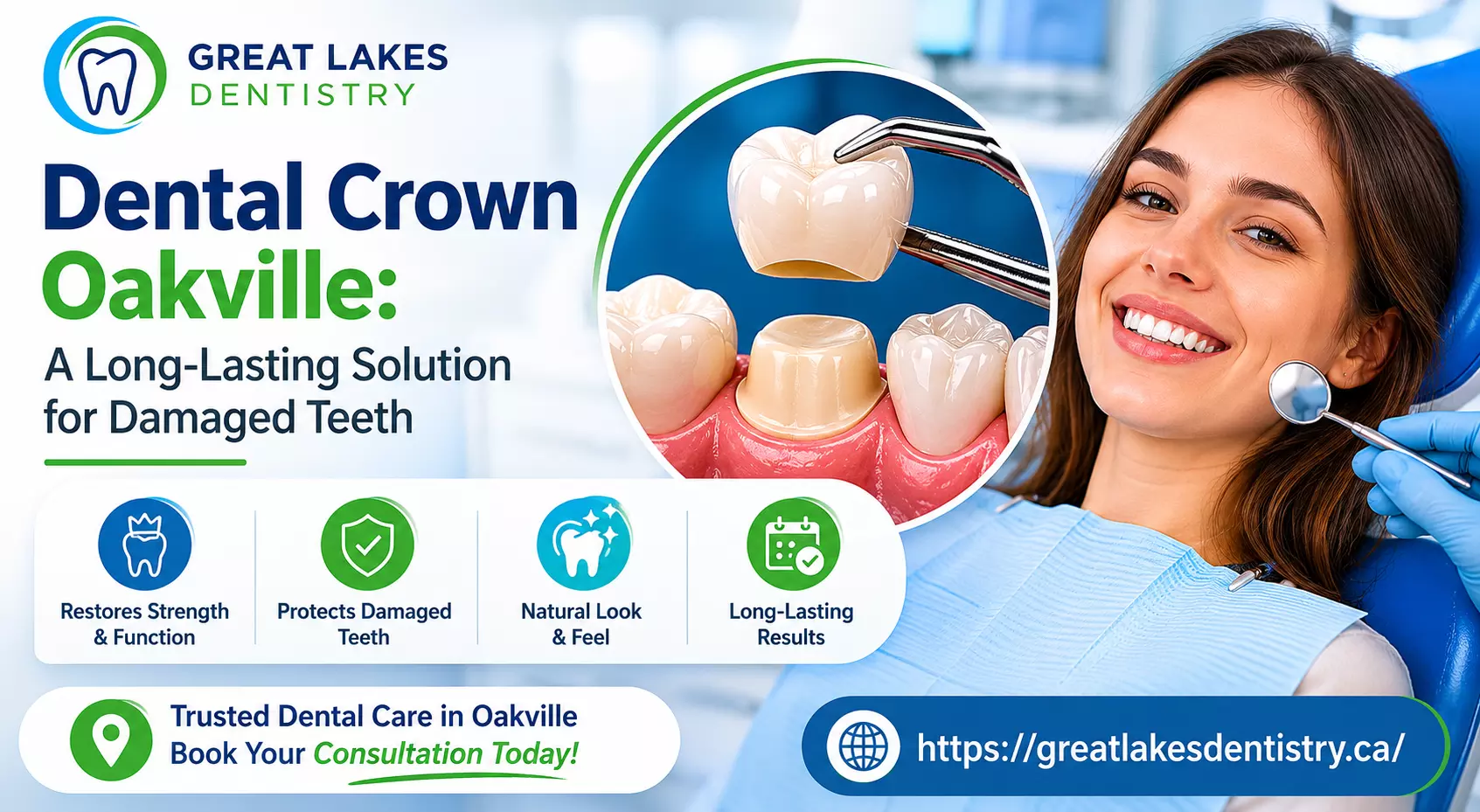
Dental Crown Oakville: A Long-Lasting Solution for Damaged Teeth
Damaged, cracked, or weakened teeth can affect more than just your smile. They can make chewing uncomfortable, increase tooth sensitivity, and lead to further oral health complications if left untreated. Fortunately, modern dental crowns provide a durable and natural-looking solution for restoring damaged teeth while protecting them from future problems.
If you are considering dental crowns in Oakville, understanding how they work, their benefits, and the treatment process can help you make a confident decision about your oral health. In this guide, we’ll explain everything you need to know about dental crowns and why they remain one of the most trusted restorative dentistry treatments available today.
What Is a Dental Crown?
A dental crown is a custom-made cap placed over a damaged or weakened tooth to restore its shape, size, strength, and appearance. Crowns are carefully designed to blend naturally with your surrounding teeth while improving both function and aesthetics.
Dental crowns are commonly used to:
- Protect weakened teeth
- Restore broken or worn teeth
- Cover large fillings
- Strengthen teeth after root canal treatment
- Improve the appearance of discoloured or misshapen teeth
- Support dental bridges
- Restore dental implants
Modern dental crowns are made from durable materials such as porcelain, ceramic, zirconia, or metal alloys depending on the patient’s needs and preferences.
Why You May Need a Dental Crown
There are several situations where a dentist may recommend a dental crown to protect and restore your tooth.
Cracked or Broken Teeth
Teeth can crack or fracture due to injury, grinding, chewing hard foods, or accidents. A dental crown helps hold the tooth together and prevents further damage.
Severe Tooth Decay
When a tooth has extensive decay that cannot be repaired with a regular filling, a crown may provide the support needed to restore the tooth.
After Root Canal Treatment
Root canal therapy removes infected tissue from inside the tooth, but the tooth may become more fragile afterward. Crowns strengthen and protect treated teeth.
Worn-Down Teeth
Teeth worn down from grinding or erosion may lose strength and function. Dental crowns help rebuild their structure and durability.
Cosmetic Improvements
Crowns can improve the appearance of stained, misshapen, or uneven teeth, helping create a more balanced and attractive smile.
Benefits of Dental Crowns
Dental crowns remain a popular restorative option because they offer both cosmetic and functional advantages.
Restores Tooth Strength
Crowns reinforce weakened teeth and reduce the risk of fractures or additional damage.
Improves Appearance
Custom-made crowns are designed to match the colour and shape of your natural teeth for a seamless smile.
Enhances Chewing Ability
Damaged teeth can make eating uncomfortable. Crowns restore proper chewing function and bite alignment.
Long-Lasting Solution
With proper care, dental crowns can last many years while maintaining their appearance and strength.
Protects Oral Health
By covering and strengthening damaged teeth, crowns help prevent future dental complications and preserve natural teeth.
Types of Dental Crowns
Different crown materials offer unique benefits depending on the location of the tooth and your dental needs.
Porcelain Crowns
Porcelain crowns are highly popular because they closely resemble natural teeth and provide excellent aesthetics.
Ceramic Crowns
Ceramic crowns are metal-free and ideal for patients seeking a natural appearance or those with metal sensitivities.
Zirconia Crowns
Zirconia crowns are known for their exceptional durability and strength while still offering a natural appearance.
Metal Crowns
Metal crowns are extremely durable and often used for molars where chewing pressure is greatest.
Porcelain-Fused-to-Metal Crowns
These crowns combine the strength of metal with the appearance of porcelain for balanced performance.
What to Expect During the Dental Crown Procedure
The Dental Crown Oakville process is typically completed over two appointments, although some clinics may offer same-day crowns using advanced technology.
Initial Examination
Your dentist will examine your tooth, take digital X-rays, and determine whether a crown is the best treatment option.
Tooth Preparation
The tooth is carefully reshaped to create room for the crown while preserving as much healthy tooth structure as possible.
Dental Impressions
Impressions or digital scans are taken to create a custom crown that fits comfortably and naturally.
Temporary Crown Placement
A temporary crown may be placed to protect the tooth while the permanent crown is being fabricated.
Permanent Crown Placement
Once your custom crown is ready, your dentist will check the fit, appearance, and bite alignment before securely bonding it into place.
Are Dental Crowns Painful?
Most patients experience little to no discomfort during the procedure because local anesthesia is used to numb the area. Mild sensitivity may occur afterward, but it usually resolves quickly.
Modern dental techniques and advanced technology help make the treatment comfortable and stress-free.
How Long Do Dental Crowns Last?
The lifespan of a dental crown depends on oral hygiene, eating habits, and regular dental care.
On average, dental crowns can last between 10 to 15 years or longer with proper maintenance. Some crowns may last decades when cared for properly.
How to Care for Your Dental Crown
Good oral hygiene is essential for maintaining your dental crown and surrounding teeth.
Brush and Floss Daily
Keep your teeth and gums healthy by brushing twice daily and flossing carefully around the crown.
Avoid Hard Foods
Chewing ice, hard candy, or non-food objects may damage the crown over time.
Wear a Night Guard if Needed
If you grind your teeth at night, your dentist may recommend a night guard to protect your crown.
Visit Your Dentist Regularly
Routine dental exams and cleanings help monitor the condition of your crown and overall oral health.
Read: Dental Implants Oakville: Natural-Looking Tooth Replacement
Dental Crowns vs Fillings
Patients often wonder whether they need a filling or a crown.
Fillings
Fillings are ideal for small areas of decay or minor tooth damage.
Crowns
Crowns are recommended when a tooth has extensive damage, large fillings, fractures, or weakness that requires full coverage and protection.
Your dentist will evaluate the condition of your tooth and recommend the most appropriate treatment option.
Are Dental Crowns Noticeable?
Modern dental crowns are designed to look highly natural. Materials like porcelain and ceramic closely mimic the appearance of natural enamel, making crowns difficult to distinguish from surrounding teeth.
Most patients feel more confident smiling after receiving a dental crown.
Why Choose Dental Crowns in Oakville?
Choosing an experienced Oakville dental clinic ensures your treatment is completed using modern restorative dentistry techniques and high-quality materials. Personalized care, advanced imaging, and precise crown fabrication help improve both comfort and long-term results.
A professional dental consultation can determine the best restorative option for your individual oral health needs.
Final Thoughts
Dental crowns are one of the most reliable and effective solutions for restoring damaged teeth while improving oral health and appearance. Whether your tooth has been weakened by decay, injury, grinding, or root canal treatment, a custom dental crown can help protect your smile for years to come.
If you are considering dental crowns in Oakville, scheduling a consultation with an experienced dentist is the first step toward restoring your healthy, confident smile.
Frequently Asked Questions (FAQ)
How long does a dental crown procedure take?
Traditional dental crowns usually require two appointments over a few weeks. Some clinics offer same-day crowns using digital technology.
Are dental crowns permanent?
Dental crowns are considered a long-term restoration, but they may eventually need replacement after many years of use.
Can dental crowns look natural?
Yes. Modern crowns are custom-designed to match the shape, size, and colour of your surrounding teeth for a natural appearance.
Is getting a dental crown painful?
The procedure is generally comfortable because local anesthesia is used. Mild sensitivity afterward is normal and temporary.
Can a dental crown fix a broken tooth?
Yes. Crowns are commonly used to restore broken, cracked, or severely damaged teeth.
How do I clean my dental crown?
Brush and floss daily just like your natural teeth. Maintaining good oral hygiene helps extend the lifespan of your crown.
Can dental crowns stain?
Porcelain and ceramic crowns are highly stain-resistant, although maintaining good oral hygiene is still important.
What happens if a dental crown falls off?
Contact your dentist immediately. In many cases, the crown can be reattached or replaced if necessary.
Are crowns stronger than fillings?
Crowns generally provide more strength and protection than fillings because they fully cover the tooth.
Who is a good candidate for dental crowns?
Patients with weakened, damaged, cracked, or cosmetically imperfect teeth may benefit from dental crowns after a professional dental evaluation.