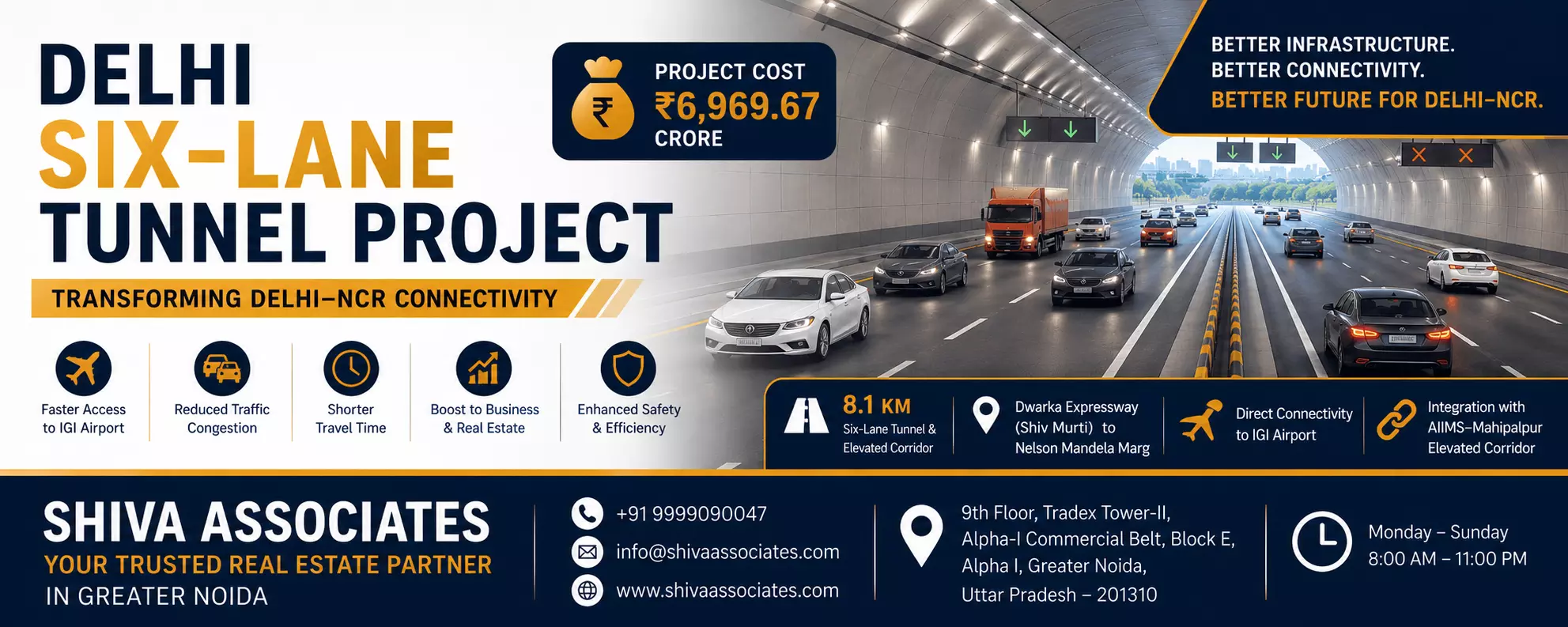
What Is the Delhi Six-Lane Tunnel Project and Why Does It Matter?
India's urban infrastructure is evolving rapidly, with governments investing in projects that improve transportation, reduce congestion, and support long-term economic growth.
One of the latest initiatives attracting attention is the Delhi Six-Lane Tunnel Project, an ambitious development aimed at strengthening connectivity across Delhi-NCR.
While roads and expressways often make headlines, tunnels are equally important because they help create faster, uninterrupted travel routes through densely populated urban areas.
This project is expected to become another significant milestone in Delhi's expanding transportation network.
Understanding the Delhi Six-Lane Tunnel Project
The Delhi Six-Lane Tunnel Project is designed as an 8.1-kilometre six-lane tunnel and elevated corridor connecting the Dwarka Expressway near Shiv Murti with Nelson Mandela Marg in Vasant Kunj.
The objective is straightforward: provide a smoother traffic corridor, reduce bottlenecks, and improve connectivity between key parts of Delhi and the National Capital Region.
The project is expected to benefit thousands of daily commuters by offering a more direct travel route while easing pressure on existing roads.
Why Better Connectivity Matters
Urban populations continue to grow, increasing the demand for efficient transportation systems.
Poor connectivity often leads to:
- Longer travel times
- Increased fuel consumption
- Higher vehicle emissions
- Traffic congestion
- Reduced productivity
Modern infrastructure projects aim to solve these challenges by improving traffic flow and creating better links between residential, commercial, and business districts.
Benefits Beyond Daily Commuting
Although commuters will be among the primary beneficiaries, infrastructure projects like this have broader advantages.
Economic Growth
Improved transportation supports businesses by making the movement of goods and people more efficient.
Better Regional Integration
Large cities no longer function independently. Delhi, Gurugram, Noida, Ghaziabad, and Greater Noida form an interconnected economic region where efficient transportation is essential.
Environmental Impact
Reduced congestion generally results in lower fuel consumption and fewer emissions, contributing to cleaner urban environments.
Emergency Services
Faster roads can also improve response times for ambulances, fire services, and disaster management teams.
Read: How much does it cost to design an exhibition booth in
Infrastructure and Urban Development
Throughout the world, infrastructure has played an important role in shaping cities.
Better roads, airports, metro systems, and rail corridors often encourage commercial development while making surrounding areas more accessible.
The Delhi Six-Lane Tunnel complements several ongoing projects across Delhi-NCR, including airport expansion, expressway development, metro extensions, and rapid transit systems.
Together, these investments are helping create a more integrated transportation network for one of India's fastest-growing metropolitan regions.
Looking Ahead
Large infrastructure projects require significant planning, investment, and execution. While construction takes time, their long-term benefits often extend well beyond transportation.
Improved connectivity can support economic activity, enhance mobility, encourage regional development, and improve the overall commuting experience for millions of people.
As Delhi-NCR continues to grow, projects like the Delhi Six-Lane Tunnel demonstrate the importance of investing in modern infrastructure to meet future transportation needs.
Understanding these developments helps citizens appreciate how infrastructure shapes urban life and contributes to sustainable regional growth.