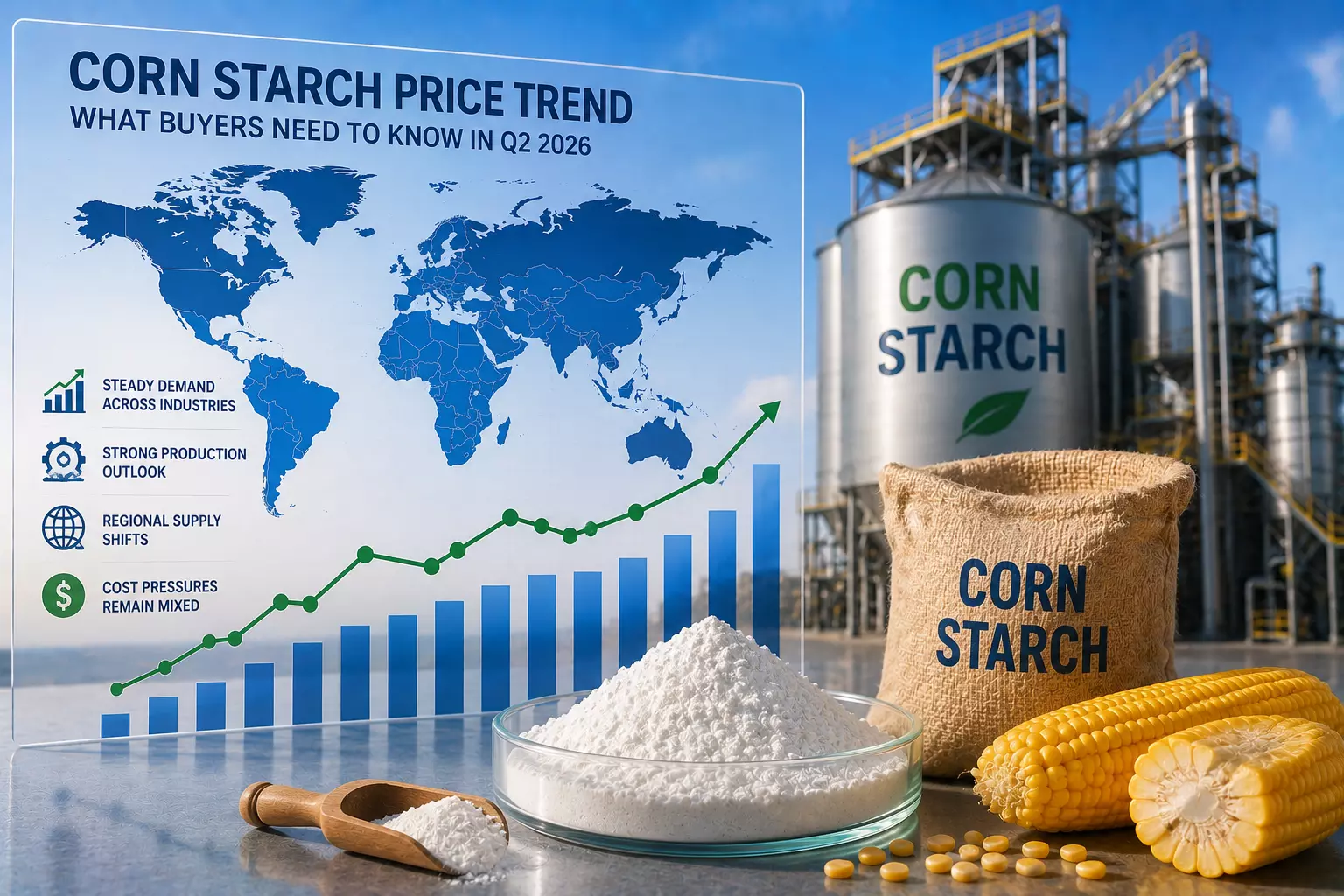
Corn Starch Price Trend: What Buyers Need to Know in Q2 2026
I've talked to enough procurement folks to know one thing corn starch prices never sits still for long.
One month it's a shortage of feedstock corn, the next it's a container shortage out of a major port. China and India happen to sit on opposite ends of that puzzle right now, and the numbers show it clearly.
Take a look at May 2026: China's exporting corn starch at USD 418.84/MT FOB, while India's landing it at USD 552.08/MT CIF. That's roughly USD 133 per metric ton separating the two.
First reaction? That seems steep. But a lot of that gap has nothing to do with the actual product it's about how each price gets quoted.
Current Corn Starch Prices by Region
Here's what the numbers look like this month:
- China (FOB): USD 418.84/MT
- India (CIF): USD 552.08/MT
China's FOB number reflects cost at the port of origin — nothing added for freight, insurance, or import duties yet. India's CIF price already has those shipping and insurance costs folded in, because it's quoted at the destination port.
So a chunk of that gap is just how the pricing terms work, not anything dramatic happening with supply.
Even so, that's only part of the story. What each country grows, processes, and consumes locally matters just as much.
Why China and India Land So Far Apart
China's built a genuinely massive corn starch processing base over the years, backed by steady domestic corn supply.
That combination usually keeps FOB pricing competitive, particularly in years when corn stocks hold up well.
India's situation looks different. Some demand gets covered through imports, and local processors often face steeper input costs than what Chinese manufacturers deal with. Tack on freight and insurance for CIF shipments, and the landed cost ends up well above the export price quoted at origin.
It's easy to look at these two figures side by side and assume China is simply the cheaper market.
But FOB and CIF aren't measuring the same thing — one's a price at the dock, the other's a price at your warehouse door, more or less. Line them up directly and you'll draw the wrong conclusion.
What's Actually Moving Corn Starch Prices This Year
A few things are pushing and pulling on prices at the same time:
- Corn crop conditions in the big growing regions set the baseline for what processors pay for raw material.
- Energy and processing costs haven't let up much, keeping pressure on manufacturer margins.
- Freight rates hit CIF pricing much harder than FOB, since shipping's already built into the CIF number.
- Currency movements against the US dollar can shift landed costs even when production costs stay flat.
- Steady demand from food processing, paper, and textile makers keeps consumption from dropping much, even when prices swing.
None of these move in a vacuum. A rough corn harvest paired with climbing freight rates, say, can push prices up faster than either one would alone.
What This Means If You're Buying
For anyone placing purchase orders, FOB versus CIF isn't just a technicality — it changes how you plan your budget.
FOB gives a cleaner read on the manufacturer's base cost, but you'll still need to add freight, insurance, and duties yourself to land on the real cost.
CIF, like what India's quoting now, makes budgeting easier since those costs are already baked in. The catch is you lose visibility into how much of the price is product and how much is shipping.
One habit worth building: always ask suppliers for FOB and CIF quotes side by side. That gives you a real basis for comparison, instead of guessing at the freight gap yourself.
Read: The Science Behind Fresh, Safe, and Sustainable Burgers
Where Corn Starch Prices Could Head Next
Watch the harvests — that's really what it comes down to. A strong corn crop later this year, and prices could ease off a bit. Bad weather in the growing belts, and supply tightens fast.
On top of that, freight costs will keep swinging CIF numbers around more than FOB ones, so if you're buying landed, keep half an eye on shipping rates too, not just what's happening with corn futures.
Right now though? China and India's gap looks pretty routine for an FOB-to-CIF spread. Mostly logistics and import setup doing the work, not some big shift underneath in actual demand.
Final Thoughts
So where does that leave things? China's sitting at USD 418.84/MT FOB, India's at USD 552.08/MT CIF, and most of that spread traces back to shipping, insurance, and import costs — not some big shift in how corn starch gets made. Don't just glance at the headline number.
Dig into what's actually included before comparing across markets. The buyers who avoid getting blindsided are usually the ones checking both FOB and CIF figures regularly, and paying attention to freight news and harvest reports along the way.
FAQs
What is the current corn starch price trend in 2026?
Heading into May 2026, China's corn starch sat at USD 418.84/MT FOB while India's stood at USD 552.08/MT CIF. That difference mostly traces back to how each figure gets quoted — export versus landed — rather than any dramatic swing in global demand.
Why does corn starch cost less in China than in India?
China's rate is quoted FOB, so shipping and insurance haven't been added yet. India's rate is CIF, already carrying those costs. A good part of that price gap traces back to logistics terms rather than China simply producing starch more cheaply.
What factors push corn starch prices up or down?
Several things matter here — how the corn harvest turns out, energy and processing costs, freight rates, and currency shifts against the dollar. Out of these, harvest conditions in the largest growing regions usually swing prices the most.
How do FOB and CIF pricing actually differ for corn starch?
FOB reflects the cost right at the origin port, before any shipping gets tacked on. CIF already folds in freight and insurance all the way to the destination port. Skip that adjustment when comparing prices, and you'll likely reach the wrong conclusion.
Could corn starch prices climb higher later in 2026?
That mostly hinges on how the next corn harvest turns out and where freight rates head. A solid crop yield could bring costs down somewhat. But supply hiccups or pricier shipping routes could just as easily send landed prices climbing, particularly for CIF buyers like India.