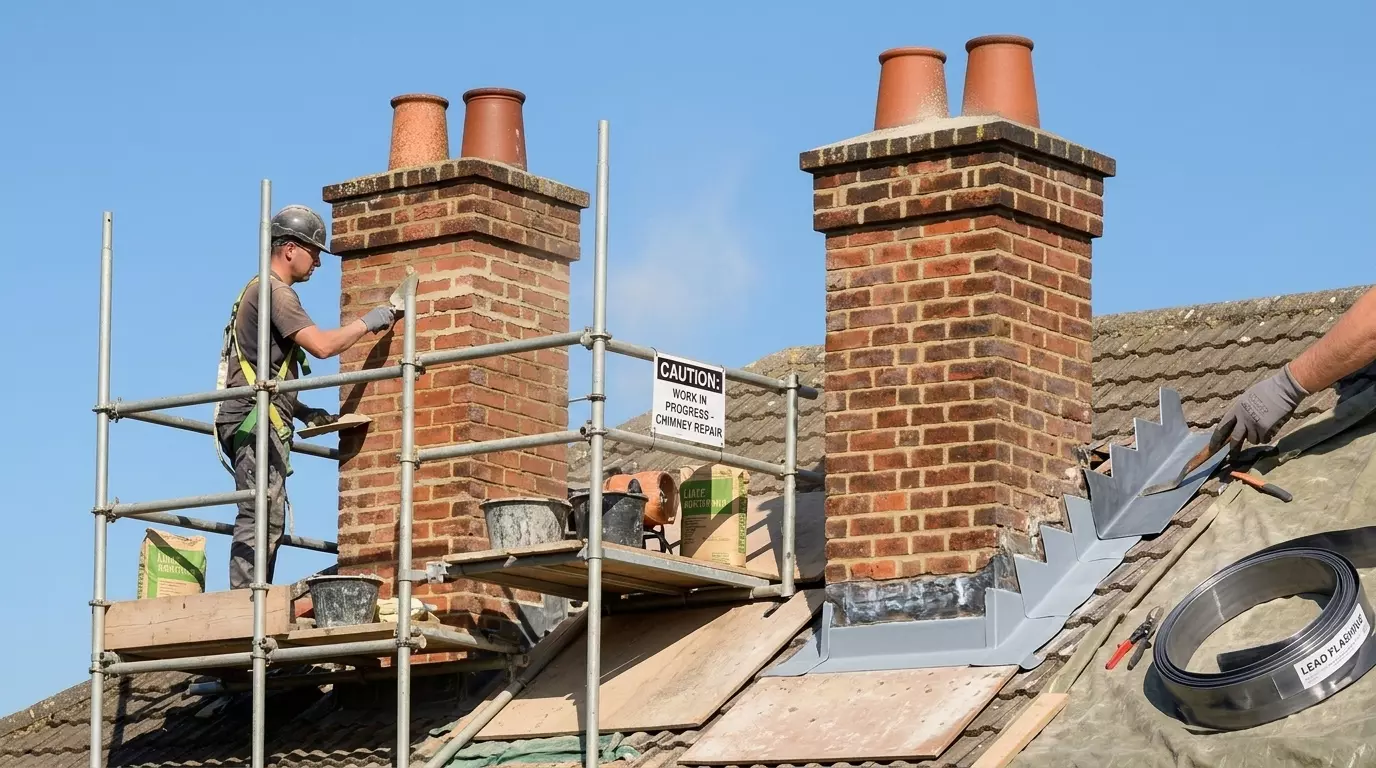
Chimney Work in Hull East Riding Yorkshire
Chimneys are exposed sections of a property and can require attention as they age. Their position above the roof means they experience weather exposure, while their connection with the roof creates additional areas where deterioration can become important.
For property owners researching Chimney Work in Hull, understanding the different parts of a chimney and recognizing potential warning signs can help when deciding whether an inspection is needed.
Why chimney condition matters
A chimney is not simply a decorative feature above the roof. It is a structure that passes through or rises from the roof and therefore has to remain suitably integrated with the surrounding roofing system.
Problems can occur in different areas, including masonry, joints, the chimney top, or the area where the chimney meets the roof.
Because several components can be involved, the visible symptom may not always identify the precise cause.
Common signs of chimney deterioration
Chimney problems can present themselves in several ways. Some are visible from outside, while others may become apparent through moisture entering the property.
Potential signs include:
- Cracked or deteriorated masonry
- Loose or damaged areas
- Deteriorated mortar joints
- Signs of water penetration
- Damage around the chimney's roof junction
- Visible changes to the chimney structure
- Deterioration around the chimney top
Not every visible defect indicates a serious structural problem, but it can still be worth investigating.
The chimney and roof junction
The point where a chimney meets the roof is particularly important. This area needs to manage the transition between the vertical chimney structure and the sloping roof.
If this junction becomes vulnerable, rainwater may find a route into the building.
Importantly, a leak appearing near a chimney does not necessarily mean the chimney masonry itself is the only problem. Roofing details around the junction may also need to be considered.
A proper assessment should therefore look at the chimney and the surrounding roof rather than treating them as completely separate features.
Mortar and masonry
Masonry chimneys are exposed to changing weather conditions throughout the year. Mortar joints can deteriorate, while individual areas of masonry may become damaged over time.
Visible cracks or deteriorated joints should not automatically be ignored. The extent and location of the deterioration can help determine whether maintenance or more extensive work is required.
Addressing a developing issue can be preferable to allowing deterioration to continue unnoticed.
When should chimney work be considered?
Chimney work may be appropriate when there are visible signs of deterioration, water-related problems, or concerns about the condition of the chimney structure.
An inspection can help establish what needs attention. Depending on the condition, the required work may involve a particular area rather than the entire chimney.
This is why it is useful to avoid making assumptions based only on the age or appearance of a chimney.
Read: Roofing Milton – Complete Guide to Roof Repair & Replacement
Chimney problems and water
Water is one of the key concerns around deteriorating chimney areas. Because the chimney rises above the roof, several exposed surfaces and junctions can potentially be affected by rainfall.
Water entering around a chimney can lead to interior signs such as dampness or staining. However, the point where the moisture becomes visible may not be the exact location where water first entered.
Tracing the source is therefore an important part of understanding a chimney-related leak.
Considering the wider roof
Chimney work should be approached with the surrounding roof in mind.
The roof covering, chimney junction, roof edges, and associated details all work together to keep weather outside the building. A problem affecting one part can sometimes make another area appear to be responsible.
Looking at the complete arrangement can provide a more useful understanding of what work is actually needed.
Dealing with chimney concerns early
Visible deterioration is easier to assess when it is identified early. Property owners do not necessarily need to wait until a significant leak or obvious damage develops before seeking an assessment.
A change in the appearance of masonry, damaged joints, or signs of moisture can all provide reasons to investigate.
Early attention does not automatically mean extensive work is required. It simply provides an opportunity to establish the condition and choose an appropriate response.
FAQs
1. What does chimney work involve?
The exact work depends on the condition and problem involved. It can relate to chimney masonry, joints, roof junctions, or other chimney-related areas.
2. What are signs that a chimney needs attention?
Cracks, deteriorated mortar, damaged masonry, water penetration, and visible changes can all indicate that an inspection may be appropriate.
3. Can a chimney cause a roof leak?
Yes, problems around the chimney or its junction with the roof can provide potential routes for water to enter.
4. Does a chimney leak always mean the chimney itself is damaged?
No. Roofing details around the chimney can also contribute to water ingress, so the surrounding area should be considered.
5. Should cracked chimney mortar be ignored?
It is better to have noticeable deterioration assessed rather than assuming it will resolve itself.
6. Does every chimney problem require complete rebuilding?
No. The appropriate work depends on the extent and nature of the problem.
7. When should I have a chimney checked?
An inspection can be worthwhile when you notice visible deterioration, water-related signs, or other changes around the chimney or roof junction.
For local property owners looking into chimney or wider roofing requirements, Roofing company in Hull East Riding Yorkshire provides a local reference point for roofing services in Hull and East Riding Yorkshire.