Causes, Treatment and Hair Transplant Guide
You notice a wider parting, more strands in the shower drain and a hairline that seems to have moved. If you are searching for hair fall after 30, you are not alone.
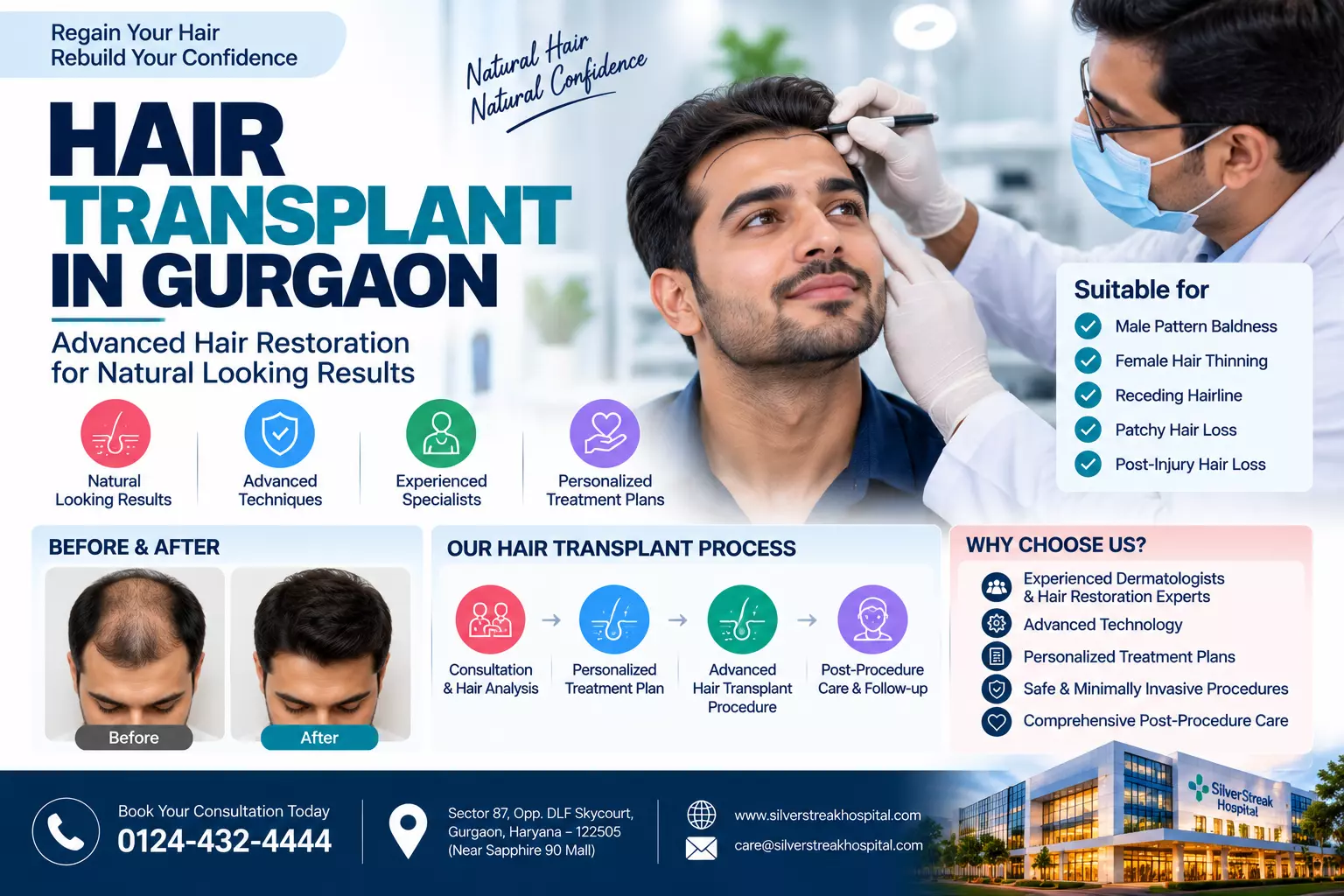
Millions of adults face early hair loss, and many eventually look into hair transplant in Gurgaon. This guide explains the causes, the warning signs and the treatment options, so you can make a clear and informed decision.
What Is Normal and What Is Not
Losing 50 to 100 hairs a day is normal. The concern begins when shedding stays heavy for weeks or when you see thinning hair at the crown or a receding hairline at the temples.
Main Causes of Hair Loss in Young Adults
Stress and Long Working Hours
Chronic stress and hair loss are closely connected. Prolonged pressure can push follicles into the resting phase early, a condition called telogen effluvium. Shedding often starts two to three months after a stressful period.
Pollution and Water Quality
Dust and fine particles settle on your scalp daily, while hard water leaves residue that dries hair. Together, pollution and hard water can make hair loss look worse.
Genetics and Hormones
Pattern hair loss is the most common cause of permanent thinning. It runs in families and depends on how follicles respond to hormones.
Nutrition Gaps
Low iron, vitamin D and protein can weaken hair from within. These nutrition gaps are common when meals are skipped or diets are unbalanced.
Understanding the Hair Growth Cycle
Each follicle moves through growth, transition and resting phases. In pattern hair loss, the hair growth cycle shortens and each new hair grows finer. Once a follicle stops producing hair, products alone cannot revive it.
This is why finding the cause matters. Temporary shedding often recovers once the trigger is fixed, while permanent loss needs a longer plan.
Read: How to Choose the Best Hair Transplant for Natural Results
When to See a Doctor
Home remedies may soothe the scalp, but they rarely change permanent loss. Seek advice if shedding lasts beyond three months, if you see bald patches or a widening parting, or if your scalp is itchy, flaky or painful.
A dermatologist in Gurgaon can perform a scalp examination, check for infections or deficiencies and confirm whether your loss is temporary or permanent.
A hair loss consultation also helps decide whether hair fall treatment with medication is enough or surgery should be considered.
Hair Restoration Options Explained
For stable, permanent loss, hair restoration in Gurgaon is a medical procedure that should be planned carefully.
How a Hair Transplant Works
In a hair transplant, healthy follicles are taken from the back of the scalp, where hair resists hormonal thinning, and placed into thinning areas.
With Follicular Unit Extraction, grafts are removed one at a time, which avoids a long linear scar. A well-planned FUE hair transplant aims for a natural hairline and even density.
Recovery Timeline
Expect mild redness and scabbing for about a week. Transplanted hairs usually shed within a few weeks, which is normal. New growth begins around the third or fourth month and keeps improving for up to a year.
Realistic Expectations
A transplant redistributes the hair you already have. Results depend on donor density, the extent of loss, your age and aftercare.
Everyday Habits That Support Hair Health
- Eat enough protein, iron and vitamin D
- Wash your scalp regularly, especially in polluted weather
- Avoid tight hairstyles and excessive heat styling
- Sleep well and manage stress
- Avoid strong treatments without medical advice
Conclusion
Understanding why you are losing hair, when to seek help and what restoration can achieve puts you back in control. Start with a proper diagnosis, ask careful questions and decide at your own pace.
For expert guidance, connect with a multispeciality hospital in Gurgaon Silverstreak and let the team at Silverstreak Hospital guide your next step.
Frequently Asked Questions
1. Is hair fall after 30 normal?
- Losing 50 to 100 hairs daily is normal at any age.
- Heavy shedding beyond three months is not.
- See a doctor to find the cause.
2. Who is a good candidate for a hair transplant?
- Adults with stable pattern hair loss and healthy donor hair.
- A clear diagnosis comes first.
- Your doctor decides suitability after examining your scalp.
3. When will I see results after a transplant?
- Transplanted hairs shed in the first few weeks.
- New growth starts around three to four months.
- Full results can take up to twelve months.
4. Can stress alone cause hair loss?
- Yes, severe or long-term stress can trigger temporary shedding.
- It often settles once the stress is managed.
- Persistent loss needs a medical check.
5. Is a hair transplant permanent?
- Transplanted hair comes from areas resistant to thinning.
- It usually lasts for life.
- Untreated native hair may still thin over time.