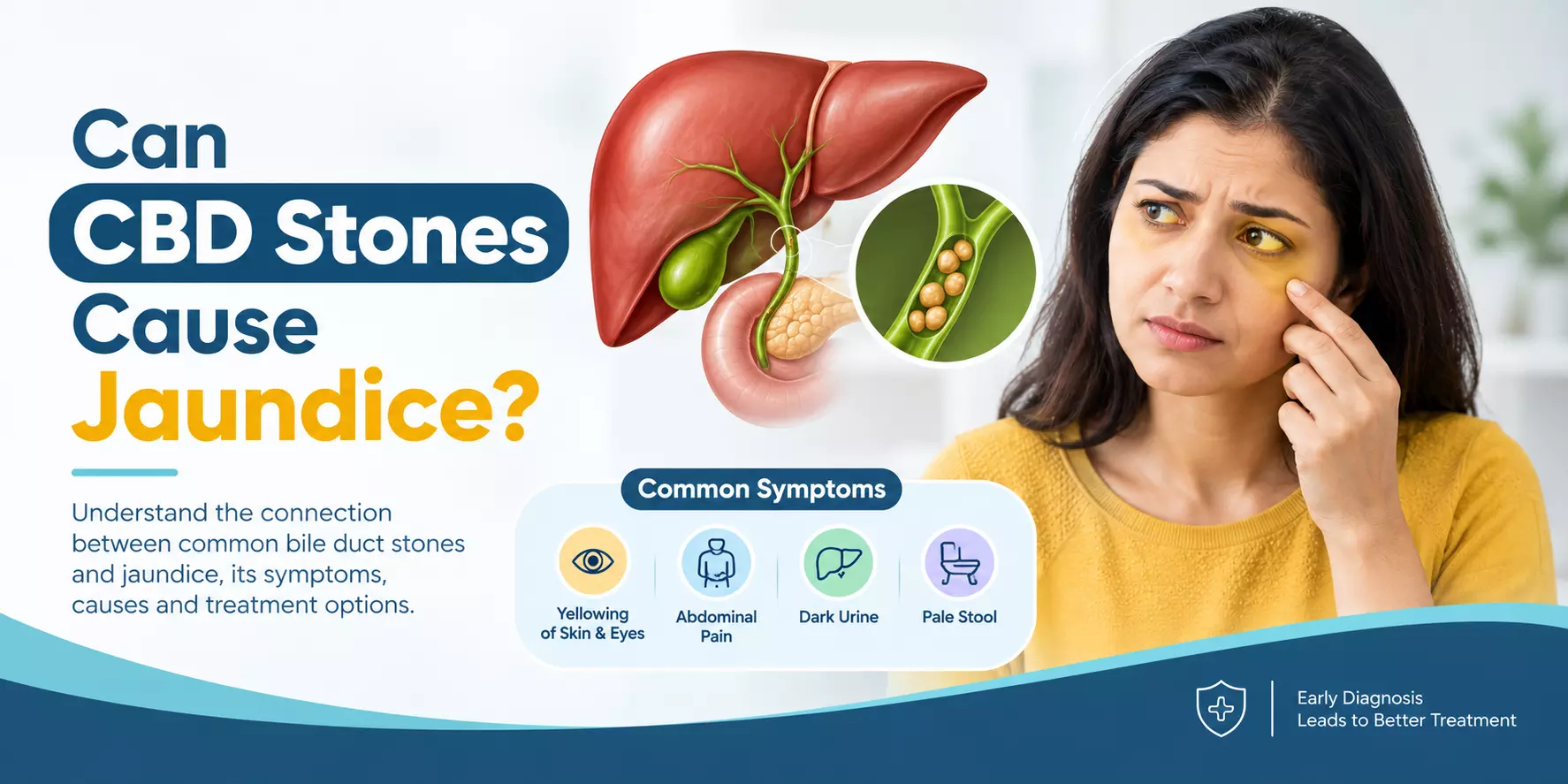
Can CBD Stones Cause Jaundice?
If you've recently been told you have a "CBD stone" and now your skin or eyes have taken on a yellowish tint, you're probably searching for answers right now — and rightly so.
The short answer is yes, CBD stones can absolutely cause jaundice, and understanding why can help you recognize the warning signs early and get treated before things get complicated.
Let's break this down properly: what CBD stones actually are, how they lead to jaundice, what symptoms to watch for, and when it's time to stop researching online and book an appointment with a specialist.
What Exactly Is a CBD Stone?
CBD here doesn't refer to cannabidiol — in medical terms, CBD stands for the Common Bile Duct. This is the tube that carries bile from your liver and gallbladder into your small intestine, where it helps digest fats.
A CBD stone, also called choledocholithiasis in medical language, occurs when a gallstone migrates from the gallbladder and gets lodged in this duct, or in some cases forms directly within it.
Most gallstones form in the gallbladder and stay there without causing much trouble. Problems begin when one of these stones travels into the common bile duct and blocks it.
Since this duct is the only pathway for bile to reach the intestine, a blockage here has consequences that ripple through your entire digestive and metabolic system.
The Direct Link Between CBD Stones and Jaundice
Here's where the connection to jaundice becomes clear. Bile carries a pigment called bilirubin, which is a breakdown product of old red blood cells.
Normally, your liver processes bilirubin and sends it out through bile into the intestines, where it's eventually eliminated from the body.
When a CBD stone blocks the duct, bile — and the bilirubin within it — can't flow out properly. It backs up into the liver and eventually spills into the bloodstream.
As bilirubin accumulates in your blood, it starts depositing in tissues throughout the body, particularly in the skin and the whites of the eyes. This buildup is what causes the yellowish discoloration we recognize as jaundice.
This type of jaundice is known as obstructive jaundice, and it's different from jaundice caused by liver disease or certain infections, even though the visible symptom looks the same.
The distinction matters because the treatment approach is completely different — obstructive jaundice caused by a CBD stone typically requires removing the blockage, not medication for a liver condition.
Read: Kidney Stone Symptoms in Women: Signs, Causes, and
Other Symptoms That Often Come Along With It
Jaundice rarely shows up alone when a CBD stone is the cause. Most patients also experience:
- Dark-colored urine, since excess bilirubin is being filtered out through the kidneys
- Pale or clay-colored stools, because bile isn't reaching the intestines to give stool its normal brown color
- Upper right abdominal pain, often sudden and intense, sometimes radiating to the back or right shoulder
- Nausea and vomiting, especially after eating fatty foods
- Fever and chills, which can indicate the bile duct has become infected — a condition called cholangitis that needs urgent care
- Itchy skin, caused by bile salts accumulating under the skin
If you're experiencing jaundice along with fever and abdominal pain together, this combination (sometimes called Charcot's triad) is a red flag for a bile duct infection and needs immediate medical attention, not a wait-and-watch approach.
Why This Isn't Something to Ignore
A blocked bile duct doesn't just cause uncomfortable symptoms — it can lead to serious complications if left untreated.
Prolonged obstruction can cause liver damage, pancreatitis (since the bile duct and pancreatic duct often share a common opening), and dangerous infections that can spread into the bloodstream.
The encouraging part is that CBD stones are very treatable once properly diagnosed. Most cases don't require major surgery.
With the right expertise, the stone can often be removed through a minimally invasive procedure, and patients typically see their jaundice and other symptoms resolve within days.
How CBD Stones Are Diagnosed
If a doctor suspects a CBD stone based on your symptoms, they'll usually recommend a combination of the following:
- Blood tests to check bilirubin levels and liver enzyme function
- Ultrasound of the abdomen to look for stones and duct dilation
- MRCP (Magnetic Resonance Cholangiopancreatography), a detailed imaging test that maps out the bile duct system
- ERCP (Endoscopic Retrograde Cholangiopancreatography), which can both diagnose and treat the blockage in the same procedure
This is where seeing the right specialist becomes important. Diagnosing a CBD stone accurately requires experience reading these specific imaging tests and understanding how bile duct anatomy varies from patient to patient.
Treatment Options for CBD Stones
The good news is that CBD stone removal treatment in Jaipur has become far more advanced and far less invasive than it used to be.
The most common and effective approach is ERCP, where a thin, flexible scope is passed through the mouth down to the small intestine.
A small cut is made at the opening of the bile duct, and specialized tools are used to extract the stone directly — no large incisions required.
Recovery from ERCP is typically quick, and most patients notice their jaundice and abdominal discomfort improving within a day or two of the stone being removed.
In rare cases where ERCP isn't suitable, surgical options are available, but these are far less common today given how effective endoscopic techniques have become.
Why Choosing the Right Gastroenterologist Matters
CBD stones sit at a slightly tricky intersection of gastroenterology and hepatobiliary care, which means the specialist treating you needs both diagnostic sharpness and hands-on procedural experience.
This isn't a condition where "wait and see" is a safe strategy — timely, accurate treatment prevents complications and gets you back to normal life faster.
Dr. Sushil Kumar Jain is recognized as one of the trusted names for patients seeking a gastro doctor in Jaipur, particularly for conditions involving the bile duct, gallbladder, and pancreas.
Known for a thorough diagnostic approach and experience with advanced procedures like ERCP, he's a name that regularly comes up when people search for the best gastroenterologist in Jaipur for complex biliary issues.
A careful, experienced hand matters a great deal in procedures that involve delicate anatomy like the bile duct.
When Should You See a Doctor?
If you notice yellowing of your skin or eyes, especially alongside dark urine, pale stools, or abdominal pain, don't wait it out at home.
Jaundice is always a signal that something in your liver-bile system needs attention, and a CBD stone is one of the more common — and more treatable — causes behind it.
The earlier it's diagnosed, the simpler the treatment tends to be, and the lower the risk of complications like infection or pancreatitis.
If these symptoms sound familiar, it's worth getting evaluated by a specialist experienced in bile duct conditions rather than assuming it will pass on its own.