Best Hair Transplant in Islamabad, Explore Advanced Hair Restoration Options
Hair plays an important role in personal appearance, and noticeable hair loss can affect how people feel about themselves.
Whether the problem involves a widening part, a receding hairline, or bald areas on the scalp, finding the best hair transplant in Islamabad can be the beginning of a journey toward improved hair coverage and renewed confidence.
Hair restoration has developed considerably over the years, offering patients different surgical approaches based on their individual needs. Islamabad provides access to clinics offering hair restoration consultations and procedures.
However, successful treatment depends on choosing a qualified medical professional, understanding the available options, and maintaining realistic expectations.
This article explores the important considerations for anyone researching hair transplantation in Islamabad, including modern techniques, clinic selection, treatment expenses, recovery, and expected outcomes.
Understanding Hair Loss and Its Treatment
Hair loss can develop for several reasons, including hereditary factors, hormonal changes, certain medical conditions, nutritional deficiencies, and scalp disorders. The appropriate treatment depends on identifying the underlying cause rather than simply treating the visible symptoms.
A hair transplant is a surgical procedure that relocates healthy hair follicles from a donor area, generally at the back or sides of the scalp, to areas where hair has become thin or disappeared.
When the transplanted follicles establish themselves successfully, they can continue producing hair in their new location. This makes transplantation a potential option for people with suitable donor hair and particular patterns of permanent hair loss.
Before considering surgery, patients should undergo a professional assessment. Some conditions respond better to medication or other treatments, while unexplained hair loss may require further investigation.
Why Research Hair Transplant Clinics in Islamabad?
Islamabad is a healthcare destination where patients can investigate different hair restoration services and compare treatment approaches. Clinics may offer consultations for hereditary baldness, receding hairlines, thinning crowns, and selected cases of facial hair restoration.
The availability of different providers allows patients to ask questions about surgical methods, treatment planning, and follow-up services before making a commitment.
Choosing a clinic requires more than simply reviewing advertisements and promotional offers.
A professional consultation, appropriate medical facilities, qualified surgical personnel, and transparent communication are essential considerations.
Patients should ensure that the clinic clearly explains expected outcomes, possible risks, and the limitations of hair transplant procedures.
Popular Hair Transplant Techniques
Several techniques are used in modern hair restoration. The most appropriate method depends on the patient's hair characteristics, donor supply, treatment goals, and the surgeon's assessment.
Follicular Unit Extraction (FUE)
FUE is a hair restoration technique in which individual hair follicles are carefully extracted from the donor region of the scalp using precision tools. These grafts are subsequently placed into the areas requiring additional hair coverage.
Because FUE does not involve removing a long strip of scalp, it avoids the linear scar associated with the FUT technique. However, small scars may remain at the extraction sites.
FUE is often considered by patients who want to restore a receding hairline or improve coverage in selected areas. The quality of the outcome depends on careful planning, graft handling, and the experience of the surgical team.
Follicular Unit Transplantation (FUT)
FUT is a hair restoration method in which a small section of scalp is taken from the donor region and carefully divided into individual hair grafts before being placed in areas affected by hair loss.
FUT can be appropriate for certain patients who require a substantial number of grafts. Its main consideration is the linear scar left at the donor site, along with the recovery requirements associated with the procedure.
A skilled hair transplant specialist can determine if FUT is the right option by assessing the patient's scalp health, hair thickness, and individual treatment goals.
Direct Hair Implantation (DHI)
Direct Hair Implantation, commonly called DHI, is an implantation approach that uses a specialized implanter device to place hair follicles into the recipient area.
The technique allows the practitioner to focus on the position, angle, and depth of each graft. Whether this technique is appropriate depends on the patient's specific needs and the expertise of the healthcare professionals performing the procedure.
DHI is not necessarily a better choice than FUE or FUT, as each technique offers different benefits depending on the patient's needs.
The best option is the one that appropriately addresses the patient's needs and is performed according to suitable medical standards.
Read: How to Choose the Best Hair Transplant for Natural Results
How to Identify the Best Hair Transplant in Islamabad
Finding a suitable clinic requires careful evaluation. The following factors can help patients make a more informed choice.
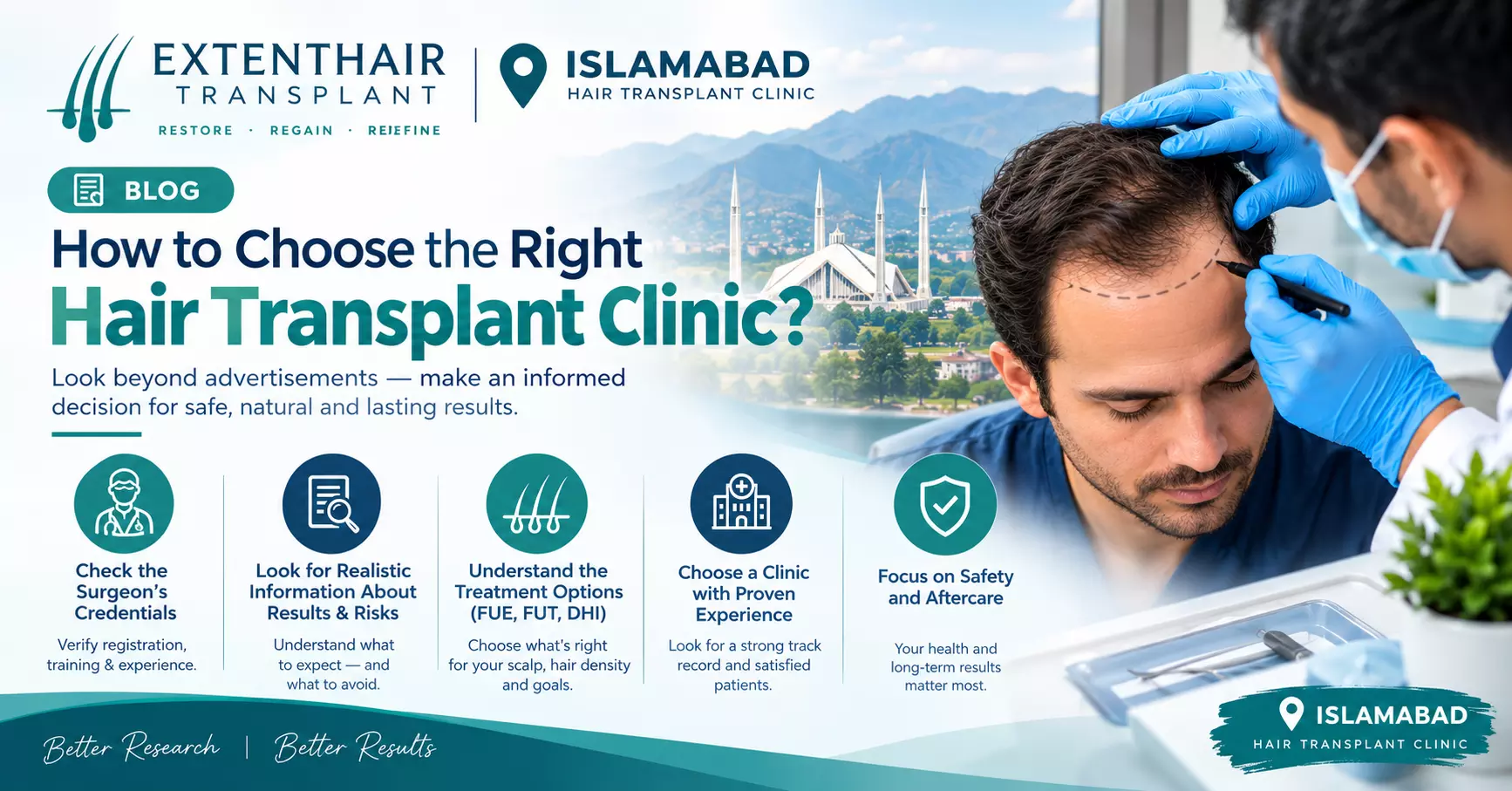
Check the surgeon’s credentials: Confirm the doctor’s medical registration, specialized qualifications, and practical experience in performing hair restoration procedures.
Confirm who will perform the important stages of the procedure.
Examine previous results: Request genuine before-and-after photographs showing patients with similar hair loss patterns. Images taken under comparable conditions and after sufficient recovery time are more useful for evaluating outcomes.
Look for individualized planning: Every patient has different hair characteristics and expectations. A responsible specialist should examine the scalp, evaluate donor hair, and explain a realistic treatment strategy.
Prioritize hygiene and safety: Ask about sterilization, surgical facilities, anesthesia, and procedures for handling unexpected complications.
Understand the complete quotation: Request written details of the estimated graft count, surgical charges, medication, and follow-up services. Make sure you understand which expenses are included.
Evaluate patient support: Reliable aftercare includes written recovery instructions, scheduled assessments, and guidance on what to do if complications occur.
Avoid providers who promise flawless results, guaranteed density, or completely risk-free surgery. Medical procedures always involve limitations and potential complications.
What Determines Hair Transplant Prices in Islamabad?
Hair transplant costs vary depending on the patient's requirements and the clinic's pricing structure. The number of grafts, selected technique, complexity of the treatment, surgeon's experience, and available facilities may all influence the total expense.
For example, improving a small area around the temples may require a different treatment plan from restoring coverage across a larger bald region.
Patients should obtain a personalized quotation following a scalp examination rather than relying exclusively on advertised starting prices.
It is also important to ask whether the quotation covers consultation, surgery, medication, and post-operative appointments. Comparing the complete treatment package provides a clearer understanding of value than comparing a single price.
What to Expect During Recovery
Following a hair transplant, patients may experience temporary swelling, redness, tenderness, or small scabs around the treated areas. The recovery period varies according to the procedure and individual healing.
Transplanted hairs commonly shed during the first few weeks. This is often part of the normal hair growth cycle and does not necessarily indicate that the treatment has failed.
New growth develops gradually over the following months. Many patients assess their results at around twelve months, although the timeline can vary and some individuals require longer.
Patients should follow their clinic's instructions about scalp washing, physical activity, medication, and protecting the recipient area. Worsening pain, fever, spreading redness, or other concerning symptoms should be reported to a healthcare professional promptly.
A transplant also does not prevent future thinning in untreated areas. Depending on the diagnosis, a specialist may recommend additional measures to manage ongoing hair loss.
Who Can Benefit From Hair Transplant Surgery?
Hair transplantation may be suitable for people with permanent hair loss, sufficient donor hair, and realistic expectations about the achievable coverage.
The surgeon should consider the patient's age, progression of hair loss, scalp health, medical history, and potential future thinning before recommending surgery.
People experiencing sudden hair shedding or unexplained bald patches should seek medical evaluation before pursuing transplantation. Treating an underlying condition may be more appropriate than surgery.
A detailed consultation helps determine whether transplantation, medication, or another hair restoration approach is the most suitable choice.
Frequently Asked Questions
How long do hair transplant results last?
Transplanted follicles can produce hair for many years, but results vary between individuals. Untreated hair may continue to thin, and some patients need additional treatment.
Is a hair transplant suitable for everyone?
No. Donor hair availability, the cause of hair loss, general health, and individual expectations influence suitability.
When will new hair become visible?
Growth develops gradually over several months. The overall outcome is commonly evaluated after approximately twelve months or longer.
Is FUE the best option for every patient?
No. FUE, FUT, and DHI have different considerations. A qualified surgeon should recommend a technique after assessing the patient's needs.
Conclusion
Choosing the best hair transplant in Islamabad involves researching clinics, checking medical qualifications, and understanding the available treatment methods.
FUE, FUT, and DHI provide different approaches to hair restoration, but the most suitable option depends on the patient's individual condition and treatment goals.
Before proceeding, compare genuine patient results, clinical safety standards, complete pricing, and aftercare arrangements. Be cautious of unrealistic promises and seek professional advice before making a decision.
With appropriate patient selection, careful surgical planning, and proper follow-up, hair transplantation may improve hair coverage and help patients feel more comfortable with their appearance. A consultation with a qualified hair restoration specialist is the best starting point for exploring your options.