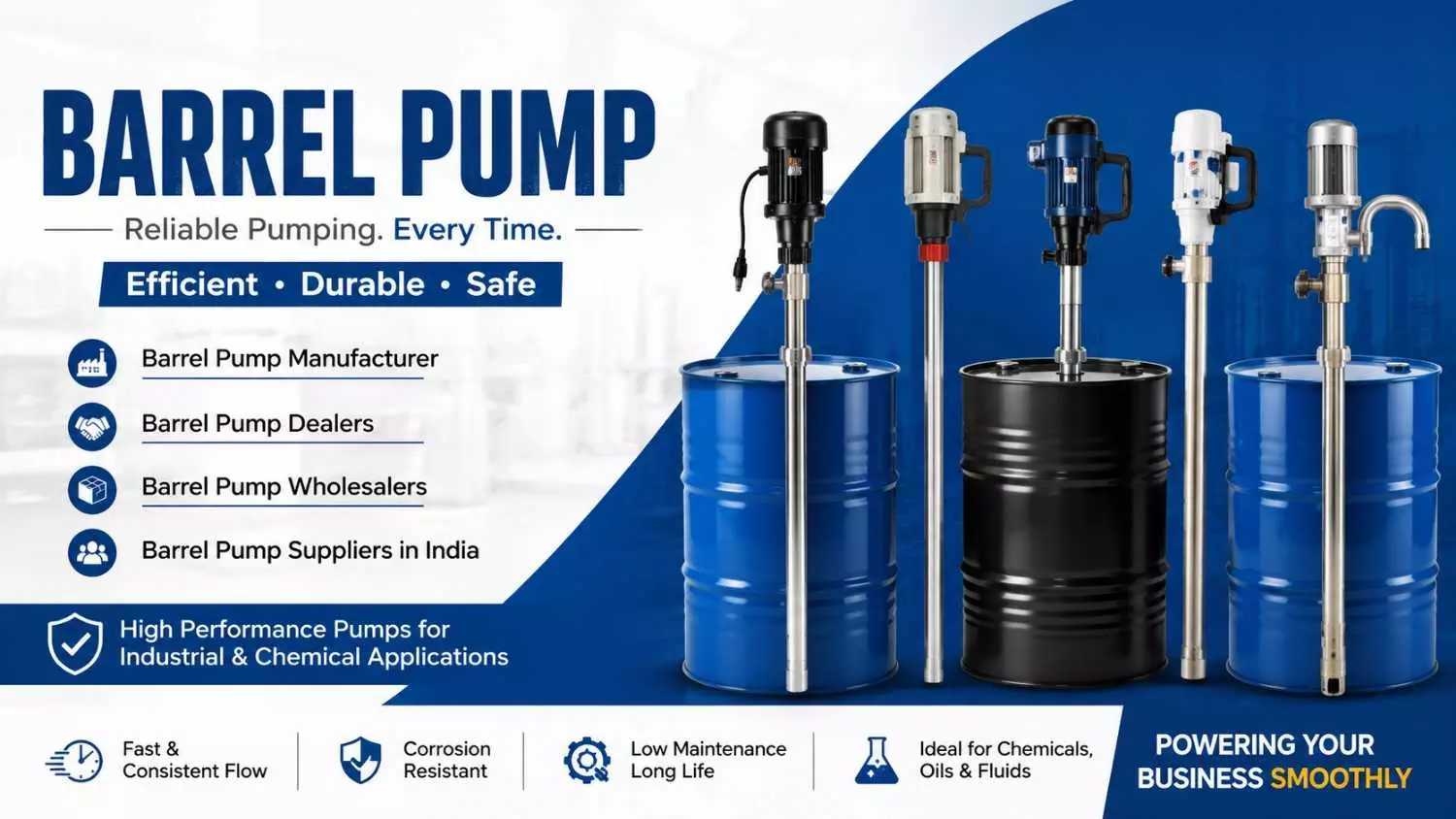
Barrel Pump Buying Guide: Types, Uses, Features, and Benefits
A 200-litre drum is beside the line, production needs the liquid now, and somebody orders the cheapest Barrel Pump from a catalogue photo.
That shortcut is expensive. A pump selected without checking chemistry, viscosity, temperature, drum opening, duty cycle and required flow may leak, stall or contaminate the liquid.
Most buyers blame the equipment later. The real mistake happened before the purchase order was raised. Industrial drum-pump systems commonly serve 200-litre containers, but output varies by design and fluid.
Match the Pump to the Liquid, Not the Photograph
Manual, Electric and Air-Operated Types
Manual rotary or lever pumps suit occasional transfer and remote sites. Electric models make sense where drums are emptied repeatedly.
Air-operated pumps are considered for demanding or hazardous areas, but “pneumatic” does not automatically mean approved for every flammable liquid. Explosion protection and area classification still matter.
Materials That Decide Service Life
Giza lists SS 304, SS 316, polypropylene, PVDF and cast iron across its range. Each material behaves differently. Nobody tells you this at the bargain stage: the seal, hose, nozzle and O-rings must also be compatible, not only the suction tube.
Flow, Head and Viscosity
Typical flow rates may range from 20 to 151 L/min; specialised models can handle much thicker liquids. A high flow figure measured on a thin liquid means little for cold gear oil. Ask for head, viscosity limit, tube length and duty rating before comparing prices.
Five Supplier Answers That Expose Future Trouble
- Liquid compatibility: A good Barrel Pump Manufacturer asks for the exact liquid, concentration and temperature. A bad answer is, “It works for all chemicals.”
- Required output: Confirm litres per minute, transfer height and hose length. A bad supplier quotes only motor wattage.
- Operating pattern: State whether the pump runs twice weekly or empties 12 drums per shift. “Heavy duty” without a duty-cycle limit is meaningless.
- Testing: Ask what is checked before dispatch and whether model and material appear on documents. “We never receive complaints” is not evidence.
- Spares and claims: Serious Barrel Pump Dealers explain seal, hose and warranty support before billing. “We will manage defects later” is a dispute, not a policy.
Liquid type, viscosity, temperature, chemical nature and operating frequency are among the selection factors identified across Giza’s published product information.
Where the Right Pump Protects Margin
- Lower spill loss: Controlled discharge reduces overfilling and wasted liquid.
- Less operator strain: Motorised transfer removes repeated hand cranking.
- Faster changeovers: At a theoretical 100 L/min, a 200-litre drum represents two minutes of pumping before head and friction losses.
- Reduced contamination: Dedicated pumps prevent residues moving between oil, solvent and process liquids.
- Longer component life: Correct metallurgy and elastomers reduce corrosion and seal damage.
- Better stock economics: Barrel Pump Wholesalers can standardise proven models instead of carrying cheap units that return as claims.
And yet, some buyers save a few hundred rupees on the pump and lose hours cleaning one spill.
Industrial barrel-pump specifications vary significantly, with published models ranging from approximately 20 L/min to more than 150 L/min. Actual performance depends on liquid viscosity, discharge head, motor and hose arrangement.
Why Rajkot Matters to Pan-India Supply
Buyers comparing Barrel Pump Suppliers in India should check more than a city name. Giza Pumps operates from Shapar, Rajkot, Gujarat, PIN 360024, and lists manual, electric, pneumatic and motorised options with five main material families. Still, confirm stock in writing before payment.
Most Barrel Pump Dealers can forward an enquiry. Fewer can confirm tube material, seal compatibility, packed quantity and dispatch date on one quotation. For Barrel Pump Wholesalers, repeatability matters more than a one-time low rate.
One mixed batch can damage a dealer relationship that took years to build.
Read: Why Vietnam's Water Pumps Market Is Gaining Strategic
About Giza Pumps: Selection Before Selling
We operate as Giza Pumps by Swastik Enterprise from Rajkot. Our range covers four operating formats and five principal materials; our website copyright line reads 1999–2026.
We know one detail that causes repeated trouble: buyers often say “oil,” but hydraulic oil, cold gear oil and low-viscosity lubricant do not impose the same suction load. We prefer the liquid name, viscosity, temperature and daily volume before recommending a model.
We ask for the liquid name, viscosity, temperature, drum capacity, required quantity and delivery PIN code. We target a reply within one working day for standard enquiries. Our standard-model MOQ starts from 1 unit where stock permits; dealer and wholesale quantities depend on model, material and destination.
Send the operating details, and we will quote the suitable Barrel Pump, accessories, dispatch position and terms.
Conclusion
A Barrel Pump is small compared with the value of the liquid and the downtime around it. Choose by six real inputs chemistry, viscosity, temperature, output, duty cycle and container size not appearance. Future procurement teams will demand documented compatibility before accepting the lowest quote.
FAQs
1. Which Barrel Pump is suitable for oils and lubricants?
Cast iron or stainless steel may suit many oils. Caveat: cold or heavy oil can cut flow sharply, so confirm viscosity at operating temperature.
2. What should a Barrel Pump Manufacturer ask before quoting?
Expect questions about liquid, concentration, viscosity, temperature, drum size, flow, transfer height, power source and quantity. A quote without these basics deserves scrutiny.
3. Do Barrel Pump Dealers keep ready stock?
Some dealers hold standard manual models. SS 316, PVDF or air-operated units may need production time, so request written stock confirmation.
4. How do Barrel Pump Wholesalers maintain batch consistency?
Reliable wholesalers lock the material, seal, tube length, packing and model code. Caveat: wholesale pricing is useless when specifications change silently.
5. Can Barrel Pump Suppliers in India handle corrosive chemicals?
Selected PP, PVDF or stainless-steel configurations may work. Compatibility depends on the exact chemical, concentration and temperature; “acid-compatible” alone is not enough.
6. Can one pump be used for several liquids?
Sometimes, but cross-contamination and seal compatibility create risk. Dedicated pumps are safer where purity, chemical reaction or flammability matters.
7. What documents should I request with a bulk order?
Request the confirmed model, wetted-part material, accessories, quantity, packing, dispatch schedule, warranty terms and inspection record. Put every agreed specification on the purchase order.