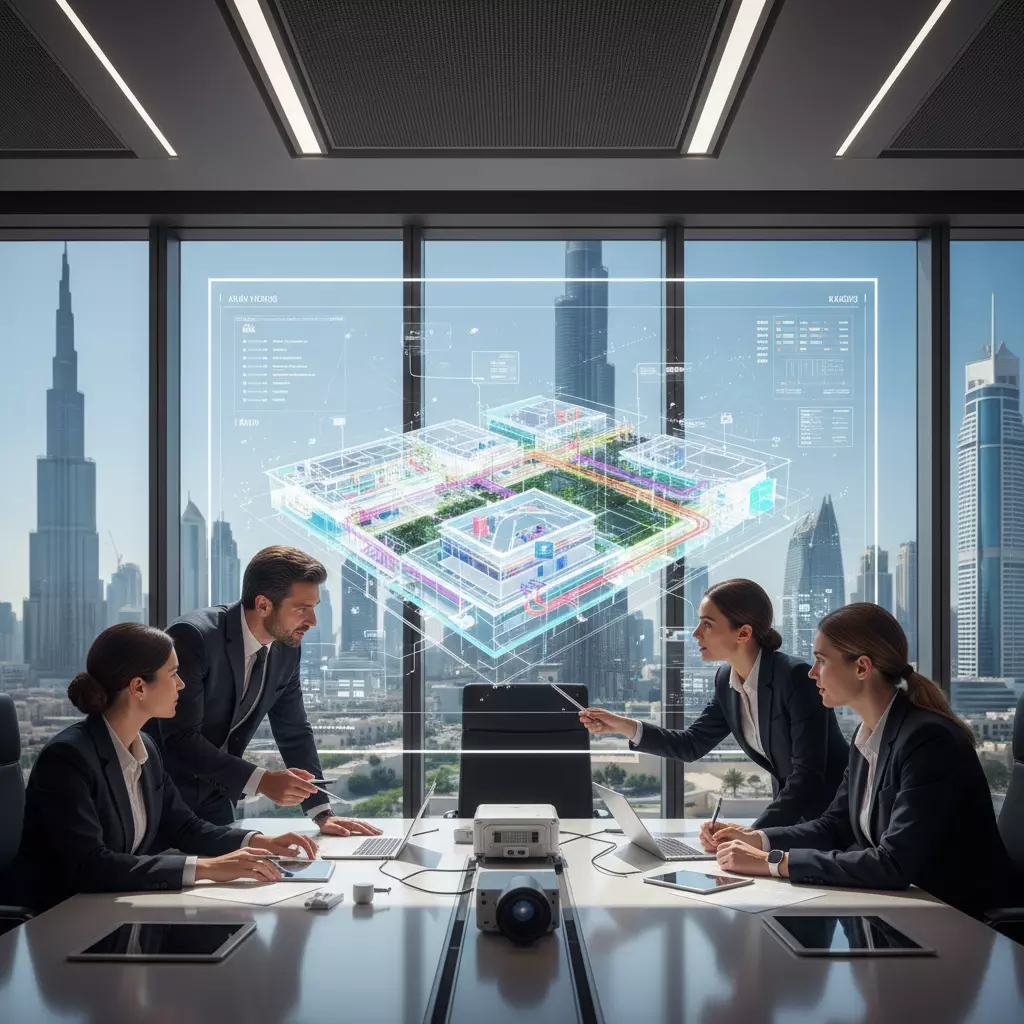
Applications of Scan to BIM Services in Dubai
Scan to BIM (Building Information Modeling) refers to the process of capturing accurate physical data of existing buildings or infrastructure using laser scanning or photogrammetry and converting that data into a digital BIM model.
In Dubai, Scan to BIM services have become an important component of the construction, architecture, engineering, and facility management sectors, supporting the city’s focus on advanced digital construction technologies and smart city development.
Dubai’s rapid urban expansion, presence of complex high-rise structures, and emphasis on sustainable and efficient building practices have contributed to the widespread application of Scan to BIM across various project phases and industries.
Existing Building Documentation
One of the primary applications of Scan to BIM services in Dubai is the documentation of existing buildings. Many structures in the city were constructed before the widespread adoption of BIM standards, resulting in limited or outdated as-built drawings.
Laser scanning allows accurate capture of building geometry, which is then converted into BIM models representing architectural, structural, and MEP (mechanical, electrical, and plumbing) elements.
This application is commonly used for commercial buildings, residential towers, hotels, and mixed-use developments. Accurate digital records support renovation planning, compliance assessments, and long-term asset management.
Renovation and Retrofit Projects
Dubai’s growing focus on building upgrades and retrofitting has increased the use of Scan to BIM in renovation projects. Older buildings often undergo modernization to meet updated safety regulations, energy efficiency standards, or functional requirements.
Scan to BIM provides precise data on existing conditions, reducing uncertainties during design and construction. BIM models generated from scans help designers and engineers evaluate spatial constraints, identify clashes, and plan modifications with minimal disruption.
This approach is particularly useful in occupied buildings, such as offices, hospitals, and hospitality facilities, where minimizing downtime is critical.
Heritage and Cultural Preservation
Although Dubai is known for modern architecture, it also has heritage sites and historic districts that require careful preservation. Scan to BIM services are applied to document culturally significant structures and public spaces with high accuracy.
Three-dimensional BIM models derived from laser scans allow authorities and conservation specialists to analyze building conditions, monitor structural changes, and plan restoration efforts while preserving original architectural features.
Digital documentation also supports archival purposes and future research related to heritage conservation.
Construction Planning and Coordination
In new construction projects, Scan to BIM is used to enhance planning and coordination. During construction phases, laser scanning can capture progress data and compare it with design BIM models. This process helps identify deviations between planned and actual construction.
In Dubai’s large-scale projects, including high-rise towers and infrastructure developments, this application supports quality control, schedule tracking, and risk mitigation. Accurate as-built BIM models also facilitate smoother project handovers upon completion.
Infrastructure and Civil Engineering Projects
Scan to BIM services are applied beyond buildings, particularly in infrastructure projects such as roads, bridges, tunnels, and utility networks. Dubai’s ongoing investment in transportation and urban infrastructure has increased demand for precise digital models of existing assets.
Laser scanning captures terrain and structural data, which is integrated into BIM platforms for design analysis, maintenance planning, and future expansions.
This application supports improved coordination among stakeholders and reduces conflicts during construction.
Facility Management and Operations
Facility management is a significant application area for Scan to BIM in Dubai. BIM models created from scanned data serve as digital twins of buildings, providing a centralized source of information for operations and maintenance teams.
These models can include details about equipment locations, spatial layouts, and asset attributes, enabling more efficient maintenance scheduling and space management.
In large commercial complexes, airports, and healthcare facilities, Scan to BIM supports lifecycle management and operational efficiency.
Clash Detection and Risk Reduction
Scan to BIM services are used to identify discrepancies between existing site conditions and design models. By comparing laser scan data with BIM designs, project teams can detect clashes involving structural components, MEP systems, or architectural elements.
This application reduces construction errors, rework, and delays. In Dubai’s complex building projects, where space constraints and design intricacies are common, early clash detection contributes to improved project outcomes.
Smart City and Digital Transformation Initiatives
Dubai’s smart city initiatives emphasize digital integration and data-driven urban management. Scan to BIM plays a role in supporting these initiatives by providing accurate digital representations of buildings and infrastructure.
BIM models generated from scans can be integrated with geographic information systems (GIS), building management systems, and other digital platforms.
This integration supports urban planning, energy analysis, and long-term sustainability strategies.
Safety and Compliance Assessments
Scan to BIM is applied in safety audits and regulatory compliance evaluations. Accurate BIM models allow authorities and consultants to assess fire safety layouts, accessibility standards, and evacuation routes without relying solely on manual surveys.
In Dubai, where building regulations and international standards are continuously evolving, this application supports compliance verification and risk assessment processes across different building types.
Read: BIM Modeling Services for Faster Construction Estimations
Research, Training, and Visualization
Scan to BIM services are also used for educational, research, and visualization purposes. Detailed BIM models generated from real-world data provide valuable resources for training professionals, conducting simulations, and developing virtual walkthroughs.
Architects, engineers, and students use these models to study complex structures and construction methods. Visualization derived from Scan to BIM supports stakeholder communication and public presentations related to major development projects.
Conclusion
The applications of Scan to BIM services in Dubai span a wide range of sectors, including construction, infrastructure, heritage preservation, and facility management.
By converting accurate spatial data into detailed BIM models, Scan to BIM supports improved decision-making, risk reduction, and lifecycle management of built assets.