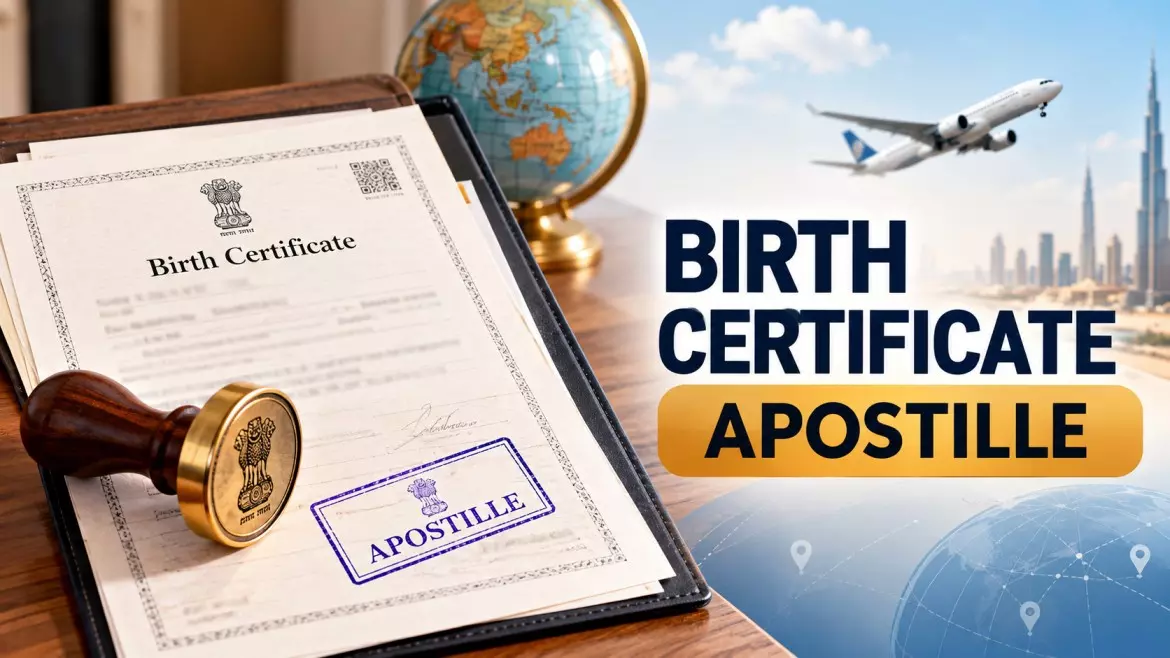
The Actual Steps to Birth Certificate Apostille in India
Nobody really thinks about their birth certificate until they need it for something serious, like moving abroad.
Then suddenly, this document you've had since you were a baby needs to go through government offices and get stamped before any embassy or university abroad will even look at it.
That's the whole idea behind a birth certificate apostille, and honestly, once you know how it works, it's not nearly as confusing as it first seems.
What is The Actual Meaning of a Birth Certificate Apostille?
Basically, apostille is India telling another country, "This document is genuine; we've verified it."
India is part of something called the Hague Convention, and because of that, an apostilled document gets accepted in more than 120 countries. You don't have to run around to different embassies getting separate approvals. One apostille, done right, works across all of them.
It's not a new document either. Your birth certificate stays exactly as it is. The Ministry of External Affairs just adds a sticker or stamp confirming it's legitimate.
When people actually need this
Mostly it comes up with visas. Spouse visas, dependent visas, sometimes student visas if family members are part of the application. A few countries want it for residency too. Basically, wherever your birth record needs legal recognition outside India, this is going to come up.
Who this is for
If you're a spouse joining your partner overseas, a parent taking your kids abroad, or a student whose visa paperwork lists family details, you'll probably need this at some point.
One thing worth checking early, though: some countries aren't part of the Hague Convention, and if yours isn't, apostille won't apply, and you'll need embassy attestation instead.
Read: Chile Visa Requirements for Minors Under 18 Years of Age
How the process actually works
- There are really only two stages here, even though it sounds complicated at first.
- First is state attestation. Your certificate goes to the Home Department or General Administration Department in whichever state issued it originally. The central government won't touch your document until the state confirms it's real; that's just how the chain works.
- After that's cleared, it moves to the Ministry of External Affairs, either directly or through one of their authorized centers depending on your location. That's the stage where the actual apostille gets attached to your document.
- Two steps. That's it. What actually causes delays isn't the process itself; it's small mistakes in paperwork that get things sent back.
What you'll need on hand
Your original birth certificate, a photocopy, a valid ID like a passport or Aadhaar card, and in some states, a short letter explaining why you need the apostille.
Every state handles the small details a bit differently, so it's worth checking your own state's requirements rather than assuming it'll be the same as somewhere else.
Time and cost
Usually takes somewhere between 3 and 10 working days, though it depends a lot on how busy the state office and MEA center are at that time. Costs vary by state too, so it's better to ask about fees upfront instead of guessing.
Where people go wrong
The biggest mistake is skipping state attestation altogether and sending the document straight to the MEA, which just gets rejected.
Another common one is a name mismatch; even a small spelling difference between the birth certificate and passport can cause problems. And people sometimes try submitting photocopies or laminated documents thinking it'll be fine, but authorities want to see the real, unaltered original.
Getting help with it
You can absolutely do all of this on your own if you have the time and patience for the back and forth.
But a lot of people end up looking into Apostille Services in Ahmedabad simply because a local service already knows the state process inside out, how long things usually take, and what tends to get rejected, so they can skip a lot of the trial and error.
Conclusion
Birth Certificate Apostille really comes down to two stages: state attestation and then the MEA. Most of the delays people run into aren't because the process is hard; it's usually just paperwork issues. Get your documents right before you submit, and the whole thing moves a lot faster.