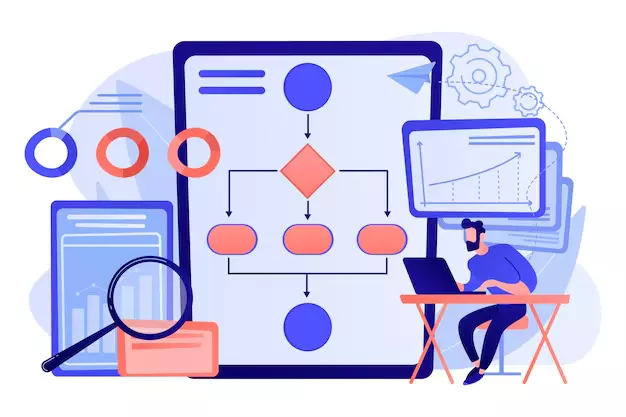
Workflow Automation Advances with AI and Digital Transformation
Workflow automation is becoming an increasingly important component of enterprise digital transformation as organizations seek to reduce repetitive tasks, improve productivity, control costs, and create more connected business processes.
Businesses across finance, healthcare, manufacturing, retail, IT, and other industries are adopting automation platforms to streamline activities across departments and improve operational efficiency.
A recent study by MarkNtel Advisors states that the global workflow automation industry was valued at around USD 21.9 billion in 2025 and is projected to grow from USD 24.70 billion in 2026 to USD 50.88 billion by 2032, exhibiting a CAGR of 12.8% during 2026–2032. North America holds the largest share of about 39.82% in 2026.
The industry’s development is being influenced by enterprise digitalization, efficiency optimization, cost reduction, regulatory compliance, AI-powered automation, cloud adoption, and the increasing need to streamline complex business processes.
Digital Transformation Strengthens Automation Adoption
The rapid expansion of enterprise digital transformation is creating more opportunities for workflow automation.
Organizations are digitizing finance, procurement, customer service, human resources, supply chains, and other functions, generating increasingly complex digital workflows.
MarkNtel Advisors identifies rapid digital transformation across industries as a key driver.
As businesses move from manual processes toward software-driven operations, automation can help coordinate tasks, transfer information, trigger actions, and reduce repetitive activities.
Software Leads the Industry
Software accounts for approximately 72% of the global workflow automation industry in 2026, according to MarkNtel Advisors.
Workflow automation and orchestration platforms, business process management software, robotic process automation, integration and API automation, and intelligent automation tools form important parts of this segment.
Software-based solutions can provide organizations with scalable tools for designing, executing, monitoring, and optimizing workflows. Cloud-based deployment can further simplify implementation by reducing dependence on extensive physical infrastructure.
AI Creates Intelligent Workflows
Artificial intelligence is becoming an important development within workflow automation.
Organizations are increasingly moving beyond fixed, rule-based processes toward systems capable of analyzing information, supporting decisions, and adapting workflows according to changing conditions.
MarkNtel Advisors identifies the integration of AI and intelligent automation as a key trend.
AI capabilities can support customer service, finance, human resources, supply chain operations, and other enterprise functions by automating repetitive activities and assisting employees with more complex tasks.
BFSI Remains a Major Application Area
The BFSI industry vertical accounts for approximately 24% of the global workflow automation industry in 2026, according to MarkNtel Advisors.
Financial institutions manage large volumes of transactions, customer requests, compliance processes, claims, payments, and other structured activities.
Automation can help financial organizations standardize workflows, reduce manual intervention, improve processing speed, and maintain consistency across high-volume operations. AI-powered automation can further support fraud detection, customer service, document processing, and other functions.
Read: Choosing a Workflow Automation Partner in Toronto
Integration Becomes Increasingly Important
Many enterprises operate with a combination of legacy systems, cloud applications, databases, and specialized software. Connecting these systems can be challenging when applications were developed at different times or use incompatible architectures.
MarkNtel Advisors identifies integration complexity with legacy systems as an important challenge while highlighting opportunities for low-code/no-code and API-based workflow automation platforms.
API-based connectivity can help organizations exchange information between applications, while low-code/no-code tools can make automation more accessible to business users without requiring extensive programming expertise.
Cloud Deployment Improves Scalability
Cloud-based workflow automation is gaining importance as organizations seek flexible and scalable technology environments.
Cloud platforms can allow businesses to deploy automation capabilities across distributed teams and locations while supporting centralized management.
Cloud adoption can also make it easier for enterprises to scale workflows as transaction volumes increase. This is particularly relevant for organizations managing customer service, digital commerce, financial transactions, and other high-volume processes.
Productivity and Cost Optimization Drive Demand
Organizations are increasingly focused on improving productivity while controlling operating costs.
Workflow automation can reduce the amount of time employees spend on repetitive tasks such as data entry, document processing, approvals, notifications, and routine administrative activities.
By automating predictable processes, employees can spend more time on analytical, creative, and customer-focused responsibilities. This productivity benefit is becoming increasingly relevant as businesses seek greater efficiency from existing workforces.
North America Maintains Regional Leadership
North America holds approximately 39.82% of the global workflow automation industry in 2026, according to MarkNtel Advisors. The region’s leading position is supported by a strong technology ecosystem and early adoption of automation across major industries.
The United States and Canada have large enterprise populations across BFSI, healthcare, IT and telecommunications, retail, manufacturing, and other sectors where workflow efficiency and real-time data management are important.
Strong investment in AI, cloud computing, enterprise software, and digital infrastructure is also supporting the adoption of workflow automation solutions across the region.
Low-Code Tools Broaden Accessibility
Low-code and no-code platforms are making automation more accessible to business users. Instead of requiring extensive software development for every workflow, users can configure processes through visual interfaces, predefined connectors, and reusable components.
This can reduce implementation time and allow departments to automate smaller processes without depending entirely on specialized IT teams. The approach is particularly useful for organizations seeking to scale automation across multiple business functions.
Automation Supports Regulatory Compliance
Regulatory compliance is another factor influencing workflow automation adoption. Financial services, healthcare, government, and other regulated industries often need structured processes for approvals, documentation, reporting, and record management.
Automated workflows can create consistent procedures and provide greater visibility into process execution. This can support organizations in managing compliance requirements while reducing the risk associated with inconsistent manual processes.
Competition Encourages Intelligent Platforms
The global workflow automation industry is moderately fragmented, with more than 200–300 companies operating worldwide.
According to MarkNtel Advisors, the top five players, including ServiceNow, Microsoft, IBM, UiPath, and Automation Anywhere, collectively account for approximately 40% share.
Competition is increasingly focused on AI capabilities, integration, ease of deployment, cloud scalability, workflow intelligence, and industry-specific solutions. Vendors are also expanding automation platforms to support both human employees and AI-powered systems.
Future Development Remains Automation-Focused
The global workflow automation industry is developing alongside enterprise digitalization, AI integration, cloud adoption, low-code/no-code technologies, API connectivity, and growing demand for productivity improvements.
The increase from USD 24.70 billion in 2026 to USD 50.88 billion by 2032 indicates continued opportunities across software, services, BFSI, healthcare, IT, retail, manufacturing, government, and other applications.
Future development is likely to remain connected with intelligent automation, AI-powered workflows, legacy-system integration, cloud deployment, process orchestration, low-code platforms, and real-time analytics.
As organizations continue modernizing their operations, workflow automation is expected to become increasingly important for creating faster, more connected, and efficient business processes.