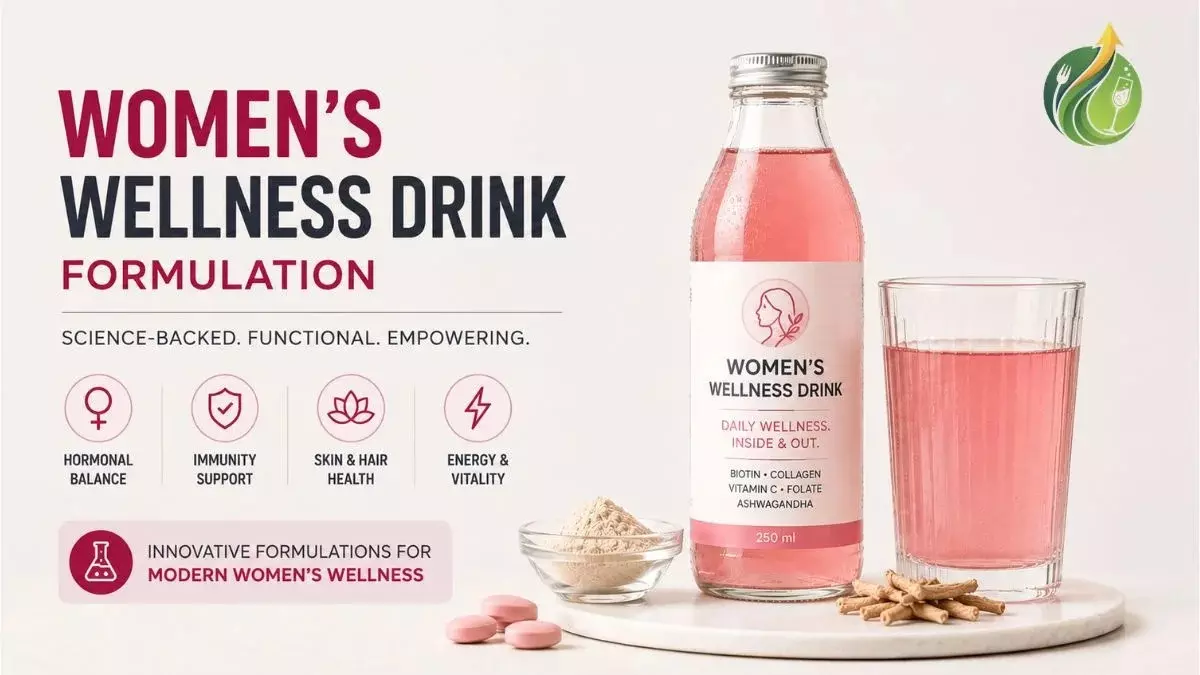
Women’s Wellness Drink Formulation
The demand for functional beverages is growing as consumers look for convenient ways to support their everyday wellness routines.
From refreshing herbal drinks to nutrient-enriched beverages, brands have many opportunities to develop products that meet different consumer preferences.
Flavor Catalystz helps businesses explore food and beverage product development, including formulation planning, flavour development, and the journey from an initial concept to a market-ready product.
Women’s wellness beverages can be designed around specific needs, such as everyday nutrition, hydration, digestive comfort, or nutritional support during different life stages.
However, successful product development requires more than selecting popular ingredients. Taste, ingredient compatibility, safety, stability, and regulatory compliance must all be considered.
This guide explains how businesses can approach women’s wellness drink formulation and develop a beverage that meets consumer expectations while following applicable food regulations in India.
What Is Women’s Wellness Drink Formulation?
Women’s wellness drink formulation is the process of developing beverages intended to complement women's everyday nutritional and wellness needs.
These products may contain selected vitamins, minerals, botanical ingredients, electrolytes, or other permitted functional ingredients, depending on their purpose and regulatory classification.
The objective is to create a beverage that combines suitable ingredients with an enjoyable flavour, consistent quality, and appropriate nutritional value.
Why Are Women's Wellness Beverages Gaining Attention?
Consumers increasingly examine ingredient lists, sugar content, convenience, and the nutritional value of packaged drinks. This creates opportunities for businesses to develop beverages with a clear purpose and transparent product information.
Potential product concepts include:
- Nutrient-enriched daily wellness drinks.
- Hydration beverages with suitable electrolytes.
- Fruit-based drinks with added permitted nutrients.
- Herbal-inspired beverages using legally permitted ingredients.
- Dairy-based or plant-based nutritional beverages.
- Convenient powdered drink mixes for everyday use.
These categories serve different purposes, so the formulation should begin with a clearly defined consumer need rather than a list of trending ingredients.
1. Identify Your Target Audience and Product Purpose
Before developing a recipe, decide who the beverage is intended for and what role it should play in their routine.
Women have different nutritional requirements depending on factors such as age, activity level, dietary habits, and life stage. A single beverage cannot automatically address every need.
H3: Define Your Product Category
Consider these potential audiences when planning a new beverage.
Target audience
Potential product direction
Active women
Convenient hydration and nutrient-enriched beverages
Working professionals
Ready-to-drink options designed for everyday convenience
Health-conscious consumers
Beverages with transparent ingredients and controlled sugar levels
Women with specific nutritional needs
Carefully formulated products based on suitable nutritional requirements
Older women
Products designed around clearly defined nutritional objectives
These are product-development opportunities, not medical recommendations. Any specific nutritional positioning should be supported by evidence and reviewed for regulatory compliance.
Research Consumer Preferences
Market research can help identify preferred flavours, sweetness levels, beverage formats, price ranges, and packaging styles.
You can conduct customer interviews, online surveys, concept testing, and small-scale tasting sessions. Ask potential customers what they value most in a wellness beverage and what prevents them from purchasing similar products.
The results can help you develop a product that solves a practical consumer problem instead of relying only on marketing trends.
2. Select Suitable Ingredients for Women's Wellness Drinks
Ingredient selection is one of the most important stages of beverage development. Each ingredient must serve a clear formulation purpose and be appropriate for the intended consumer and product category.
Vitamins and Minerals
Depending on the product concept, permitted vitamins and minerals may be considered to provide specific nutrients. Iron, calcium, vitamin D, vitamin B12, and folate are examples of nutrients associated with different nutritional functions.
However, not every beverage requires these nutrients. Their inclusion, amount, permitted use, stability, and labelling must be evaluated according to the applicable requirements.
Botanical and Plant-Based Ingredients
Some businesses explore botanical ingredients for flavour, product identity, or specific functional positioning. These ingredients require careful assessment because their safety, permitted use, and evidence can vary.
A plant-derived ingredient is not automatically safe or legally permitted simply because it is natural.
Hydration and Electrolytes
Electrolyte-based beverages may be appropriate for concepts focused on fluid replacement or hydration, depending on their composition and intended use.
Sodium, potassium, and other relevant minerals must be considered in suitable quantities. The formulation should also account for sweetness, acidity, flavour balance, and the intended serving size.
Check Ingredient Compatibility Before Finalising the Formula
Some ingredients may react with one another or affect flavour, colour, solubility, and shelf life. Product developers should assess ingredient interactions, processing conditions, and nutritional stability before approving the final recipe.
3. Create a Balanced and Enjoyable Flavour Profile
Taste strongly influences whether consumers continue purchasing a beverage. Even a thoughtfully designed wellness drink can struggle if it tastes bitter, overly sweet, or leaves an unpleasant aftertaste.
Choose the Right Flavour Direction
The flavour profile should match the target audience and product concept. Potential options include:
- Lemon and citrus.
- Berry and mixed fruit.
- Peach and other mild fruit flavours.
- Ginger and citrus combinations.
- Mild herbal-inspired flavour profiles.
The final choice depends on ingredient compatibility, consumer preferences, and the intended product format.
Control Sweetness and Acidity
Sweetness, acidity, aroma, and mouthfeel must work together. Too much acidity can make a drink harsh, while excessive sweetness may make it feel heavy.
Depending on the formulation, developers may evaluate permitted sweeteners, fruit ingredients, flavouring substances, and acidity regulators.
Conduct Sensory Evaluation
Prepare controlled samples and evaluate flavour, aroma, appearance, aftertaste, and overall acceptability. Consumer testing can help identify the preferred version before moving towards commercial production.
Record each formulation change so the preferred sample can be reproduced consistently.
Read: Exploring the Power of Mushroom Drinks for Daily Wellness
4. Develop the Right Beverage Format
The beverage format affects formulation, packaging, production costs, storage, and distribution.
Beverage format
Development considerations
Ready-to-drink beverage
Processing, filling, microbial safety, and shelf stability
Powdered drink mix
Solubility, moisture protection, and mixing performance
Concentrated drink
Dilution instructions, ingredient stability, and serving consistency
Dairy-based beverage
Protein stability, heat processing, and refrigeration or other suitable storage requirements
Plant-based beverage
Ingredient compatibility, suspension, texture, and separation control
A ready-to-drink beverage may offer convenience, while a powdered format may reduce shipping weight. Neither option is automatically more economical; the decision depends on the formula, packaging, manufacturing process, and distribution model.
5. Understand FSSAI Compliance and Product Labelling
Regulatory compliance should be considered before the formula is finalised or packaging is printed.
In India, the Food Safety and Standards Authority of India (FSSAI) establishes requirements for food products, including applicable standards for ingredients, manufacturing, labelling, and claims. The relevant rules depend on the product's composition, intended use, and classification.
Confirm the Correct Product Classification
A women's wellness drink is not automatically a health supplement or nutraceutical. Depending on its composition and presentation, it may fall under another applicable food category.
Before commercialisation, review:
- Permitted ingredients and their conditions of use.
- Applicable product standards and category requirements.
- Relevant FSSAI licensing obligations.
- Manufacturing and quality-control requirements.
- Applicable packaging and labelling rules.
- Advertising, nutrition, and health-claim restrictions.
Where an ingredient or product requires additional approval, this must be addressed before proceeding with commercial production.
Prepare Clear and Accurate Labels
Depending on the applicable requirements, the label may need to include ingredients, nutritional information, allergen declarations, net quantity, manufacturer details, batch identification, date marking, storage instructions, and other prescribed information.
Claims such as “balances hormones,” “cures PCOS,” or “prevents menopause symptoms” should not be used without a valid legal basis. Claims must comply with the relevant regulations and supporting evidence.
For compliance planning, consult the official FSSAI website and obtain specialist advice where necessary.
6. Conduct Product Testing and Shelf-Life Studies
A wellness beverage must maintain acceptable quality throughout its intended shelf life. Testing helps identify potential problems before the product reaches consumers.
Important Quality Checks
Depending on the formulation and manufacturing process, testing may include:
- Microbiological safety.
- Relevant chemical and physical parameters.
- Nutrient content verification, where applicable.
- pH and acidity measurements.
- Flavour, colour, and appearance changes.
- Solubility, sedimentation, or separation.
- Packaging compatibility and integrity.
Establish a Reliable Shelf Life
Shelf-life studies should assess product quality under defined storage conditions. Temperature, light exposure, oxygen, packaging materials, and processing methods may influence stability.
Do not assign an expiry date based solely on assumptions or the shelf life of a similar product. The proposed shelf life should be supported by appropriate evidence.
7. Choose a Suitable Manufacturing Partner
Once the formulation has been evaluated, the next step is to identify a manufacturer capable of producing the beverage consistently.
Contract manufacturing can be an option for startups that want to test the market without immediately establishing their own facility.
Evaluate Manufacturing Capabilities
Before selecting a partner, review:
- Relevant licences and product-category experience.
- Ingredient sourcing and traceability.
- Production capacity and minimum order quantity.
- Quality assurance and testing procedures.
- Packaging and filling capabilities.
- Batch documentation and consistency.
- Production costs and delivery timelines.
Request a detailed quotation and clarify who is responsible for ingredient procurement, testing, packaging, and regulatory documentation.
Begin With a Controlled Production Plan
Where commercially practical, start with a manageable production quantity. Confirm that the approved formulation, manufacturing instructions, packaging specifications, and quality checks are documented before scaling up.
Any significant formulation change should be evaluated for its effect on product quality, stability, and compliance.
8. Calculate Costs and Set a Competitive Price
A commercially successful wellness beverage must offer value to consumers while covering the costs of development and distribution.
Identify Your Main Expenses
Your budget may include:
- Formulation development and sample preparation.
- Ingredient sourcing and procurement.
- Laboratory testing and regulatory support.
- Manufacturing and filling.
- Bottles, cans, sachets, labels, and cartons.
- Branding, packaging design, and marketing.
- Warehousing, transportation, and distribution.
Calculate the total cost per saleable unit rather than considering only the cost of ingredients.
Build a Practical Pricing Strategy
Research comparable products and assess what your target customers are willing to pay. Include applicable taxes, distributor and retailer margins, promotional discounts, shipping costs, and customer acquisition expenses in your financial calculations.
Avoid setting a price based only on competitors. Your final pricing should reflect your actual cost structure, positioning, and expected sales volume.
9. Build a Strong Marketing Strategy
A clear marketing message helps customers understand what makes your product relevant to them.
Communicate Product Benefits Responsibly
Explain the product's ingredients, intended use, taste, format, and relevant nutritional information. Keep the messaging simple and avoid unsupported medical or performance claims.
Use Digital Channels to Reach Customers
Businesses can explore search engine optimisation, educational blog content, social media, sampling programmes, online sales channels, and suitable retail partnerships.
Relevant functional beverage development and nutritional drink formulation topics can also support an educational content strategy, provided the information is accurate and useful.
Use customer feedback and sales data to understand which messages and product features attract genuine interest.
10. Work With an Experienced Product Development Team
Developing a women's wellness beverage involves several connected decisions, from ingredient selection to sensory testing and commercial manufacturing. Managing these stages systematically can help reduce avoidable formulation problems.
Flavor Catalystz can support businesses exploring food and beverage formulation, prototype development, flavour optimisation, and product development planning.
Before beginning a project, prepare a brief covering your target audience, product concept, preferred format, potential ingredients, budget, and launch objectives. This gives the development team a clearer starting point for evaluating technical requirements and possible next steps.
Final Thought
Women's wellness beverages offer opportunities for businesses that understand their customers and develop products around clear, realistic objectives.
The strongest concepts combine suitable ingredients, enjoyable taste, reliable quality, responsible communication, and compliance with applicable food regulations.
If you are planning Women’s Wellness Drink Formulation, begin with a well-defined concept, validate your ingredients, and test the product before scaling up.
With the right development strategy and support from Flavor Catalystz, you can work towards creating a distinctive beverage that is ready for further commercial evaluation.
Frequently Asked Questions
1. What is women's wellness drink formulation?
It is the process of developing beverages designed around defined nutritional or everyday wellness objectives, while considering ingredient safety, taste, stability, and regulatory compliance.
2. Which ingredients can be used in women's wellness drinks?
Depending on the product category and permitted uses, formulations may include selected vitamins, minerals, electrolytes, fruit ingredients, or suitable botanical ingredients. Each ingredient requires an appropriate safety and regulatory review.
3. Is FSSAI licensing required for a women's wellness beverage?
The applicable licensing and compliance requirements depend on the business activity and product category. The relevant requirements should be confirmed before manufacturing or selling the product.
4. Can a women's wellness drink be developed without added sugar?
Yes, some concepts can be developed without added sugar, depending on the ingredients and desired taste. The formulation must still meet applicable labelling requirements and maintain acceptable flavour and stability.
5. How long does it take to develop a wellness drink?
The timeline depends on formulation complexity, ingredient availability, prototype trials, testing, regulatory review, packaging, and manufacturing schedules. Additional testing or approvals may extend the process.
6. How can I improve the taste of a functional beverage?
Taste can be improved through controlled adjustments to sweetness, acidity, aroma, flavour balance, and mouthfeel. Sensory evaluation helps identify the most acceptable formulation.
7. How do I determine the shelf life of a wellness drink?
Shelf life should be established through suitable stability studies and quality testing under defined storage conditions. The process depends on the ingredients, packaging, and manufacturing method.