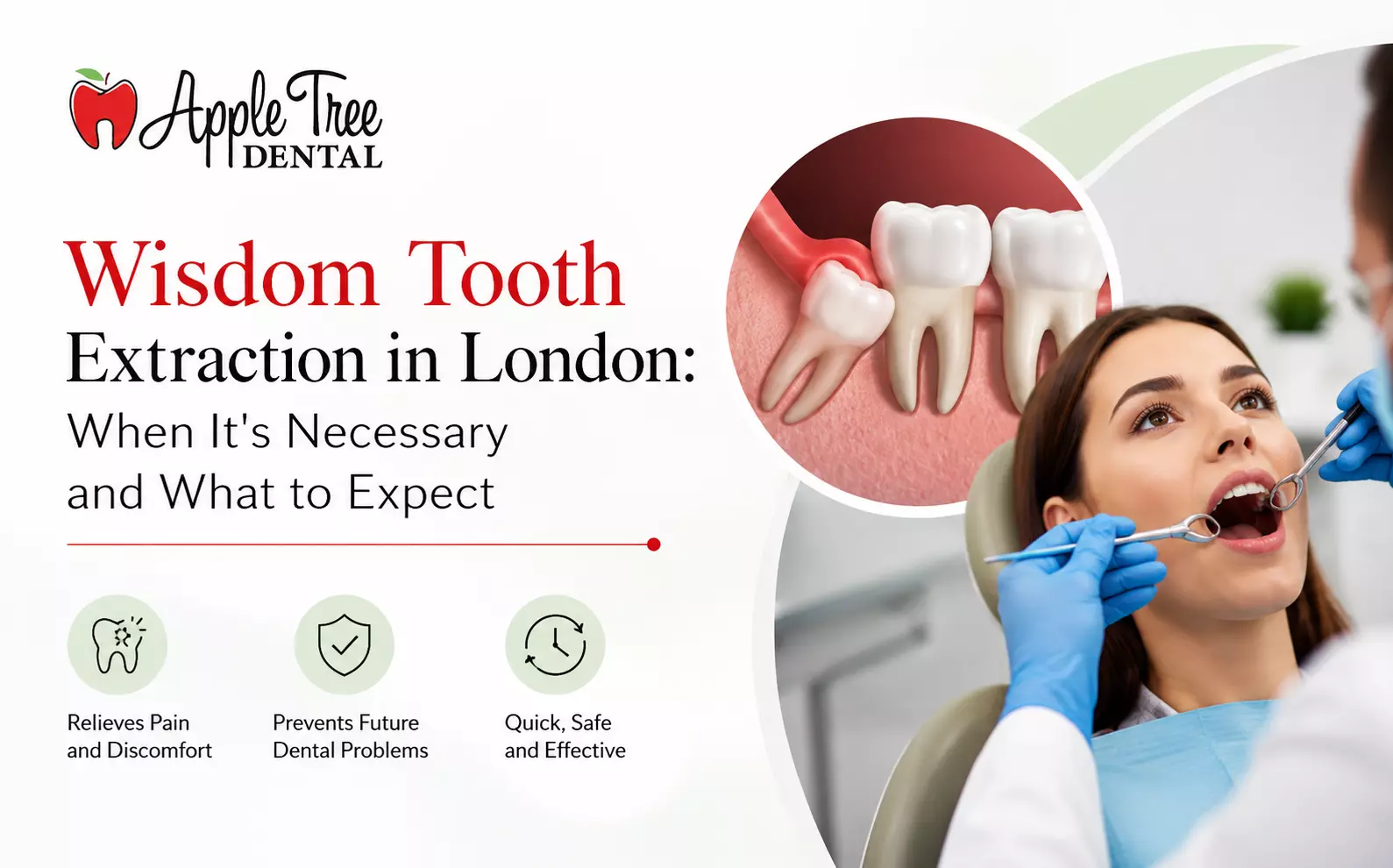
Wisdom Tooth Extraction in London: When It's Necessary and What to Expect
Not every wisdom tooth needs to come out — but when a tooth is impacted, causing pain, or crowding surrounding teeth, extraction is usually the safest long-term option.
Most patients in London can expect a recovery window of three to seven days for straightforward cases, with impacted or surgical extractions taking slightly longer.
Why Wisdom Teeth Cause Problems in the First Place
Wisdom teeth, or third molars, are the last teeth to develop, typically emerging between ages 17 and 25.
The trouble is that human jaws haven't kept pace evolutionarily with tooth count — most people simply don't have enough room at the back of the jaw to accommodate them properly.
This mismatch is why wisdom teeth so frequently become impacted, meaning they're blocked from erupting normally by bone, gum tissue, or neighboring teeth.
Dental researchers have long noted that a large majority of adults will have at least one impacted wisdom tooth in their lifetime. Some people are fortunate enough to have adequate jaw space and never experience issues.
Others develop symptoms gradually — mild jaw stiffness at first, then swelling, then pain that radiates toward the ear or throat as the tooth pushes against adjacent structures.
Signs You Might Need an Extraction
Patients often wait too long before seeking care because early symptoms are easy to dismiss as general jaw tension or a sinus issue. Warning signs worth taking seriously include:
- Persistent pain or pressure at the back of the jaw
- Swollen or tender gums near the molars
- Difficulty opening the mouth fully
- Bad breath or an unpleasant taste that doesn't resolve with brushing
- Visible crowding or shifting of nearby teeth on dental X-rays
The Role of X-Rays in Diagnosis
Panoramic X-rays are the standard diagnostic tool for assessing wisdom teeth, since they reveal the angle of eruption, root position, and proximity to the nerve canal — details that aren't visible during a routine visual exam.
This imaging step is what allows a dentist to distinguish between a tooth that simply needs monitoring and one that's actively causing damage.
What the Extraction Process Actually Involves
There's a meaningful difference between a simple extraction and a surgical one, and patients researching the procedure should understand which category applies to their case.
Simple Extractions
These apply when the tooth has fully erupted through the gum and is accessible enough to be removed with standard dental instruments, usually under local anesthesia alone.
Surgical Extractions
Impacted teeth — those still under the gumline or angled sideways into the neighboring molar — require a small incision and sometimes sectioning of the tooth into pieces for safer removal.
These cases often involve sedation options beyond local anesthetic, particularly when multiple teeth are being removed in one visit.
The choice between these approaches isn't cosmetic preference; it's determined by anatomy. A dentist reviewing imaging beforehand can usually predict which category a patient falls into, which helps set realistic expectations for both the appointment length and the recovery that follows.
Read: Family Dentistry in London, Ontario: A Practical Guide
Recovery: What's Normal and What Isn't
The first 24 hours after extraction matter most. Mild bleeding, swelling, and tenderness are expected, and most discomfort is manageable with over-the-counter pain relief plus ice application.
Soft foods — soups, yogurt, mashed potatoes — are recommended for the first few days, with patients gradually reintroducing normal foods as chewing becomes comfortable again.
One recovery detail that doesn't get discussed enough: avoiding straw use and vigorous rinsing for the first several days isn't just a minor suggestion.
Suction can dislodge the blood clot forming in the socket, leading to a painful complication called dry socket, which delays healing significantly.
Patients who follow post-op instructions closely rarely experience this, but it remains one of the most common preventable complications after extraction.
Swelling typically peaks around 48 hours before subsiding, and most people return to normal activity within a week. Full soft-tissue healing, however, can take several weeks in the background even after the patient feels fully recovered.
Choosing a Provider in London
For anyone comparing local options, it's worth looking beyond price alone.
A clear explanation of the wisdom tooth extraction London process — including how sedation decisions are made and what imaging is used for diagnosis — is a reasonable benchmark for evaluating whether a clinic prioritizes thorough assessment over rushing patients into surgery.
It's also worth asking prospective providers how they handle complications like nerve proximity, since the lower wisdom teeth sit close to the inferior alveolar nerve.
Clinics that walk patients through this risk before treatment, rather than after, tend to set more realistic expectations. Readers wanting a broader look at how oral surgery consultations in London typically proceed can find that outlined in more detail through the clinic's service overview.
Frequently Asked Questions
Do all wisdom teeth need to be removed?
No. If a wisdom tooth is fully erupted, properly aligned, and doesn't trap food or bacteria, it can sometimes be left in place with regular monitoring.
How painful is the procedure itself?
The extraction is performed under anesthesia, so patients typically feel pressure rather than pain during the procedure. Discomfort afterward is manageable with prescribed or over-the-counter medication.
How long does full recovery take?
Most patients feel back to normal within a week, though complete soft-tissue healing can take three to four weeks.
Can wisdom teeth grow back after removal?
No. Once removed, the tooth and its root are permanently gone; there's no regrowth.
The Bottom Line
Wisdom tooth extraction isn't automatically necessary for everyone, but ignoring clear warning signs — persistent pain, swelling, or crowding on X-rays — tends to make the eventual procedure more complicated, not less.
Patients in London considering treatment should prioritize a provider who explains the diagnostic reasoning behind their recommendation rather than one who treats extraction as a routine upsell.