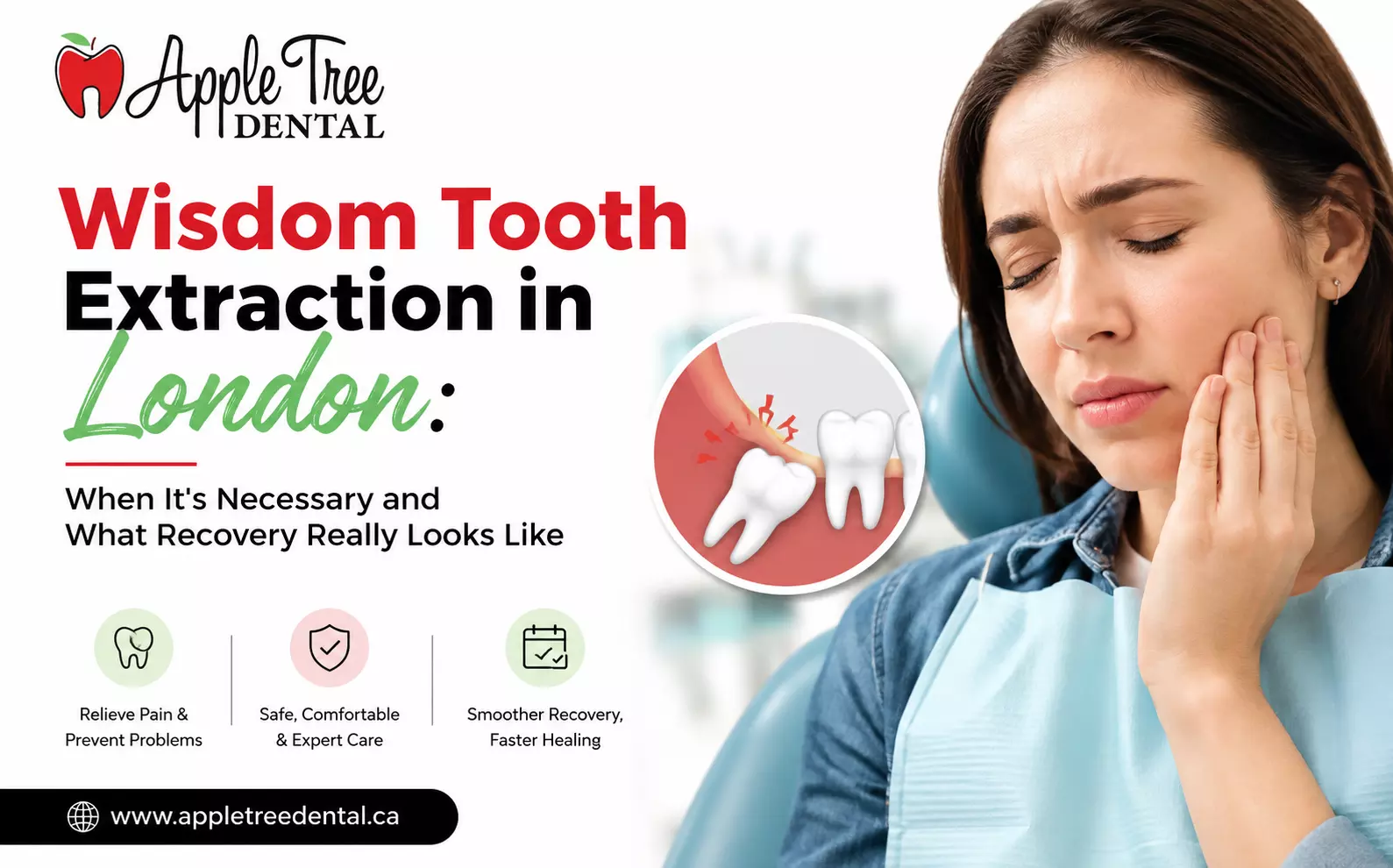
Wisdom Tooth Extraction in London: When It's Necessary and What Recovery Really Looks Like
Wisdom teeth typically need extraction when they're impacted, causing crowding, or at risk of infection — not simply because they've erupted.
Most patients recover within three to seven days with proper aftercare, though impacted extractions can take longer. An X-ray-based assessment, not age alone, should guide the decision.
Why "Everyone Gets Their Wisdom Teeth Out" Is a Myth
It's a common assumption that wisdom teeth always need to come out eventually. In reality, some people have enough jaw space to accommodate them without issue and never need extraction at all.
The decision should be based on imaging and symptoms, not a blanket rule applied to every patient in their late teens or twenties.
That said, when extraction is genuinely necessary, delaying it often makes the procedure more complicated. Understanding the actual indicators — rather than assuming removal is inevitable — helps patients make a more informed decision with their dentist.
When Extraction Is Actually Necessary
Impaction
Impacted wisdom teeth are those that don't have enough room to erupt properly, often growing at an angle against neighboring teeth.
This is one of the most common reasons for extraction, since impacted teeth can cause pain, damage to adjacent teeth, or cyst formation if left untreated.
Recurrent Infection or Gum Inflammation
Partially erupted wisdom teeth create a pocket where food and bacteria collect, leading to a condition called pericoronitis. Recurring infection in this area is a strong indicator that extraction, rather than repeated antibiotic treatment, is the more durable solution.
Crowding Risk
Some evidence suggests wisdom teeth can contribute to shifting in the front teeth, though this remains debated among researchers.
Where crowding is already a concern — particularly for patients who've had orthodontic treatment — a dentist may recommend extraction as a preventive measure.
Cyst or Cavity Formation
Because wisdom teeth are difficult to clean thoroughly, they're more prone to decay and, in less common cases, cyst development around an impacted tooth. Regular checkups and panoramic X-rays are how these issues get caught before they become urgent.
Read: Family Dentistry in London, Ontario: A Practical Guide
What the Procedure Actually Involves
Most straightforward extractions are done under local anesthesia, with sedation options available for patients who are anxious or facing a more complex impaction. The procedure itself typically takes twenty to forty minutes per tooth, though fully impacted teeth requiring bone removal can take longer.
For patients in the London area weighing their options, this detailed walkthrough of the wisdom tooth extraction process covers what happens during consultation, the extraction itself, and post-operative care — useful context to review before a first appointment so you know what questions to ask.
Recovery Timeline: What's Normal and What Isn't
Days 1–2
Swelling and mild discomfort are expected and usually well-managed with prescribed or over-the-counter pain relief. Ice packs in twenty-minute intervals help reduce swelling during this window.
Days 3–5
Swelling typically peaks around day two or three before starting to subside. Most patients can return to light activity, though strenuous exercise should still be avoided.
Days 5–7
Most discomfort resolves by the end of the first week, though full healing of the extraction site can take a few additional weeks.
Dry socket — a painful complication where the blood clot dislodges prematurely — is the main reason patients should avoid straws, smoking, and vigorous rinsing during early recovery.
When to call your dentist: Worsening pain after day three, fever, or a foul taste that doesn't improve with rinsing are signs worth getting checked rather than waiting out.
Questions Worth Asking Before Scheduling
- Is this tooth impacted, and if so, how severely?
- What type of anesthesia or sedation is recommended for my case?
- What's the realistic recovery timeline given my specific extraction?
- Are there risks specific to my X-ray findings I should know about?
A Note on Cost and Insurance
Extraction costs vary depending on whether the tooth is impacted and whether sedation is required.
Many dental insurance plans in Ontario cover a portion of extraction costs, particularly when the procedure is medically necessary rather than elective — worth confirming with your provider before booking.
Final Thoughts
Wisdom tooth extraction is a routine procedure, but "routine" doesn't mean it should be treated casually. A proper assessment — based on imaging and symptoms rather than age or assumption — is what actually determines whether extraction is the right call, and how smooth recovery is likely to be.
This article was reviewed by the clinical team at Apple Tree Dental, a family dental practice serving London, Ontario with locations on Beaverbrook Avenue North and Wonderland Road South.
Apple Tree Dental is registered with the Royal College of Dental Surgeons of Ontario (RCDSO) and provides oral surgery services including wisdom tooth extraction alongside general and family dental care.
The team draws on ongoing continuing education in oral surgery and patient sedation protocols to guide safe, individualized treatment decisions. For more on wisdom tooth extraction London options, visit the practice's service page directly.