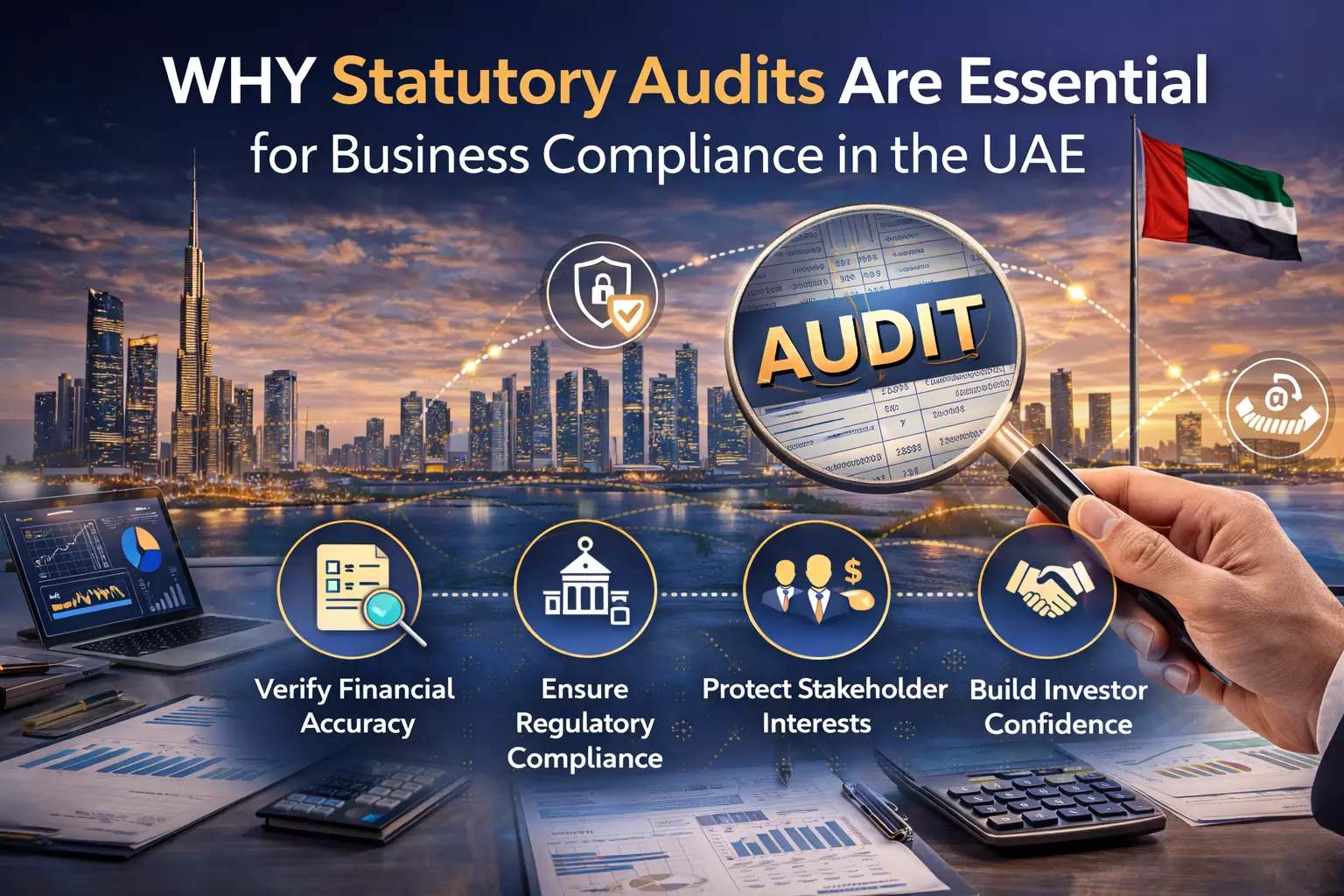
Why Statutory Audits Are Essential for Business Compliance in the UAE
The United Arab Emirates has become one of the most attractive destinations for global businesses, thanks to its strong infrastructure, investor friendly regulations, and strategic location.
However, operating in this dynamic market also requires companies to follow strict financial and regulatory standards. One of the most important mechanisms that ensures transparency and accountability is Statutory Audits in the UAE.
For many businesses, audits may initially appear to be just another regulatory obligation. In reality, they play a much larger role.
A well conducted statutory audit strengthens financial credibility, protects stakeholders, and helps organizations maintain full compliance with UAE regulations.
Whether a company operates in the mainland, a free zone, or offshore jurisdiction, understanding the importance of statutory audits can help businesses maintain trust, avoid penalties, and operate with confidence.
Understanding the Role of Statutory Audits in the UAE
To understand their importance, it is helpful to first clarify what a statutory audit actually means.
A statutory audit is a legally required review of a company's financial records conducted by an independent auditor. The purpose is to verify that financial statements accurately reflect the company's financial position and comply with relevant laws and accounting standards.
In the UAE, these audits are often required by:
- Government regulations
- Free zone authorities
- Corporate tax compliance rules
- Banking institutions and investors
The process ensures that companies maintain accurate financial reporting and operate within the legal framework.
For organizations aiming to maintain transparency and credibility, Statutory Audits in the UAE are a critical part of responsible business management.
Why Business Compliance Matters in the UAE
Compliance is a major priority for companies operating in the UAE. Authorities have introduced clear financial regulations to strengthen transparency and protect investors.
Non compliance can lead to several challenges, including:
- Financial penalties
- Delays in license renewals
- Difficulties opening or maintaining bank accounts
- Reduced investor confidence
Regular audits help companies detect potential issues early and maintain proper documentation. By ensuring financial accuracy, Statutory Audits in the UAE provide businesses with a reliable system for maintaining compliance.
Key Benefits of Statutory Audits for UAE Businesses
Many business owners view audits purely as a legal requirement. However, the benefits extend far beyond regulatory compliance.
Improved Financial Transparency
A statutory audit provides an independent assessment of a company's financial statements. This ensures that records accurately represent revenues, expenses, and financial health.
Transparency builds trust among stakeholders, including investors, shareholders, and financial institutions.
Strengthened Investor Confidence
Investors prefer businesses with reliable financial reporting. Audited financial statements demonstrate that a company operates with integrity and accountability.
This makes it easier to secure investments, partnerships, or funding opportunities.
Better Financial Management
Audits often reveal inefficiencies or inconsistencies in accounting processes. Identifying these areas allows companies to improve financial management and strengthen internal controls.
Over time, this leads to better decision making and improved profitability.
Regulatory Compliance
Regulatory compliance is one of the most important reasons companies conduct audits.
Through Statutory Audits in the UAE, businesses can confirm that their financial records comply with applicable regulations, including accounting standards and corporate tax requirements.
Which Businesses Require Statutory Audits in the UAE
Audit requirements vary depending on the jurisdiction in which a company operates.
Mainland Companies
Many mainland companies are required to maintain audited financial statements, particularly when applying for financing, partnerships, or regulatory approvals.
Free Zone Companies
Several free zones require companies to submit annual audited financial statements to maintain compliance and renew business licenses.
Examples include major commercial free zones that emphasize financial transparency and accountability.
Offshore Companies
Offshore entities may not always require mandatory audits. However, audited financial statements are often requested by banks, investors, or international partners.
Even when not legally required, audits help maintain credibility and financial clarity.
The Statutory Audit Process Explained
Understanding how the audit process works helps companies prepare effectively.
Step 1: Appointment of an Auditor
A licensed and independent auditor is selected to review the company's financial records.
Step 2: Review of Financial Documents
The auditor examines documents such as:
- Financial statements
- Accounting records
- Bank transactions
- Expense reports
Step 3: Risk Assessment
Auditors analyze potential financial risks or inconsistencies that may affect compliance.
Step 4: Audit Testing
The auditor verifies financial data and confirms that records are accurate and reliable.
Step 5: Audit Report
After completing the review, the auditor issues a formal report that confirms whether the company's financial statements are accurate and compliant.
Through this structured process, Statutory Audits in the UAE ensure financial integrity and regulatory alignment.
Common Challenges Businesses Face During Audits
Many companies encounter difficulties during their first audit due to limited preparation.
Some common challenges include:
- Incomplete financial records
- Poor bookkeeping practices
- Lack of documentation
- Misunderstanding regulatory requirements
Fortunately, these issues can be avoided by maintaining organized accounting systems and working with professional advisors.
Preparation makes the audit process smoother and significantly reduces compliance risks.
Best Practices for Successful Audit Compliance
Companies can simplify the audit process by following a few practical steps.
Maintain Accurate Accounting Records
Proper bookkeeping ensures financial transactions are recorded consistently and transparently.
Implement Strong Internal Controls
Internal control systems help monitor financial activities and prevent errors or fraud.
Conduct Regular Financial Reviews
Periodic financial reviews help businesses identify issues before the official audit begins.
Work With Experienced Audit Professionals
Professional auditors provide valuable guidance and ensure that companies meet all regulatory requirements.
By adopting these practices, businesses can approach Statutory Audits in the UAE with greater confidence and efficiency.
Read: Essential Legal Compliance Tips After Company
The Growing Importance of Audits in the UAEBusiness Environment
The UAE continues to strengthen its regulatory framework to support sustainable economic growth.
Recent developments such as corporate tax regulations have increased the importance of maintaining transparent financial records. Businesses must now demonstrate clear financial accountability to comply with evolving regulations.
As a result, statutory audits are becoming an essential part of modern corporate governance in the region.
Companies that prioritize proper auditing practices position themselves for long term success and regulatory stability.
Conclusion
Operating a business in the UAE offers exceptional opportunities for growth, innovation, and global expansion. However, these opportunities also come with the responsibility of maintaining financial transparency and regulatory compliance.
By conducting regular Statutory Audits in the UAE, companies can ensure their financial records are accurate, strengthen investor confidence, and meet legal obligations with confidence.
Rather than viewing audits as a simple compliance requirement, forward thinking businesses recognize them as a powerful tool for improving financial management and building long term credibility in the competitive UAE market.