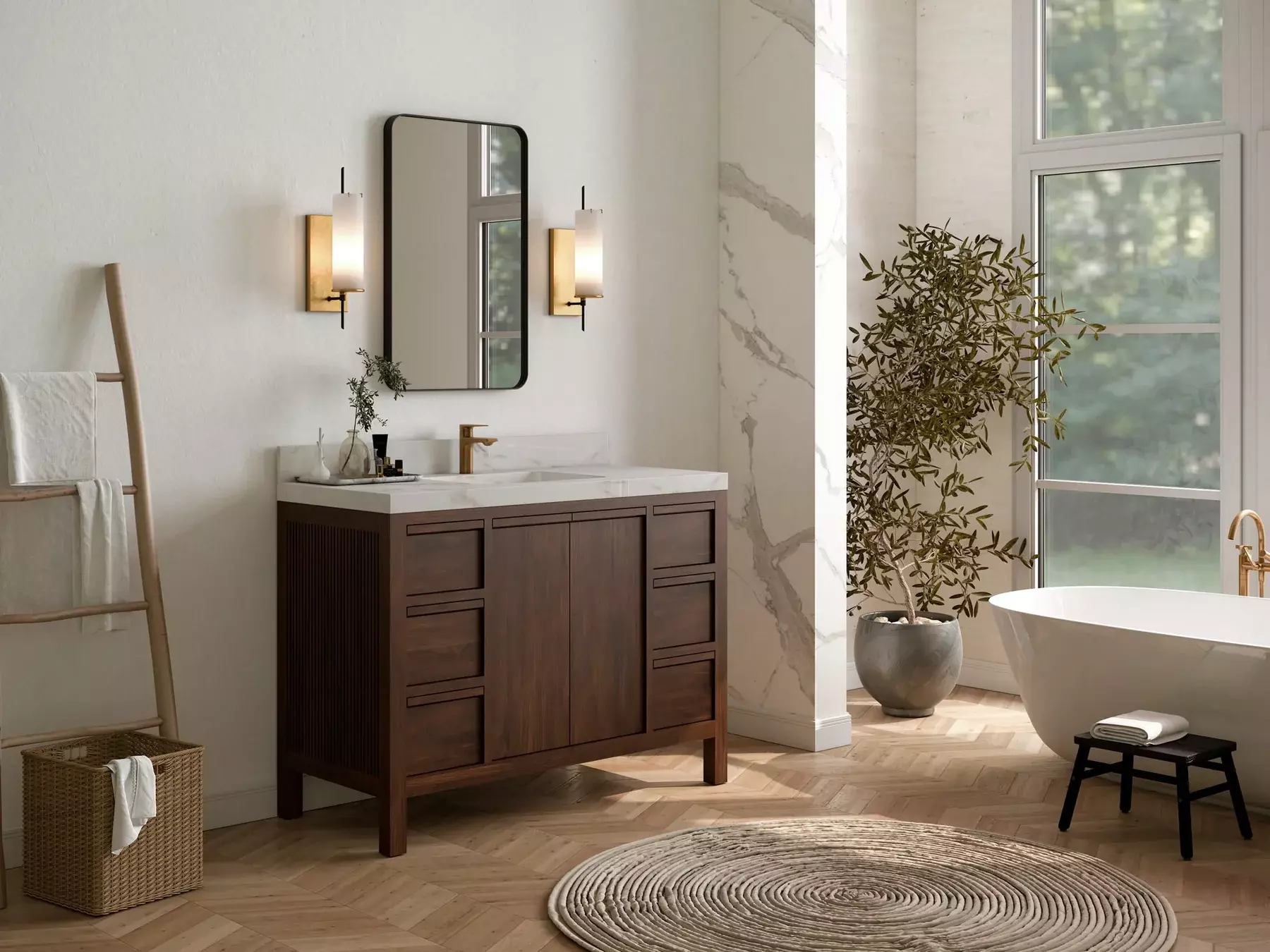
Why Some Wooden Vanities Crack Over Time and Teak Doesn’t
Understanding Why Wooden Vanities Develop Cracks
Many homeowners choose wooden vanities because they bring warmth and natural texture into the bathroom. However, not all wood performs well in humid bathroom environments over long periods.
Cracking usually happens when wood repeatedly expands and contracts due to moisture, temperature changes, and poor material quality. Some woods struggle with these conditions much more than others.
The Bathroom Environment Is Tough on Wood
Bathrooms create constant exposure to steam, humidity, water splashes, and temperature fluctuations. These conditions slowly weaken low-quality wood materials and affect their structural stability.
Over time, this stress causes visible damage.
Common bathroom conditions that damage wooden vanities:
• High moisture levels after showers
• Poor ventilation and trapped humidity
• Water sitting near sink edges
• Sudden temperature changes
• Daily wear from regular usage
These factors gradually impact weaker wood materials.
Why Many Wooden Vanities Crack Over Time
Not all wooden vanities are made from solid hardwood. Many affordable options use engineered materials or soft wood that cannot handle long-term moisture exposure properly.
As the material absorbs and releases moisture repeatedly, the surface begins weakening.
Signs a vanity may be vulnerable to cracking:
• Surface swelling near sink areas
• Small lines appearing around joints
• Peeling finishes or coatings
• Warped cabinet doors
• Uneven edges or splitting panels
These problems usually worsen without proper protection.
What Makes Teak Different from Other Woods?
Teak is naturally dense and contains protective oils that help resist moisture much better than many other wood types commonly used in bathrooms.
This natural durability makes teak a reliable material for long-term bathroom use.
Key reasons teak performs better:
• Natural oils help resist moisture absorption
• Dense grain structure improves durability
• Less expansion and contraction over time
• Strong resistance to humidity changes
• Better long-term structural stability
These qualities help teak maintain its appearance longer.
Why a Teak Bathroom Vanity Handles Moisture Better
A teak bathroom vanity performs well because the wood naturally adapts to humid environments without absorbing excessive moisture that causes cracking or splitting in weaker materials.
This makes teak especially practical for bathrooms with regular steam exposure and frequent daily use.
Unlike some materials that quickly deteriorate, teak remains stable when properly sealed and maintained over time.
Solid Construction Matters as Much as Material
Even high-quality wood can fail if the vanity is poorly constructed. Good craftsmanship plays a major role in preventing stress points that eventually lead to cracks or warping.
Strong construction improves long-term durability.
Features of a well-built wooden vanity:
• Reinforced joints for better stability
• Moisture-resistant finishing layers
• Quality hardware and fittings
• Properly sealed surfaces and edges
• Balanced structural support throughout
Construction quality directly affects product lifespan.
Choosing the Right Vanity Size for Your Bathroom
The size of the vanity also impacts functionality and durability because overcrowded spaces often increase water exposure and daily wear around the sink area.
Smaller layouts often benefit from a single teak bathroom vanity because it provides practical storage while maintaining an open and manageable bathroom layout.
Larger bathrooms may work better with wider options such as a Teak Bathroom Vanity 48, offering more counter space and improved storage for shared use.
Choosing the correct size helps improve both comfort and maintenance.
Maintenance Still Plays an Important Role
Although teak is highly durable, proper care is still necessary to keep the vanity looking clean and performing well for many years.
Simple maintenance routines help protect the finish and preserve the wood naturally.
Practical teak vanity maintenance tips:
• Wipe standing water immediately
• Use mild, non-abrasive cleaners
• Keep the bathroom properly ventilated
• Avoid harsh chemical cleaning products
• Check seals and finishes regularly
Consistent care prevents unnecessary damage over time.
Why Cheap Alternatives Often Cause Problems Later
Some vanities are designed to look like solid wood but use lower-grade materials underneath decorative finishes. These options may initially appear attractive but often fail faster in bathrooms.
Lower-quality materials typically struggle with long-term humidity and repeated daily usage, leading to cracking, swelling, and reduced durability much sooner than expected.
This is why material quality should always be considered before focusing only on price.
Read: Renovation vs Remodeling – Which Path Should You Choose?
Signs You Are Investing in a Better Vanity
A durable wooden vanity should feel solid, stable, and properly finished. The quality becomes noticeable not only in appearance but also in long-term performance.
Important things to check before buying:
• Type of wood used in construction
• Moisture-resistant finishing quality
• Strength of cabinet joints
• Weight and structural stability
• Warranty or product durability details
These details help identify long-lasting products.
Final Thoughts
Many wooden vanities crack because they are made from materials that cannot handle constant moisture exposure and daily bathroom conditions over time.
Teak stands out because of its natural durability, moisture resistance, and long-term stability, making it a smart investment for homeowners looking for both style and performance.
For homeowners exploring quality teak vanity options, Bathroom Vanity Norcross offers stylish and durable solutions designed for practical everyday use and long-lasting bathroom performance.