Why Plastic Pipe Extrusion Lines Are in Demand in UAE
Introduction
The UAE has emerged as a powerhouse in construction, infrastructure, and industrial development across the GCC. From mega real estate projects to modern irrigation systems and advanced manufacturing facilities, there is one common factor driving these industries: the growing reliance on high-quality pipes.
At the core of this demand lies the Plastic Pipe Extrusion Line, an advanced production system that manufactures pipes used in water supply, drainage, electrical conduit, irrigation, and industrial applications.
In a region where urban development is accelerating, sustainable construction practices are prioritized, and manufacturing localization is a key government agenda, the demand for extrusion machinery has never been greater. This article explores why pipe extrusion has become central to the UAE’s industrial growth, what is driving the demand, and how manufacturers and decision-makers can leverage the opportunities.
Understanding Plastic Pipe Extrusion Lines
What Is a Plastic Pipe Extrusion Line?
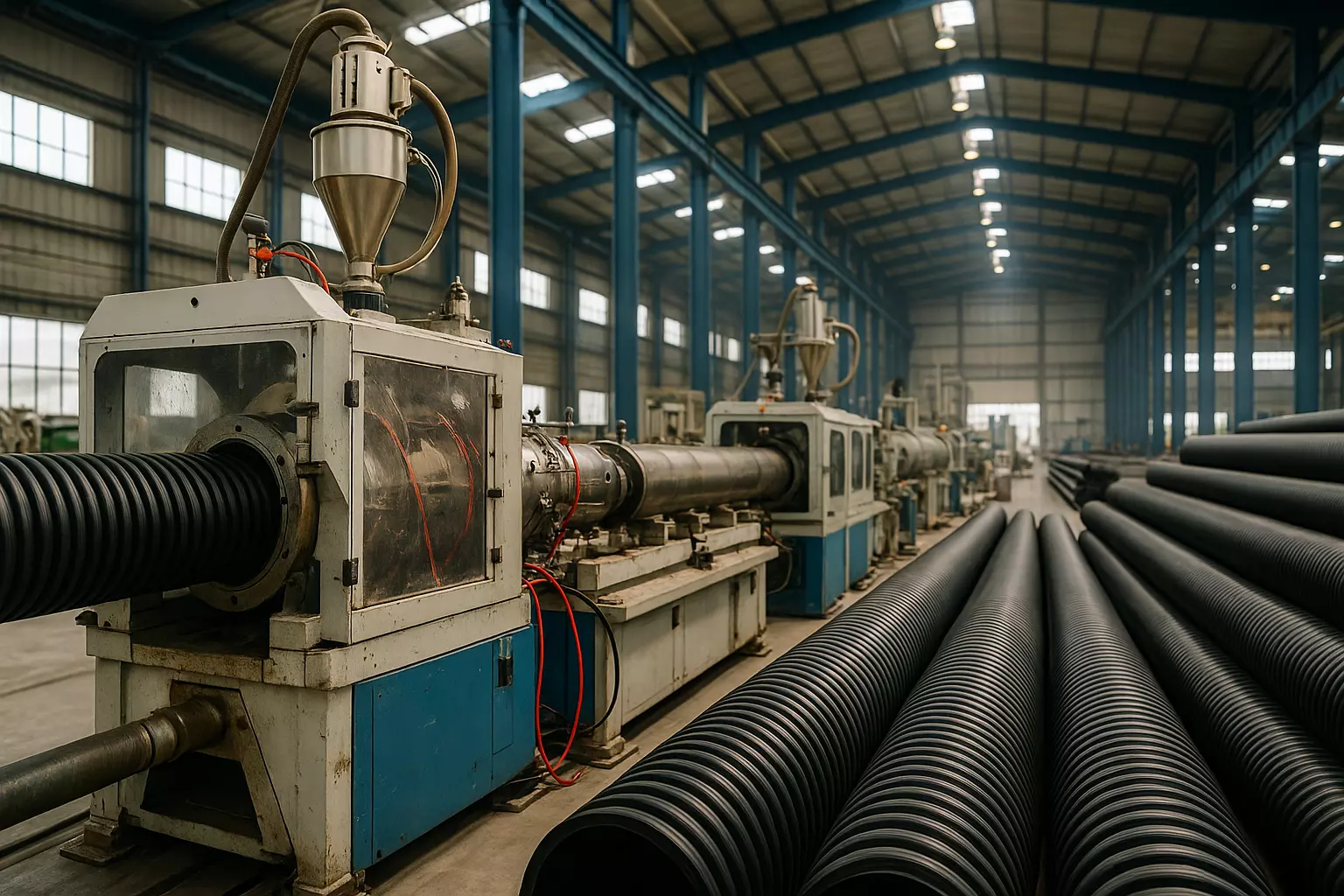
A plastic pipe extrusion line is a specialized system designed to produce continuous lengths of plastic pipes by melting raw polymer granules and shaping them through a die. The process involves several critical stages: extrusion, calibration, cooling, haul-off, cutting, and stacking.
The plastic pipe extrusion machine is the heart of this system. Equipped with single-screw or twin-screw extruders, it processes raw materials like HDPE, PVC, PP, or PPR into uniform, durable pipes. Advanced extrusion lines today integrate automation, real-time monitoring, and energy-saving technologies, ensuring consistent output that meets international standards.
Types of Plastic Pipes Produced with Extrusion Lines
The versatility of extrusion technology allows manufacturers to cater to multiple sectors:
- Water supply pipes: PPR and PVC pipes dominate plumbing and potable water distribution.
- Drainage and sewerage pipes: UPVC and HDPE pipes are preferred for their corrosion resistance and longevity.
- Electrical conduit pipes: Essential for protecting wiring in residential, commercial, and industrial projects.
- Irrigation pipes: HDPE and PE pipes power agricultural water networks and drip irrigation systems.
- Industrial-grade pipes: Specialized pipes for oil, gas, and chemical industries requiring high durability and chemical resistance.
This adaptability makes extrusion lines a long-term investment for factories catering to diverse demands across the UAE and GCC.
Why Plastic Pipe Extrusion Lines Are in High Demand in UAE
Rapid Urban Development and Mega Projects
The UAE’s real estate and infrastructure boom is unparalleled. According to a report by GlobalData, the country’s construction industry is expected to grow by 3.7% annually between 2024 and 2027, driven by smart city initiatives and large-scale housing projects. Mega developments like Dubai Creek Harbour and Abu Dhabi’s new residential expansions require millions of meters of durable pipes, fueling demand for efficient pipe extrusion technologies.
Growth in Construction and Plumbing Sectors
Modern plumbing systems rely heavily on plastic pipes due to their strength, hygiene, and ease of installation. Compared to traditional metal pipes, plastic variants are lighter, more affordable, and corrosion-free. As Dubai and Abu Dhabi lead the Gulf in modern housing and commercial towers, extrusion lines are increasingly used to manufacture pipes that meet ASTM and ISO standards demanded by contractors.
Expansion of Oil, Gas, and Industrial Applications
The UAE and wider GCC are investing in petrochemicals and industrial diversification. Industrial zones in Abu Dhabi and Ras Al Khaimah are adopting specialized extrusion machinery to produce pipes that withstand high pressures and chemical exposure. Whether for transporting crude oil derivatives or industrial fluids, pipe extrusion ensures the quality and reliability needed in critical applications.
Agricultural and Irrigation Requirements
Despite being a desert nation, the UAE is investing heavily in food security through agriculture and hydroponics. According to the Ministry of Climate Change and Environment, the UAE is expanding its irrigation networks to maximize water efficiency. HDPE pipes produced by extrusion lines are key in drip irrigation systems, ensuring water conservation while supporting large-scale farming initiatives.
Rising Demand for Energy-Efficient and Sustainable Solutions
Sustainability is central to the UAE’s Vision 2031. Plastic pipes contribute to green construction practices as they are lightweight, recyclable, and durable, lowering their carbon footprint compared to alternatives. Extrusion technology now includes machinery capable of processing recycled polymers, aligning with circular economy goals and increasing demand for eco-friendly manufacturing systems.
Advantages of Plastic Pipe Extrusion Technology
Cost-Effective Production
For manufacturers, extrusion lines offer high-volume output at a relatively low cost. The automation in modern systems reduces labor requirements while minimizing material waste. This efficiency directly translates into competitive pricing in the local and export markets.
Consistency and Quality Control
The plastic pipe extrusion machine ensures uniform wall thickness, smooth surfaces, and precise dimensions. Consistency is vital in meeting UAE’s stringent building codes and international certifications, making extrusion technology a preferred choice among quality-driven manufacturers.
Flexibility in Applications
One of the strongest advantages of extrusion technology is its adaptability. Manufacturers can produce pipes of different diameters, wall thicknesses, and material grades to serve diverse needs. From household plumbing to industrial pipelines, extrusion systems provide flexibility without requiring multiple production setups.
The UAE Market Opportunity for Extrusion Line Manufacturers
Government Initiatives Supporting Manufacturing
The UAE’s "Make it in the Emirates" campaign encourages local production of industrial and construction materials. This initiative offers incentives for manufacturers who invest in modern machinery, including extrusion lines. Localizing pipe production not only reduces reliance on imports but also strengthens the domestic supply chain.
Increasing Demand for Locally Produced Pipes
Construction contractors prefer sourcing pipes locally due to reduced shipping costs and faster availability. With projects often operating under tight timelines, factories equipped with extrusion technology have a competitive advantage.
Export Potential to GCC and Beyond
The UAE serves as a logistics hub, re-exporting manufactured goods across GCC, Africa, and South Asia. Extrusion line manufacturers and pipe producers in the UAE benefit from strong international trade connections, enhancing profitability through cross-border sales.
Choosing the Right Plastic Pipe Extrusion Line in UAE
Factors to Consider Before Investing
When selecting a pipe extrusion system, decision-makers should evaluate machine capacity, compatibility with multiple polymers, energy efficiency, and the availability of automation features. Equally important is after-sales support, including maintenance and spare parts supply, to ensure uninterrupted production.
Benefits of Twin-Screw and Co-Extrusion Lines
Twin-screw extrusion lines deliver higher output rates and can handle complex materials. Co-extrusion lines, on the other hand, allow for multi-layer pipes, providing added strength and insulation for advanced applications. This is particularly valuable in oil, gas, and high-pressure water supply sectors.
Partnering with a Reliable Supplier
In an environment where downtime can lead to significant losses, partnering with a trusted extrusion machinery supplier is essential. Suppliers offering local technical expertise, operator training, and 24/7 support ensure maximum uptime and consistent quality.
Future Outlook of Plastic Pipe Extrusion in UAE
Technological Advancements in Extrusion Machinery
The future of pipe extrusion lies in automation, smart manufacturing, and AI-driven monitoring. Modern systems can self-adjust to maintain quality, detect defects, and optimize energy usage, reducing operational costs significantly.
Growing Focus on Sustainability and Recycling
The UAE is leading regional efforts in the circular economy. Extrusion lines capable of handling recycled plastics are becoming increasingly popular. This not only reduces environmental impact but also lowers raw material costs for manufacturers.
Long-Term Market Growth Projections
With continuous urban expansion, industrial diversification, and sustainability-focused policies, the market for plastic pipes—and by extension, extrusion machinery—will continue to expand. Reports suggest that the global plastic pipe market is projected to reach USD 50 billion by 2030, with the Middle East contributing significantly due to its rapid construction pace.
Conclusion
The demand for plastic pipe extrusion lines in UAE is fueled by a unique combination of urban expansion, industrial diversification, sustainable agriculture, and green construction policies. For manufacturers and decision-makers, investing in advanced extrusion technology offers not only immediate benefits in production efficiency and cost savings but also long-term opportunities in local and export markets.
As the UAE positions itself as a global leader in sustainable industrialization, extrusion lines will remain a backbone of its infrastructure and manufacturing ecosystem. For businesses, the opportunity is clear: adopting modern pipe extrusion systems is not just an option but a strategic necessity.