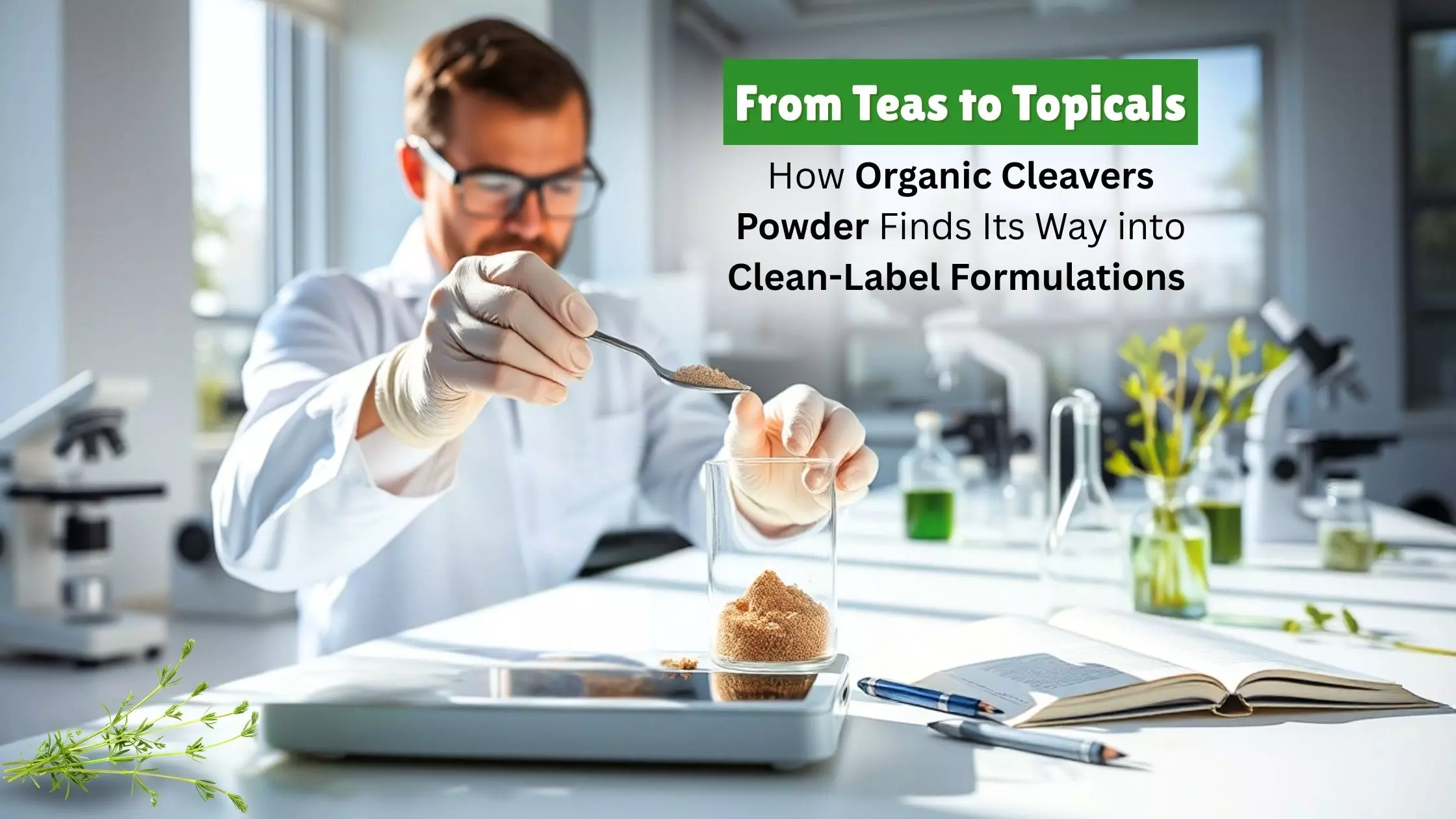
Why Organic Cleavers Herb Powder Deserves a Closer Look from Product Developers
When you work in product development or sourcing, you start to notice which ingredients consistently deliver on functionality, on label appeal, and on cost. One of those quiet overachievers, at least in my experience, is Organic Cleavers Herb Powder.
It doesn’t have the cult status of ashwagandha or matcha. But it does offer something that more brands are starting to prioritize. Clean, plant-based functionality with diverse formulation potential.
So, what exactly is cleavers?
Cleavers (Galium aparine) is that clingy little herb you might remember from childhood walks, sticking to your socks or sleeves. But beneath that scrappy exterior, it’s packed with compounds like flavonoids, tannins, iridoids, and coumarins, giving it gentle diuretic, anti-inflammatory, and lymphatic-supporting properties.
Once dried and milled into a fine powder, cleavers become a versatile ingredient that works well across nutraceuticals, skincare, and functional beverages. It’s not just a folk remedy anymore. It’s finding a solid footing in clean-label formulation strategies.
Industrial Uses of Cleavers Herb Powder
1. Nutraceuticals and detox blends
The wellness industry loves a gentle cleanse, and cleavers fits that narrative. It’s already being used in detox capsules and herbal tea blends, often alongside other botanicals like dandelion or nettle. Its mild action makes it attractive for daily or seasonal use, especially for products targeting lymphatic or urinary support.
2. Natural skincare and personal care
More formulators in the personal care space are incorporating cleavers into toners, creams, and even shampoos. Its reputation for calming irritated skin and aiding with puffiness gives it value in clean, plant-forward skincare formulations, particularly those aimed at sensitive or inflamed skin.
3. Functional food and beverage
Though it’s more niche here, cleavers have a growing presence in wellness teas and liquid herbal shots. It blends well with mint, citrus, and earthy botanicals, and appeals to brands looking to bring lesser-known herbs into the functional beverage space.
Formulation, specs, and sourcing
When sourcing in bulk, cleavers is typically available in a fine green powder, often 80 mesh or customized on request. Organic grades are preferred due to rising consumer demand for transparency and pesticide-free sourcing.
The best suppliers will provide:
- Full COAs (including microbial and heavy metal tests)
- Batch-specific spec sheets
- Certificates for USDA Organic, EU Organic, or Kosher (as applicable)
Standard shelf life is up to 24-36 months in cool, dry storage. And lead times? That depends on mesh size, quantity, and seasonal harvests. But in my experience, a good supplier will keep it under 2–3 weeks for stocked variants.
Market trends and why it matters now
Cleavers isn’t going viral on TikTok—but that’s not the point. Its value lies in reliability, sustainability, and clean-label compatibility. As buyers become more selective about what goes into their products—and how that reflects on their brand—cleavers quietly check a lot of boxes.
And from a growth perspective, the global herbal extracts market is set to hit USD 19.4 billion by 2028 (source: Vantage Market Research), with niche herbs like cleavers finding more space thanks to the shift toward gentle, plant-first wellness.
Final thoughts
Cleavers might not be the most important ingredient on your product brief, but it’s worth paying attention to. Whether you’re in formulation, sourcing, or branding, ingredients like this can help differentiate your products without reinventing the wheel.