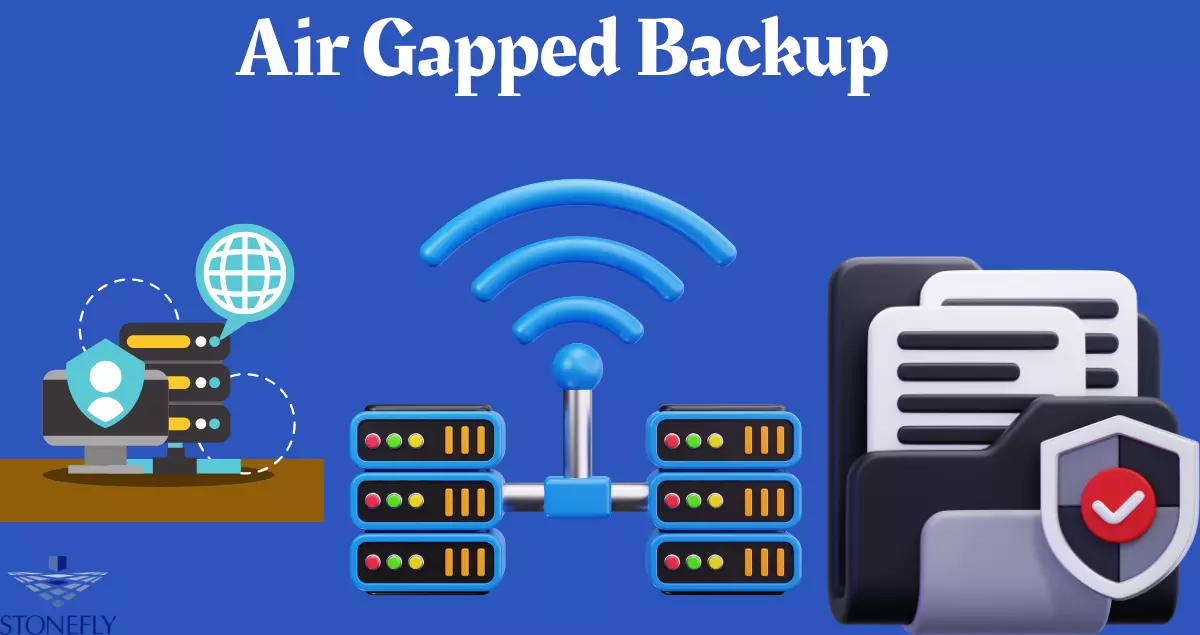
Why Offline Protection Still Wins Against Modern Cyber Threats
Why Offline Protection Still Wins Against Modern Cyber Threats
In a world where ransomware attacks and insider threats are growing more sophisticated by the day, businesses need a defense strategy that attackers literally cannot reach.
This is where Air Gapped Backup becomes one of the most reliable solutions for protecting mission-critical data.
Unlike traditional network-connected backups, an air-gapped approach physically or logically isolates your backup environment from production systems and the internet.
That isolation creates a barrier that malware, hackers, and even rogue employees cannot cross without direct physical access.
For organizations handling financial records, healthcare data, or intellectual property, Air Gapped Backup is not just a precaution — it’s a compliance and continuity necessity.
Understanding the Core Concept of Isolation
How Air Gapped Backup Actually Works
Air Gapped Backup relies on the principle of complete disconnection. After data is written to the backup medium, that medium is detached from all networks.
This can be done through removable drives, tape libraries with offline slots, or appliances that power down network interfaces after replication. The key is that there’s no persistent connection for an attacker to exploit.
Logical vs Physical Air Gapping
Not all air gaps require you to unplug cables. A logical air gap uses automated workflows, firewall rules, and one-way data diodes to ensure backup targets never accept inbound connections.
Physical air gaps take it further — the storage device is literally moved to a vault or locked cabinet. Both methods reduce the attack surface, but physical isolation remains the gold standard for high-risk environments.
The Business Case for Going Offline
Ransomware Can’t Encrypt What It Can’t Touch
Most modern ransomware strains actively hunt for connected backup shares and delete them before encrypting production data.
Because an air-gapped repository is offline, it stays invisible to these attacks. Even if your entire network is compromised, you still have a clean, untampered restore point.
Meeting Compliance Without Compromise
Regulations like HIPAA, PCI-DSS, and GDPR don’t explicitly mandate air gaps, but they do require “recoverability” and “protection from unauthorized alteration.” Auditors increasingly view offline backups as evidence of due diligence.
The isolation helps prove that your organization can recover from worst-case scenarios.
Cost vs Risk: The ROI Calculation
Yes, managing offline media involves logistics — labeling, rotation schedules, secure transport. But compare that to the average cost of a ransomware payout and downtime, which hit $4.45M in 2023 per IBM.
The operational overhead of air gapping is minor next to existential business risk.
Deployment Models That Fit Real IT Teams
Tape-Based Workflows for Long-Term Retention
Tape remains the OG air gap. LTO-9 tapes store 18TB native, have 30-year shelf life, and cost ∼$0.01/GB. Write once, eject, and ship to a secure facility. Modern tape libraries automate the load/eject cycle, so your team isn’t swapping cartridges daily.
Removable Disk and RDX for Faster RTO
If you need sub-hour recovery times, ruggedized removable disks work well. You back up to the RDX cartridge, then eject it. It’s faster than tape for restores but still gives you physical isolation. Rotate 5–10 cartridges in a grandfather-father-son scheme.
Appliances with “Vault Mode”
Some backup appliances now offer a vault mode: after a backup job completes, the system disables its NICs and isolates itself until the next window. It’s not a pure physical gap, but it’s close, and it removes human error from the eject process.
Read: Apple Tablet Price Guide 2026 - Apple iPad Price, Cheap
Common Mistakes That Break the Air Gap
Leaving It Connected “Just for a Few Hours”
The whole point is zero exposure. If your “air-gapped” disk stays plugged in for convenience, it’s not air-gapped. Automate disconnection and alert if it stays online past the backup window.
Skipping Test Restores
An offline backup you’ve never restored is just a paperweight. Schedule quarterly restore tests from the isolated media to separate hardware. Document RTO and verify data integrity.
Forgetting About Encryption
Air gaps stop network attacks, not physical theft. Always encrypt backups before they go offline. Use AES-256 with keys stored separately from the media.
Integrating Air Gaps Into a 3-2-1-1-0 Strategy
The classic 3-2-1 rule says: 3 copies, 2 different media, 1 offsite. Modern guidance adds another 1 for “1 offline/air-gapped/immutable copy” and 0 for “0 errors in backup testing.”
Your air-gapped copy satisfies that critical fourth “1.” Keep one rapid-recovery copy on disk, one in the cloud, and one air-gapped offline. That way you cover operational mistakes, site disasters, and cyber events.
Conclusion
Offline isolation remains the only way to guarantee a backup is unreachable during an active breach.
While cloud and disk replication have their place for speed, they can’t replace the certainty that comes from physically disconnecting your last line of defense.
When designed correctly with rotation, encryption, and regular testing, an air-gapped strategy gives you recovery confidence that no hacker can take away. It’s not about being paranoid — it’s about being prepared for threats that assume you’re always connected.
FAQs
1. How often should I update my air-gapped backup?
Frequency depends on your Recovery Point Objective. Most orgs run daily incrementals to the air-gapped target, then eject weekly fulls. Critical databases may need 4-hour RPO with automated vaulting appliances.
2. Can a virus jump an air gap through USB?
Technically yes, via “sneakernet” malware on the media used to transfer data. Prevent this by using dedicated, write-protected transfer stations, scanning all media before import, and never reusing the same USB between production and the vault.
3. Is a firewall rule the same as an air gap?
No. Firewalls can be misconfigured or exploited. A true air gap has no routable path at all. Logical air gaps with data diodes are closer, but only physical disconnection eliminates remote access entirely.
4. What’s the difference between air-gapped and immutable backups?
Immutable means data can’t be changed for a set period, even if accessed. Air-gapped means it can’t be accessed at all without physical action. Best practice is to combine both: make the backup immutable, then take it offline.
5. How do I manage air-gapped backups for remote offices?
Use central replication to a main site, then air gap from there. Or deploy small removable-disk appliances at each branch with a courier rotation schedule. Cloud-seeding is another option: ship an encrypted disk to your vault provider, who then takes it offline.