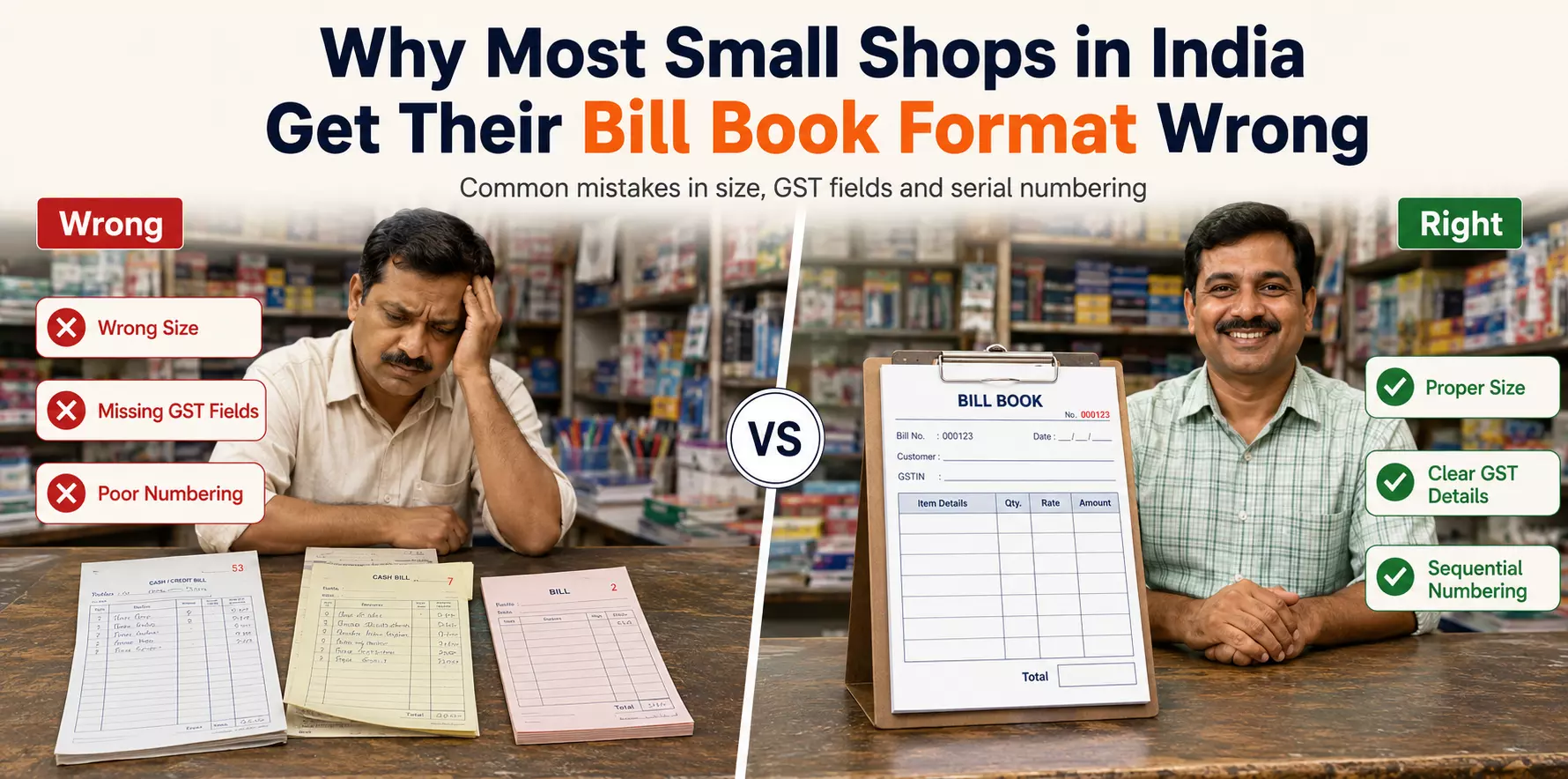
Why Most Small Shops in India Get Their Bill Book Format Wrong
A bill book may look like a simple business document, but the wrong format can create daily billing problems.
Many small shops in India still use bill books with missing fields, unclear serial numbers, limited writing space or an unsuitable page size. These issues can make record keeping difficult and may also create confusion during tax or account checking.
Common Bill Book Format Mistakes
One of the most common mistakes is choosing the wrong size. A very small bill book may not provide enough space for product details, quantity, rate and tax information. On the other hand, an unnecessarily large format can be inconvenient for quick counter billing.
Another common problem is missing important fields. Depending on the business type and tax requirements, a bill book may need sections for the business name, contact details, bill number, date, customer information, item description, quantity, rate, tax and total amount.
Poor numbering is also a major issue. Random or repeated invoice numbers can make it difficult to track sales and find older bills. Sequential serial numbering helps keep records organised and easier to verify.
Read: Top 10 Income Tax Law Books Brands in India
Choosing the Right Bill Book Size
Different businesses need different bill book sizes:
- A6 size is suitable for small cash bills with limited information.
- A5 size works well for most retail shops and service businesses.
- A4 size is useful when detailed product, GST or customer information is required.
Businesses should also decide whether they need single, duplicate or triplicate copies. Duplicate bill books are useful when one copy is given to the customer and another is kept for business records.
What a Clear Bill Book Format Should Include
A practical bill book format may include:
- Business name and contact details
- Bill or invoice number
- Date
- Customer name and details
- Item description
- Quantity and rate
- GST or tax fields, where applicable
- Total amount in figures and words
- Signature or authorised stamp
A clean layout makes bills easier to complete, read and store. It also helps shop owners maintain consistent records without wasting time searching through unclear or incomplete bills.
Choosing the correct format is not only about appearance. It supports faster billing, better record keeping and smoother account management.
Read this complete bill book format guide to understand the common mistakes, suitable sizes and essential fields for small shops in India.