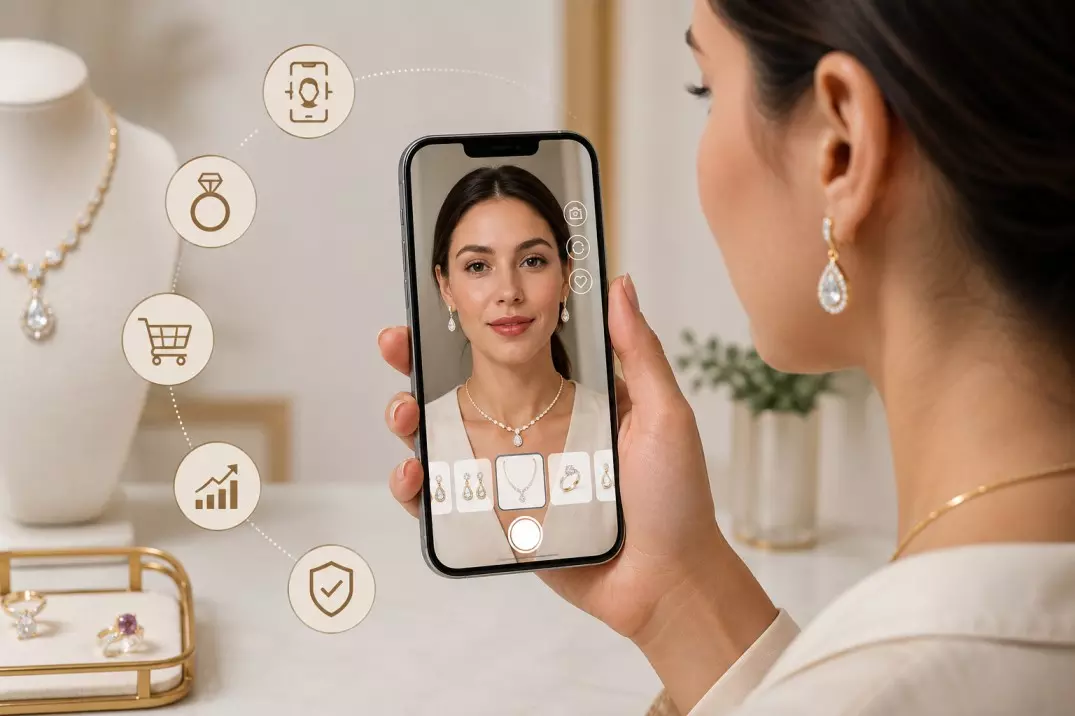
Why Are More Jewelry Retailers Investing in Virtual Try-On Technology?
Virtual try-on technology is becoming a valuable investment for jewelry retailers because it helps customers see how products may look before purchasing.
This creates a more engaging shopping experience, improves buying confidence, and helps bridge the gap between online and in-store shopping.
As customer expectations continue to evolve, jewelry businesses are looking for ways to make digital shopping more interactive, and virtual try-on has emerged as one of the most practical solutions.
Jewelry has always been a product category where appearance matters. Customers often want to see how a ring looks on their finger, how a necklace sits around the neck, or how earrings complement their style before making a decision. In a physical store, this process is simple. Online, it presents a challenge.
Virtual try-on technology helps solve that challenge by allowing shoppers to visualize jewelry before purchasing. As a result, more jewelry retailers are incorporating this technology into their online shopping experiences.
What Is Virtual Try-On Technology?
- Virtual try-on technology allows customers to digitally view jewelry products on themselves using a smartphone, tablet, or computer.
- Instead of relying only on product photos, shoppers can interact with products and gain a better understanding of how an item may appear when worn.
- Depending on the platform, customers may be able to virtually try rings, necklaces, bracelets, earrings, watches, and other accessories.
- For jewelry retailers, virtual try-on offers a way to make online product presentation more interactive while helping customers make informed purchasing decisions.
Industry Trends Supporting Virtual Try-On Adoption
- Several industry trends are contributing to the growing adoption of virtual try-on technology.
- According to Statista, eCommerce continues to account for an increasing share of retail sales globally. As more consumers shop online, retailers are looking for ways to improve digital shopping experiences.
- Research from Grand View Research shows that the augmented reality market continues to grow as businesses across industries adopt visual and interactive technologies to improve customer engagement.
- Shopify has also highlighted the importance of immersive shopping experiences in helping retailers create stronger customer interactions and improve purchase confidence.
- These trends indicate that customers increasingly expect more than static product images when shopping online.
Why Traditional Jewelry eCommerce Has Limitations
Selling jewelry online presents unique challenges.
Unlike many other products, jewelry is highly personal. Customers often consider style, fit, size, appearance, and visual appeal before making a purchase.
Customers Cannot Physically Try Products
In a physical jewelry store, customers can compare different products, examine details closely, and see how pieces look when worn.
Online shoppers do not have the same opportunity.
This can create hesitation during the buying process.
Product Photos Have Limitations
Even high-quality product photography cannot always answer every customer question.
Shoppers may wonder:
- Will this ring look too large on my hand?
- Will these earrings match my style?
- How will this necklace appear when worn?
Traditional images cannot fully address these concerns.
Purchase Uncertainty Can Affect Decisions
When customers are unsure about a product, they often delay purchasing or continue searching for alternatives.
Retailers continuously look for ways to reduce this uncertainty and improve the buying experience.
Why More Jewelry Retailers Are Investing in Virtual Try-On Technology
Several practical business benefits are driving adoption.
1. It Helps Customers Buy With Greater Confidence
Confidence plays a major role in jewelry purchases.
When shoppers can visualize products before buying, they often feel more comfortable moving forward with a purchase decision.
Virtual try-on helps customers gain a better understanding of how products may appear, making the shopping experience feel more informative and engaging.
2. It Creates a More Interactive Shopping Experience
Today's shoppers spend significant time researching products before purchasing.
Interactive experiences encourage customers to explore products more deeply compared to simply viewing static images.
Virtual try-on introduces an element of participation that helps shoppers engage with products rather than passively browse them.
3. It Supports Online Conversion Goals
While purchasing decisions depend on many factors, product visualization can play an important role.
When customers can better understand a product before buying, they may feel more comfortable progressing through the purchase journey.
This is one reason many jewelry retailers view virtual try-on as an investment in customer experience.
4. It Helps Retailers Differentiate Their Brand
Competition in the jewelry industry continues to increase.
Many retailers offer similar products, making customer experience an important differentiator.
A virtual try-on experience can help create a more memorable shopping journey while showcasing a retailer's commitment to improving customer convenience.
5. It Connects Online and In-Store Experiences
Many jewelry retailers operate both physical stores and online channels.
Virtual try-on helps bring some elements of the in-store experience into digital environments.
Customers gain more confidence online while retailers create a more consistent shopping experience across channels.
How Virtual Try-On Benefits Jewelry Customers
The advantages extend beyond convenience.
Better Product Understanding
Customers can gain a clearer view of how products may look when worn.
Faster Purchase Decisions
Visualization helps answer questions that product photos alone may not address.
More Convenient Shopping
Customers can explore products from anywhere without visiting a physical store.
Increased Confidence Before Checkout
When shoppers feel informed, they are often more comfortable making purchasing decisions.
More Engaging Product Exploration
Interactive experiences make browsing more enjoyable and informative.
How Virtual Try-On Benefits Jewelry Retailers
The technology also provides several business advantages.
Improved Product Engagement
Customers spend more time interacting with products and exploring different options.
Better Shopping Experiences
Retailers can offer a more dynamic experience compared to traditional product pages.
Stronger Brand Perception
Businesses that adopt modern shopping tools often create a stronger impression among digitally focused customers.
Competitive Advantage
Providing virtual try-on functionality can help retailers stand out in a crowded marketplace.
Support for Long-Term Digital Growth
As customer expectations evolve, retailers continue investing in technologies that improve digital shopping experiences.
Read: Silver Jewelry Manufacturer in Jaipur
What Features Should Jewelry Retailers Look For?
Not all virtual try-on solutions offer the same capabilities.
When evaluating platforms, jewelry retailers should consider several factors.
Accurate Product Visualization
The experience should represent jewelry products as realistically as possible.
Mobile Compatibility
Most customers browse and shop using mobile devices.
A mobile-friendly experience is essential.
Easy Integration
The solution should work with existing eCommerce platforms and product catalogs.
Support for Multiple Product Types
Retailers often sell rings, necklaces, bracelets, earrings, and other jewelry categories.
The platform should support a broad range of products.
Analytics and Insights
Understanding how customers interact with virtual try-on experiences can help retailers improve their online strategy.
Common Myths About Virtual Try-On Technology
Myth 1: Only Large Brands Can Use It
Many modern platforms offer solutions suitable for businesses of different sizes.
Small and mid-sized jewelry retailers are increasingly adopting virtual try-on technology.
Myth 2: Customers Will Not Use It
Consumer familiarity with interactive shopping tools continues to grow.
Many shoppers actively seek experiences that help them evaluate products more effectively.
Myth 3: Implementation Is Too Complex
Modern solutions are designed to integrate with existing online stores and retail platforms, making adoption more accessible than many businesses assume.
The Future of Jewelry Shopping
- Customer expectations continue to evolve.
- People want better product information, more interactive experiences, and greater confidence when shopping online.
- Virtual try-on technology addresses these expectations by helping customers visualize products before purchasing.
- As visual commerce continues to grow, virtual experiences are expected to play a larger role in how jewelry retailers present products, engage customers, and support online sales.
- Businesses that invest in customer-focused shopping experiences are likely to be better positioned to meet future expectations and compete in an increasingly digital marketplace.
Conclusion
More jewelry retailers are investing in virtual try-on technology because it helps solve a common challenge: enabling customers to visualize jewelry before making a purchase.
By improving product understanding, supporting customer confidence, and creating more interactive shopping experiences, virtual try-on has become an important part of modern jewelry eCommerce strategies.
For jewelry businesses exploring ways to improve product visualization and customer engagement, platforms like Arbling provide virtual try-on capabilities designed specifically for jewelry retailers, helping create shopping experiences that bring customers closer to the products they love.