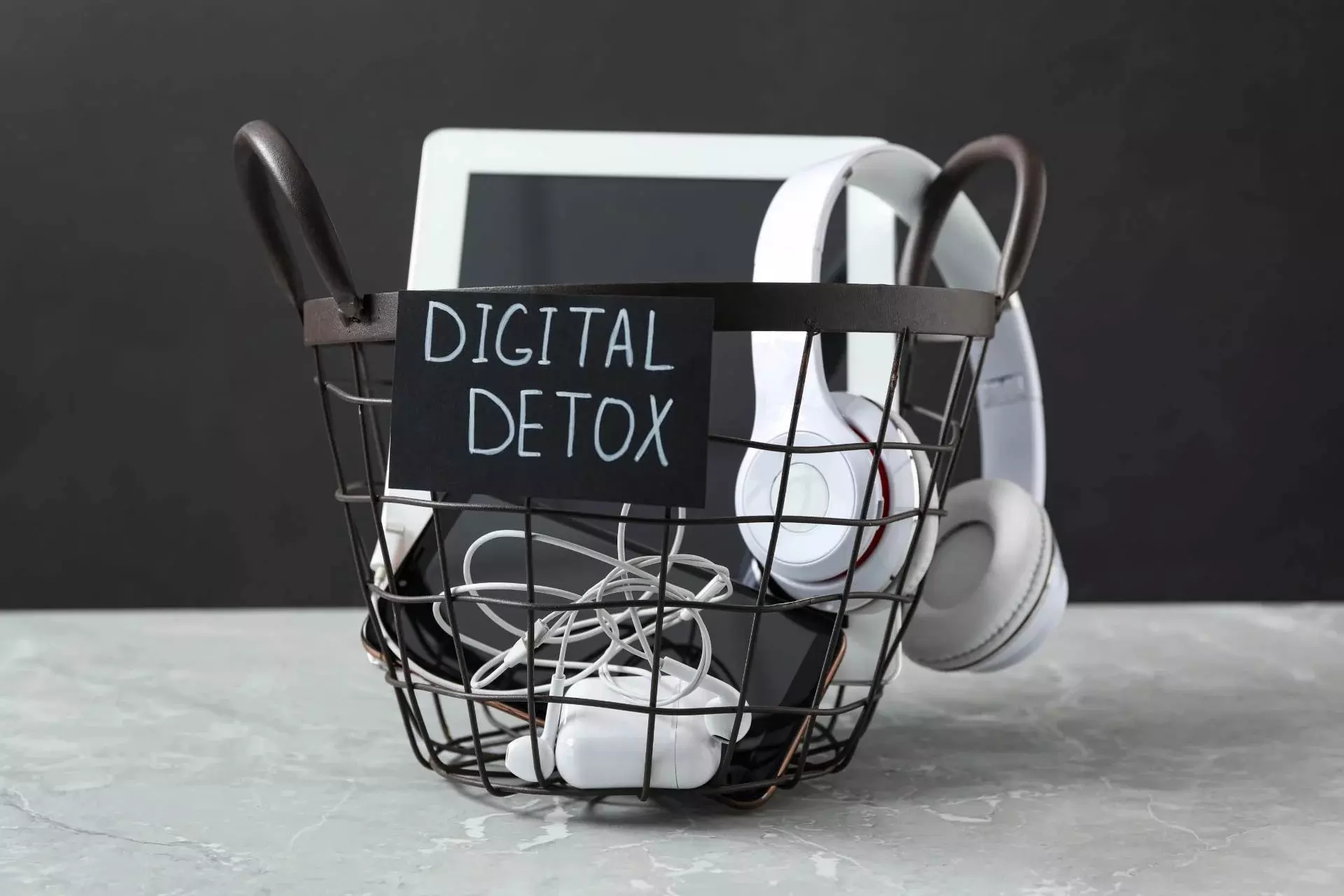
Why Digital Detox Is Becoming a Necessity
A digital detox sounded like something people tried during a holiday, retreat, or a quick weekend away. However, today, it feels much more practical. For many people, it has become a way to breathe again.
So, think about a normal day. You wake up and check your phone. You reply to messages. You scroll through while sipping on the tea. You work on a laptop. You relax and unwind with a series, reels, or online shopping.
Before you can even realise it, screens have followed you from morning till night.
Yes, technology is useful. It helps us to work, connect, learn, and stay informed. The real problem starts when screens start controlling our attention, sleep, mood, and relationships. That is why digital detox is not just a fad, but it is becoming an important step towards balance.
What is a Digital Detox?
A digital detox simply means taking a break from digital devices or reducing their usage for a certain period. It does not always mean leaving your phone in a drawer for a week. For most people, it simply means using screens more intentionally.
You may choose to avoid social media after dinner. You can keep your phone away during meals. Or you may stop checking work-related messages late at night. You may also set up fixed screen-free hours during the day.
As per Wikipedia, a digital detox generally involves voluntarily reducing or avoiding digital devices to reduce screen overuse and improve offline engagement.
Here, the goal is not to reject technology but to stop the technology from taking over your attention.
Why Has Screen Time Become Difficult to Control?
The rise in screen time is no longer restricted to work or study. But it is also about how digital platforms are designed.
Most apps are built to keep users engaged. Notifications, infinite scrolling, short videos, and personalised feeds can make it easy to continue using the device longer than planned. What begins as a quick check slowly turns into thirty minutes of scrolling.
This is the reason why many people feel that they are not completely in control of their phone use. They may open an app for one reason and end up moving between several others without even thinking.
High screen time has become a normal phenomenon as screens are involved in almost every part of life. People use them for banking, shopping, education, entertainment, fitness tracking, and social connections. As a result, the fine line between useful use and overuse starts diminishing.
However, a digital detox can help you rebuild that boundary. It gives people space to ask, “Am I using this device for a purpose, or am I just using it out of habit?”
The Link Between Smartphone Addiction and Daily Stress
The phase that is smartphone addiction may sound strong, but many people recognise the behaviour behind it.
It includes constantly checking the phone, feeling anxious when it is not nearby, scrolling even when you are tired, and struggling to focus with interruptions. Some people are in the constant habit of responding immediately to every message and notification.
This habit can increase the stress levels without you even knowing about it. The mind never gets a proper pause. Even when you are resting, the brain remains in an alert mode for the next update.
Perhaps using smartphones for longer periods can make it harder to rest, focus, and stay emotionally balanced. When the mind keeps moving from one alert to another, even simpler daily tasks can start feeling heavier than usual.
A digital detox can help people break automatic phone-checking patterns. Even small habits, say turning off non-essential notifications, can reduce the pressure to stay constantly available.
How Does Digital Overload Affect Mental Wellbeing?
Your mind also needs an empty space. It requires quiet moments to process thoughts, emotions, and experiences. Constant digital input leaves little space for that.
When people move from one notification to another, the brain keeps on switching attention. As a result, this can make it harder to focus, relax, or complete tasks. Moreover, social media can also increase comparison, especially when people see curated versions of other people's lives.
Over time, this starts affecting mental well-being. Some people start feeling restless, while others may feel less productive. Many also find it difficult to enjoy simple offline moments without reaching for their phone.
As per the American Psychological Association, social media use should be able to support healthy development, especially for young people. This shows that the conversation is not about blaming the technology, but it is more about creating safer and healthier usage patterns.
Better Sleep Starts With Screen-Free Time
Many people take their phones to bed. This one particular habit can affect the quality of rest.
Late-night scrolling delays sleep as the mind stays active. Messages, videos, and news updates can trigger emotions at a time when the body should be winding down. Moreover, bright screens may also make it harder for people to relax before sleeping.
Poor sleep then affects the next day. It can reduce focus, increase irritability and make work feel harder.
A simple digital detox routine before bed can help you overcome this problem. You can keep your phone away for the last 30 or 40 minutes of the day, and you can replace scrolling with reading, stretching, journaling, and quiet music.
Digital Detox Builds Healthier Habits
A digital detox works best when it is well-connected to healthy habits.
Here, the aim is not to reduce phone use but to create space for better activities. When you spend less time scrolling, you can use that time for movement, reading, cooking, hobbies, family conversations, and outdoor walks.
These healthy habits play an important role in improving your daily life in simple ways. They help people feel more present. They also reduce the urge to use screens when bored.
For instance, rather than checking your phone during every short break, you can drink water, stretch a little, or step outside for some fresh air. Instead of scrolling at night, you can prepare for the next day.
Signs You May Need a Digital Detox
There is no need for you to quit your screens completely. However, you may need a reset if digital use starts affecting your routine.
Common signs consist of the following:
- You check your phone immediately after waking up.
- You lose track of time while scrolling.
- You feel stressed when your phone is not around you.
- You struggle to sleep after late-night phone use.
- You compare your life with people online.
- You feel mentally drained after using social media.
- You find it difficult to focus without looking at the notifications.
These signs do not mean that you have failed. This simply means that your digital habits need attention.
Digital Habits and Healthier Alternatives
A digital detox becomes easier when you know which screen habits are affecting your daily life and what small changes can help you regain balance.
Digital Habit
How It Can Affect You
Healthier Alternative
Checking your phone immediately after waking up
Starts the day with mental noise and distraction
Keep the first 30 minutes phone-free
Scrolling late at night
Delays sleep and keeps the mind active
Create a 30- to 40-minute screen-free bedtime routine
Responding to every notification instantly
Increases stress and breaks focus
Turn off non-essential notifications
Using screens during meals
Reduces mindful eating and real conversations
Keep meals screen-free
Losing track of time on social media
Increases screen time and mental tiredness
Set a fixed time limit for social media
Keeping the phone beside your bed
Makes checking the phone easier at night
Charge your phone outside the bedroom
Using screens during every short break
Keeps the brain constantly stimulated
Take a short walk, stretch or drink water
How to Start a Digital Detox Without Feeling Lost?
Well, a digital detox is supposed to be extreme. In fact, it is usually the small and realistic changes that generally work together.
You should start with one area of your day. You can create a no-phone morning for the first thirty minutes. You can stop using social media after dinner. You can keep your phone outside the bedroom.
You can also try these simple yet effective hacks:
- Turn off the unnecessary notifications.
- Remove distracting apps from the homescreen.
- Set a fixed time to check messages.
- Keep your meals screen-free.
- Use an alarm clock and not your phone.
- Track your daily screen time once a week.
- Take short walking breaks without headphones.
- Follow accounts that support your goals and not stress.
Why is Balance More Important Than Quitting?
Technology is an integral part of modern life. Most people can't avoid phones, laptops, or online platforms, as work, education, and communication often rely on them.
This is why a digital detox should not feel like a punishment. It should simply feel like you are taking back control.
There is no need for you to delete every app or disappear from the internet. All that is expected of you is to build a healthier relationship with your devices. This simply means to use technology when it serves the purpose and step away when it starts draining out the energy from you.
However, balance is the real goal.
A practical digital detox helps you keep the benefits of technology without letting it affect your focus, sleep, relationships, and mental well-being.
Wrapping Up
A digital detox is becoming a necessity as modern life keeps on pulling people towards screens. From work-related calls to social media, from online shopping to entertainment, digital exposure now fills most parts of the day.
But constant connection can come at a price.
Too much screen time can affect your focus, sleep, mood, and real-world relationships. Smartphone addiction can make people feel restless, distracted, and mentally exhausted. As a result, these patterns can also weaken mental well-being and make it harder to maintain healthy habits.
Here, the good news is that the new change does not have to be complicated. Start small. Create screen-free spaces. Protect your sleep. Spend more time offline. Use your phone as a tool and not a companion.
After all, a digital detox is not about leaving the modern world behind. It is about returning to yourself.
For more practical ideas on digital habits and mindful living, SmartMag offers helpful lifestyle content that can inspire readers to create healthier routines and find a better balance with technology.