Why Businesses Are Switching to SSD Virtual Server Hosting Solutions
Today’s digital marketplace requires fast and reliable services. Users want sites and apps that are quick to open, operate seamlessly, and never go offline.
Every extra second spent waiting can impact user experience negatively, resulting in higher bounce rates and reduced conversion rates.
This is why an increasing number of firms are now switching to SSD Virtual Server Hosting systems rather than opting for regular hosting packages.
It is not only small start-ups that see the benefits of such technology, but larger businesses as well. Ethernet Servers is one of those companies offering fast and reliable SSD Virtual Server Hosting packages.
Faster Performance Improves User Experience
The main reason why companies are moving towards SSD hosting is performance. As opposed to the use of mechanical parts in traditional HDDs to store and access files, SSD storage is done using an electronic circuit, which makes the transfer process faster.
There have been studies proving that slow websites tend to harm sales. Therefore, with an improved loading time, companies can increase their online rankings.
The SSD virtual hosting setup is capable of managing databases, applications, and spikes in traffic better.
The majority of hosting providers have started using NVMe SSD technology for its ability to provide lower latency and even faster data transfer rates than standard SSDs.
For enterprises that operate eCommerce sites, SaaS solutions, and other resource-intensive websites, this makes a direct impact on their bottom line and customer experience.
Better Reliability for Growing Businesses
In addition, downtime may harm the reputation of the organization and cause lost business opportunities. In today’s business environment, organizations require hosting facilities that are dependable during times of heavy web traffic.
SSD disks are recognized as more dependable owing to the absence of moving mechanical parts.
Moreover, many of the providers that offer SSD Virtual Server Hosting use superior hardware and KVM virtualization software to enhance the reliability of hosting servers.
Thus, the performance of any individual client will not have an adverse impact on other clients using the same server.
Organizations engaged in global operations or those offering round-the-clock internet services require reliable hosting facilities. Hosting organizations provide uptime assurances and employ sophisticated monitoring tools to maintain website availability.
Improved Security and Data Protection
Another important aspect that makes businesses consider an SSD VPS server as their choice is that of cybersecurity. It is possible that other accounts within the shared host could be hacked, which can affect one’s website in several ways.
With an SSD VPS server, businesses can benefit immensely in terms of enhanced security options available to them. They can enjoy their very own RAM and CPU capacity, along with dedicated storage space.
Furthermore, many service providers offer additional benefits, including DDoS protection, firewalls, automatic backups, and advanced virtualization technology.
This kind of security is invaluable for businesses dealing with customers’ confidential information or financial dealings.
Read: Top 10 Features to Look for in an SSD VPS Provider in 2026
Scalability Without High Costs
High prices were another reason why many companies opted against using dedicated servers in the past. Virtual server hosting eliminates this issue by providing performance similar to that of dedicated servers but at a lower cost.
Users can begin with small packages and scale up resources as the traffic increases. This way, business owners can control their budget without sacrificing high performance.
Instant resource upgrades offered by some providers are an added advantage for growing businesses.
For instance, one can purchase hosting with scalable CPU cores, increased RAM, large SSD space, and high bandwidth network. Companies have the freedom to choose the resources that meet their needs and pay only for what they consume.
Greater Control and Flexibility
Custom software application development, configurations, and development environments have become necessary in many enterprises.
However, shared hosting may deny a client certain rights to install some software or configure a server. With a virtual server, one can enjoy root access and full control of a server.
For instance, with the use of KVM technology, clients can select various operating systems and perform software installation and server configuration in accordance with the client’s needs.
Providers usually offer various hosting solutions, including Linux, Windows, and FreeBSD, among others.
Such ability is important for developers, marketing agencies, online games platforms, and any company using custom applications.
The Future of Business Hosting
As the level of competition grows online, companies require hosting services that will be able to cater to their needs for performance, security, and expansion.
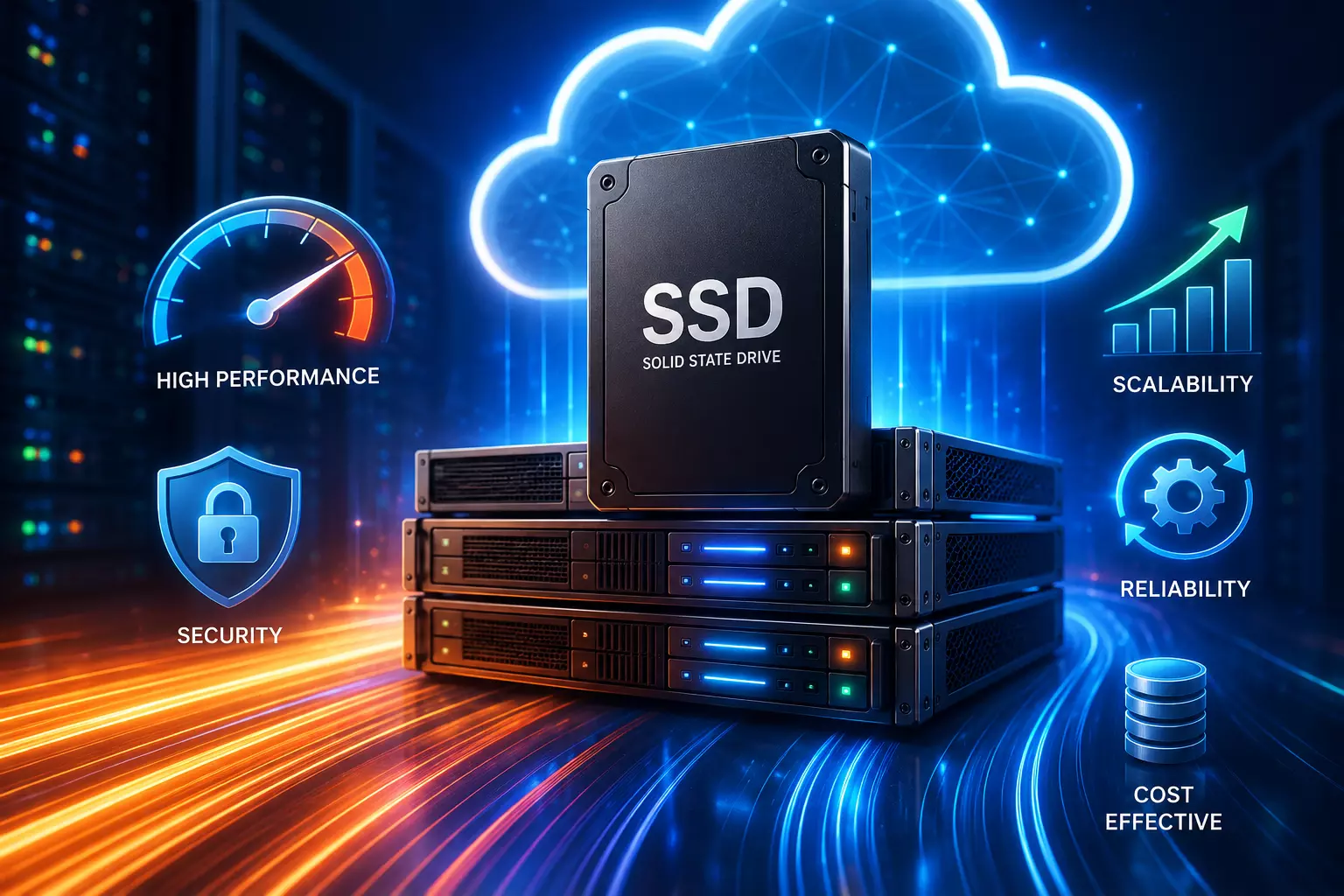
SSD-equipped virtual servers are now the top choice, as they offer speed, stability, scalability, and cost-efficiency in one package.
Hosting providers are also enhancing their infrastructure by building international data centers, offering 10 Gbps connections, and implementing IPv6 technology.
In cases where companies wish to boost website speed, ensure the safety of customers’ information, and manage increasing traffic loads effectively, investing in an SSD-driven hosting service becomes a viable business strategy.
As more companies migrate to the online sphere, efficient virtual hosting services will remain highly valuable assets.