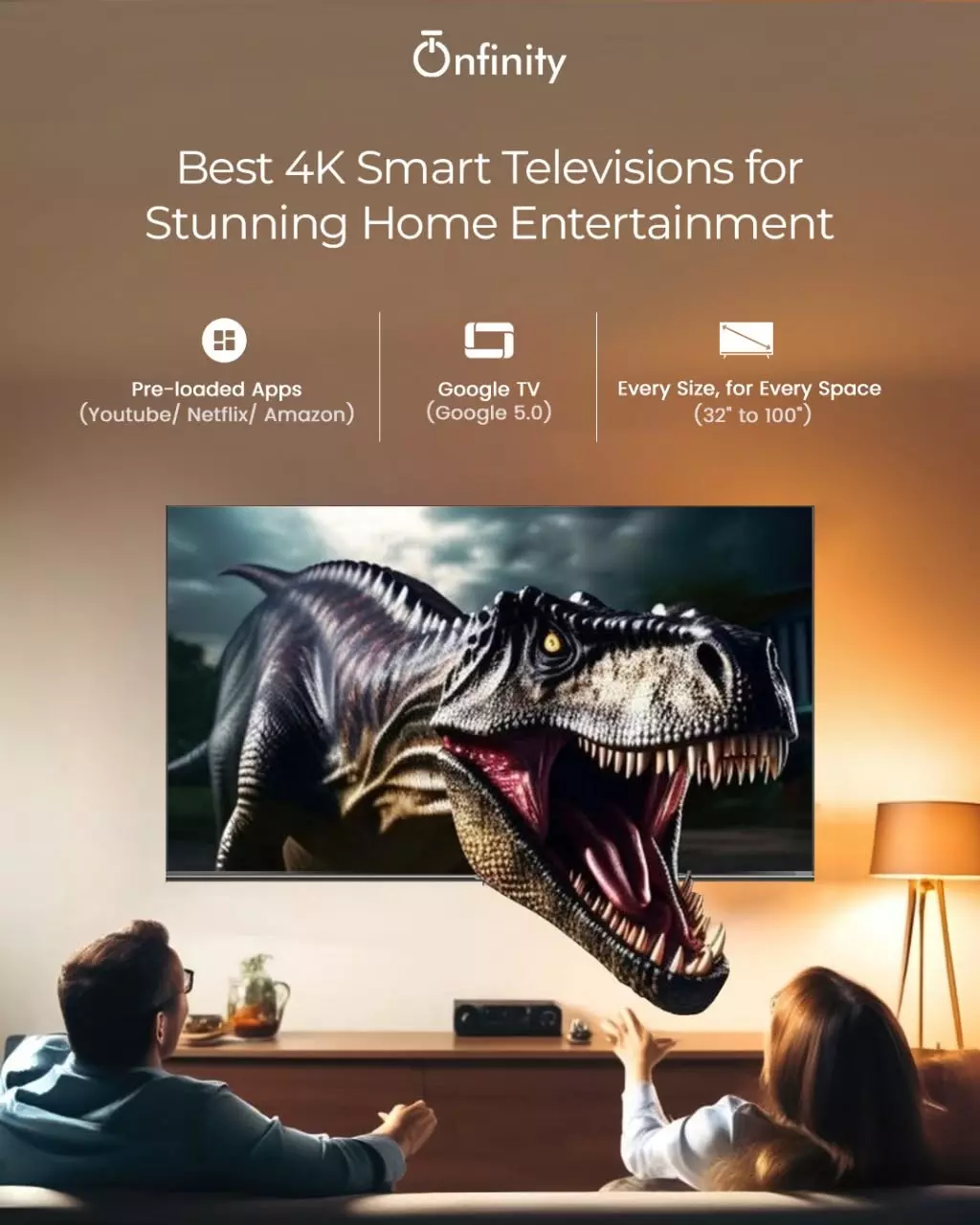
Why 4K Resolution Matters More on Larger Television Screens
Choosing a television is not just about finding a screen that fits your room. Picture quality matters just as much, especially when you are planning to buy a larger television for your living room, entertainment area, or office.
As screen sizes increase, small differences in image detail can become easier to notice. This is where 4K resolution makes a real difference.
A 4K smart TV offers a higher level of image detail than a Full HD television, making it a popular choice for people who enjoy movies, sports, streaming content, and other visually rich entertainment.
But why does resolution become more important as the screen gets bigger? Understanding how screen size and resolution work together can help you make a more informed decision.
What Is 4K Resolution?
4K resolution, commonly known as Ultra HD (UHD), typically refers to a display resolution of 3840 × 2160 pixels. That means the screen contains approximately 8.3 million pixels, four times the number found on a standard Full HD display with a resolution of 1920 × 1080 pixels.
Pixels are the tiny elements that combine to create the images you see on your television. More pixels allow a screen to display finer details when the content and viewing conditions support them.
On a smaller television, the difference between Full HD and 4K may not always be obvious from a typical seating distance. However, on larger screens, higher resolution can help images look more detailed and defined, particularly when watching high-quality 4K content.
Why Resolution Matters More on Larger Screens
1. More Detail Across a Bigger Display
When an image is stretched across a larger screen, the amount of detail available in the source material becomes increasingly important. A large Full HD television can still deliver a good picture, but its lower pixel count may make fine details less distinct when compared with a similarly sized 4K display.
A 4K television has more pixels available to reproduce textures, facial features, landscapes, and small objects. This can make scenes look sharper and more natural, particularly in high-quality movies, nature documentaries, and sports broadcasts.
For anyone considering a large-screen television, 4K resolution can provide a noticeable advantage when the content is suitable for it.
2. A More Comfortable Viewing Experience
The size of your television and the distance from which you watch it both influence how clearly you perceive individual pixels. When sitting relatively close to a large Full HD screen, you may notice less refined edges or individual pixels more easily.
A 4K display packs more pixels into the same screen area, helping reduce the visibility of individual pixels at comparable viewing distances. This can create a smoother, more detailed viewing experience.
Of course, there is no single ideal viewing distance for everyone. Your room layout, personal preferences, eyesight, and television size all play a part in determining what feels comfortable.
3. Better Use of Large Screen Sizes
A larger television can make entertainment feel more immersive, whether you are watching a cricket match, following an action-packed film, or enjoying a travel documentary.
However, a bigger screen alone does not guarantee better picture quality. Resolution, contrast, colour reproduction, brightness, and the quality of the original video all contribute to the final result.
A 4K smart TV combines a large viewing area with a high pixel count, allowing compatible content to retain fine details across the display. This is particularly useful when you want a television that feels well suited to a spacious living room or entertainment area.
Read: A Practical Guide to Choosing the Best LED TV for Your
Other Factors That Affect 4K Picture Quality
Resolution is important, but it is only one part of the overall viewing experience. Before choosing a television, it is worth looking at a few other factors.
Content quality: Not every video labelled as high-definition is available in native 4K.
Streaming services, movies, and other sources must support the resolution to deliver the full benefit. Some televisions can upscale lower-resolution content, but upscaling cannot recreate every detail missing from the original video.
Display technology: LED, QLED, and OLED televisions use different display technologies, each with its own strengths. Brightness, contrast, black levels, and colour performance can influence how impressive an image looks, regardless of its resolution.
Viewing environment: A bright room, reflections from windows, and poor screen positioning can affect your experience. Choosing a suitable location and managing ambient light can help you get more out of your television.
Refresh rate: If you regularly watch fast-moving sports or play video games, refresh rate is another specification worth considering. It affects how motion is displayed and should be evaluated alongside resolution and other picture-quality features.
Looking at these factors together will give you a more realistic idea of how a television will perform in everyday use.
Is a 4K Smart TV Worth It for a Large Room?
For many households, a 4K smart TV is a practical choice when upgrading to a larger screen. It offers high-resolution picture quality while providing access to connected entertainment features, depending on the television's operating system and specifications.
It can be particularly useful for families who stream movies, watch sports, or enjoy content filmed in 4K. A larger screen can also work well in spacious rooms where viewers sit farther away, although the ideal combination of screen size and viewing distance depends on the room.
For offices, reception areas, and shared entertainment spaces, a large 4K television may also provide a clear display for compatible video content and presentations.
The right choice depends on how the screen will be used, the ambient lighting, and whether a consumer television or a commercial display is more suitable for the environment.
Onfinity Technologies Pvt. Ltd. offers smart television solutions for people exploring high-resolution display options. You can visit its Smart 4K Televisions page to learn more about its range and available features.
How to Choose the Right Screen Size and Resolution
Before making a decision, consider how much space you have and where people will usually sit. A screen that looks impressive in a showroom may feel too large for a compact room, while a smaller television might not deliver the viewing experience you want in a spacious area.
Think about the content you watch most often, too. If you regularly stream high-quality movies or enjoy detailed sports footage, investing in a 4K display may make sense.
Check the television's connectivity, supported streaming services, brightness, and other specifications to ensure they match your needs.
Most importantly, compare the complete viewing experience rather than choosing a television based on screen size or resolution alone.
Final Thoughts
Larger television screens can make entertainment more engaging, but the quality of the picture matters just as much as the size of the display.
With four times the pixel count of Full HD, 4K resolution can deliver greater detail and sharper images when paired with suitable content.
If you are planning to upgrade your television, consider how screen size, viewing distance, display technology, and content quality work together. Choosing a 4K smart TV that suits your space and viewing habits can help you enjoy a more satisfying experience for years to come.